With more than 10‑year industry experience, Shandong Headpowder delivers full‑service pneumatic‑conveying systems and blowers, undertaking nationwide turn‑key powder‑handling projects.
Solid powder pneumatic conveying lines represent a sophisticated method for transporting bulk solid materials, particularly fine powders, through a pipeline using pressurized air or other gas. This technology has become increasingly vital in various industrial applications due to its efficiency, flexibility, and ability to handle materials that are difficult to transport via traditional methods like belt conveyors or bucket elevators. The system operates by creating a flow of air or gas within a pipeline, which lifts and propels the solid particles through the system. Understanding the underlying principles and the diverse working scenarios where these systems are applied is crucial for optimizing material handling processes in industrial settings. Developed by Shandong HeadPowder Engineering Co., Ltd. (headpowder), this technology has been refined to meet the specific demands of modern industrial operations.
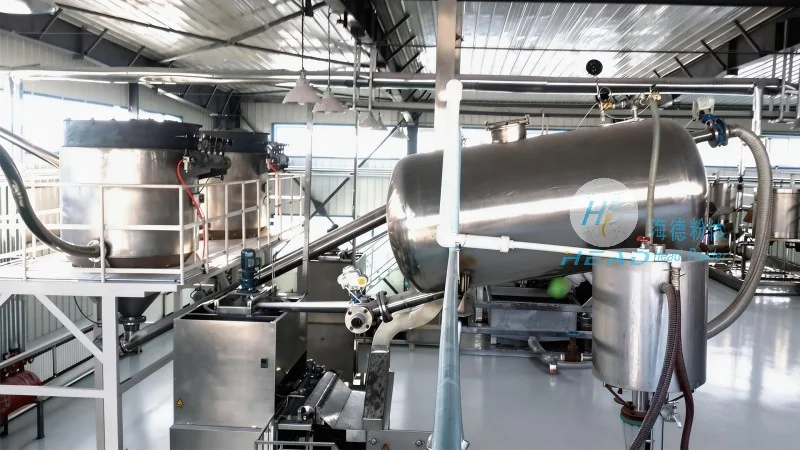
The core principle of solid powder pneumatic conveying is based on the interaction between the solid particles and the moving gas stream. When air or another gas is introduced into a pipeline at a sufficient velocity and pressure, it creates a flow that can overcome the gravitational forces acting on the solid particles. This is achieved through a combination of drag forces and lift forces. The drag force acts on the surface of each particle, pulling it along with the gas stream, while the lift force arises from the pressure differential between the gas and the particles. The efficiency of this process depends on several key factors, including the particle size, density, and shape, as well as the properties of the conveying gas such as its velocity, pressure, and temperature. By carefully selecting these parameters, engineers can design a conveying system that effectively moves the desired material with minimal energy consumption and operational issues.
The application of solid powder pneumatic conveying lines varies significantly across different industrial sectors, each presenting unique challenges and requirements. One of the most common working scenarios is in the chemical and pharmaceutical industries, where the need to handle fine powders, such as pharmaceuticals or chemical reagents, while maintaining strict contamination control is paramount. In these settings, the conveying system must be designed to prevent cross-contamination and ensure that the materials remain in a sterile state. This often involves the use of closed-loop systems, high-purity gases, and specialized equipment that can handle sensitive materials without degradation.
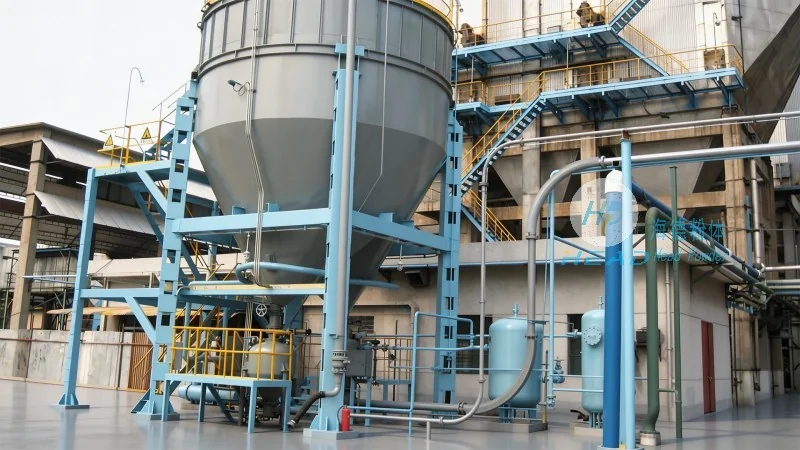
In the food and beverage industry, the working scene characteristics shift to emphasize hygiene, safety, and product quality. Pneumatic conveying lines used in this sector typically operate with air that has been filtered to remove contaminants, and the equipment is constructed from materials that are easy to clean and sanitize. The system must also be able to handle materials that are prone to caking or agglomeration, such as flour or sugar, by incorporating features like vibration or agitation to maintain the flowability of the powder. Additionally, the conveying process must be gentle enough to avoid damaging delicate food products, which requires careful control of the gas velocity and pressure.
In the mining and minerals processing industry, the working scene characteristics are dominated by the need to handle large volumes of coarse or fine powders, often with high moisture content or abrasive properties. Here, the pneumatic conveying system must be robust and capable of withstanding the harsh conditions of the material being transported. This may involve the use of high-pressure systems or specialized pipelines that can resist wear and corrosion. The system is also designed to handle materials that are prone to dust generation, which necessitates the inclusion of dust collection and filtration systems to ensure environmental compliance and worker safety.
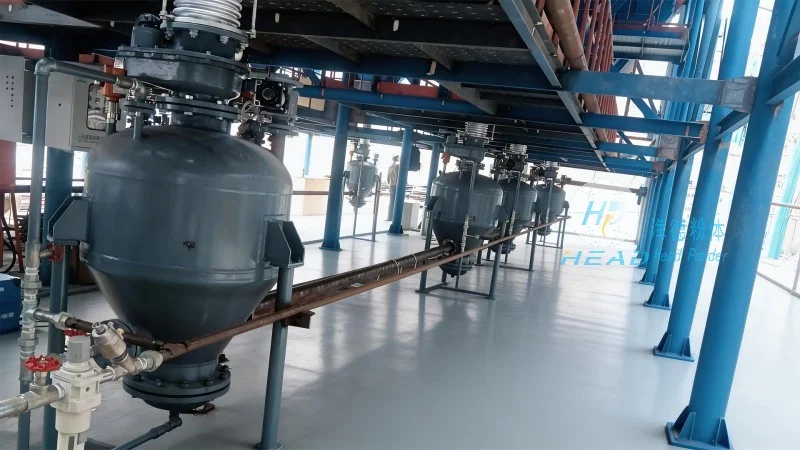
In the manufacturing and processing of building materials, such as cement, gypsum, or powdered coatings, the working scene characteristics focus on efficiency and cost-effectiveness. The pneumatic conveying line is used to transport large quantities of these materials from storage silos to processing equipment or to different parts of the production facility. The system is typically designed for high throughput and low maintenance, with features like self-cleaning pipelines and adjustable flow controls to optimize the conveying process. The ability to handle a wide range of material types and sizes makes this technology particularly suitable for the dynamic nature of building material production.
Despite the benefits, the implementation of solid powder pneumatic conveying lines requires careful consideration of several factors to ensure optimal performance. One of the primary advantages of this technology is its ability to handle a wide variety of materials, including those that are difficult to transport using traditional methods. The system is also flexible, as it can be easily modified or expanded to accommodate changes in production needs. Additionally, pneumatic conveying systems are generally compact and can be integrated into existing industrial layouts without significant disruption. However, there are also challenges associated with this technology, such as the need for high-pressure air or gas, which can increase energy consumption. The system may also be susceptible to blockages or clogs, especially when handling materials that are prone to agglomeration or moisture. Proper maintenance and regular cleaning are essential to prevent these issues and ensure the longevity of the system.

 Shandong Headpowder Engineering Co., Ltd.
 156-6277-7102(Manager Zhang)
  0531-83386006
  Zhangqiu District, Jinan City, Shandong Province, China
telephone
WeChatconsult
top