

Working Principle and Characteristics of Lantan Gas-Pneumatic Conveying
Lantan gas-pneumatic conveying is a key technology in bulk material handling, particularly for lantan, a type of carbonaceous material. This method involves transporting lantan particles through a pipeline using air or other gas as the conveying medium. The process is widely used in industrial applications due to its efficiency and adaptability.
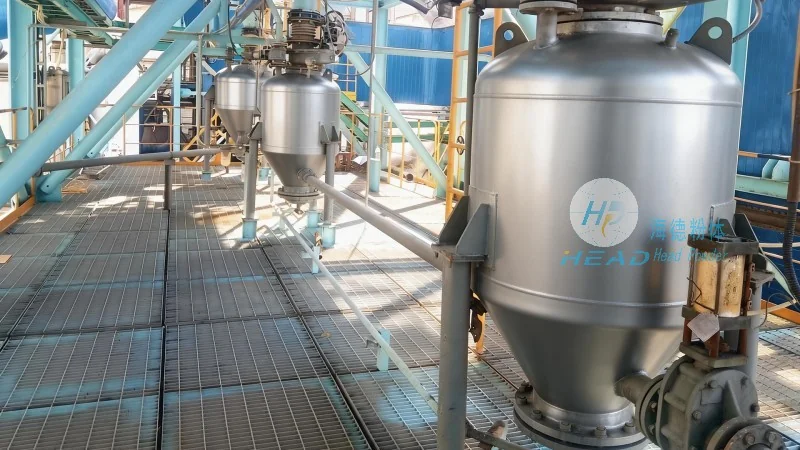
Working Principle of Lantan Gas-Pneumatic Conveying
The core of lantan gas-pneumatic conveying lies in the interaction between the material and the conveying gas. The system typically consists of a hopper, a feeder, a pipeline, and a receiver. The lantan is fed into the hopper, and then discharged into the pipeline through the feeder. Simultaneously, a high-pressure air or gas stream is introduced into the pipeline, creating a flow that carries the lantan particles forward. The velocity of the gas is critical; it must be sufficient to overcome the gravitational force and the resistance of the particles, ensuring stable and continuous transport. The conveying process can be either positive or negative pressure, depending on the system design and operational requirements. In positive pressure systems, the pipeline is pressurized above atmospheric pressure, while negative pressure systems maintain a vacuum or sub-atmospheric pressure within the pipeline. The choice between these systems influences the system's energy consumption and the risk of dust leakage.
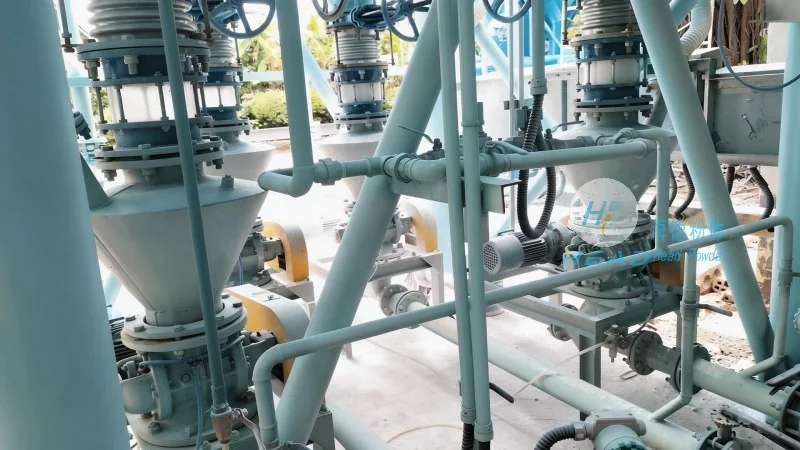
Key Characteristics of Lantan Gas-Pneumatic Conveying
Lantan gas-pneumatic conveying exhibits several notable characteristics that make it suitable for various industrial applications. Firstly, it offers high conveying efficiency, allowing for the transport of large quantities of lantan over considerable distances with minimal energy input. The system can handle a wide range of particle sizes and densities, making it versatile for different lantan types. Secondly, it provides excellent dust control compared to other bulk material handling methods. The enclosed pipeline system reduces dust emissions, enhancing workplace safety and compliance with environmental regulations. Thirdly, the system is relatively compact and can be integrated into existing production lines, reducing the need for extensive infrastructure modifications. Additionally, it allows for flexible conveying routes, enabling the material to be directed to multiple destinations from a single source. The technology also supports the mixing of different lantan grades or other additives during the conveying process, which is beneficial for customized material blending. However, it's important to note that the system's performance can be affected by factors such as particle size distribution, moisture content, and the type of conveying gas. Proper system design and maintenance are essential to optimize performance and prevent issues like blockages or pressure drops.
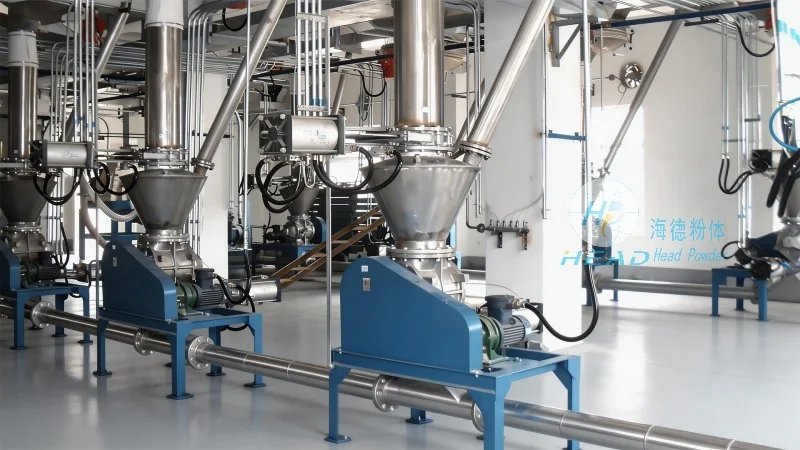
Technical Advantages and Practical Applications
From a technical standpoint, lantan gas-pneumatic conveying offers several advantages over traditional methods like belt conveyors or screw conveyors. The absence of mechanical moving parts in the pipeline reduces wear and tear, leading to lower maintenance costs and longer equipment lifespan. The system is also less prone to material degradation, as the enclosed environment minimizes exposure to external factors. In practical applications, this technology is widely used in the lantan processing industry, including mining, crushing, and screening operations. It is also employed in downstream processes such as blending, packaging, and storage. The ability to convey lantan in a controlled manner ensures consistent quality and reduces the risk of contamination. For example, in a lantan production facility, the system can efficiently transport crushed lantan from the crushing unit to the storage silo, maintaining the material's integrity throughout the process. The flexibility of the system also allows for integration with other processing equipment, such as classifiers or classifiers, to achieve precise material separation and grading. Overall, lantan gas-pneumatic conveying is a reliable and efficient solution for bulk material handling, particularly in industries where lantan is a primary raw material.
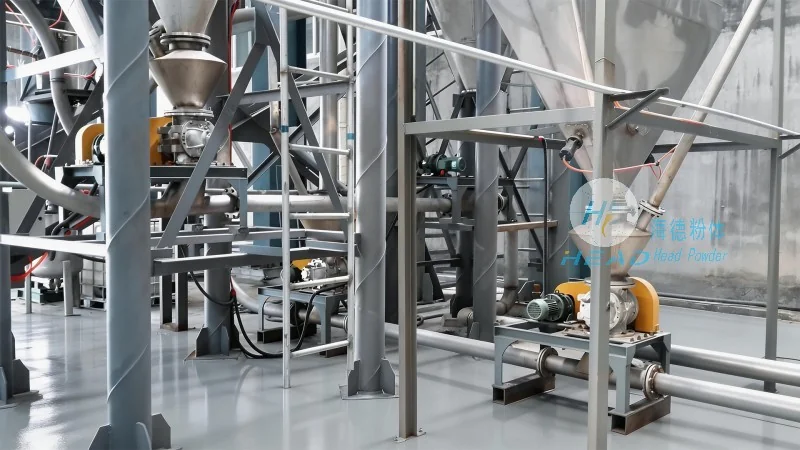
About Shandong HeadPowder Engineering Co., Ltd.
Shandong HeadPowder Engineering Co., Ltd., operating under the brand name headpowder, is a leading provider of specialized engineering solutions for bulk material handling. With a focus on innovative and efficient technologies, the company has developed expertise in designing and manufacturing gas-pneumatic conveying systems tailored to the unique needs of the lantan industry. Headpowder's team of engineers and technicians brings years of experience in material handling, ensuring that each system is optimized for performance, reliability, and cost-effectiveness. The company's commitment to quality and customer satisfaction has earned it a reputation as a trusted partner in the industry. Headpowder's facilities are located in Shandong, China, where the company leverages local resources and expertise to deliver high-quality products and services to clients worldwide. By combining advanced engineering with practical application knowledge, HeadPowder continues to advance the state of the art in lantan gas-pneumatic conveying and related technologies.