With more than 10‑year industry experience, Shandong Headpowder delivers full‑service pneumatic‑conveying systems and blowers, undertaking nationwide turn‑key powder‑handling projects.
For industrial applications involving the handling of rubber granules, understanding the mechanics of pneumatic conveying systems is crucial. This article explores the concept of rubber granule pneumatic conveying and delves into the fundamental design principles that underpin such systems.
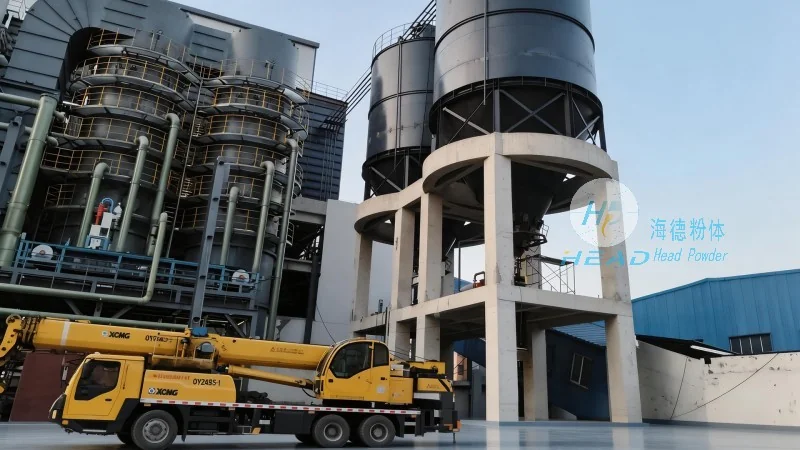
Rubber granule pneumatic conveying refers to the process of transporting rubber granules through a pipeline using a stream of air or other gas. This method is widely adopted in the rubber industry due to its efficiency, flexibility, and ability to handle abrasive or dusty materials without the need for mechanical components like belts or buckets. The system typically involves a source of material, a conveying line, and a receiver, all powered by a blower or compressor that generates the necessary air pressure.
The effectiveness of a rubber granule pneumatic conveying system relies on several critical components. These include the material hopper or feeder, which feeds the granules into the system; the air supply unit, such as a blower or compressor, that provides the motive force; the conveying pipeline, which transports the material; and the receiver or discharge unit, where the material is collected. Additionally, components like in-line mixers, cyclones, and filters may be integrated to enhance system performance and ensure material quality.
Designing an efficient rubber granule pneumatic conveying system requires careful consideration of several key principles. First, the system must be designed to handle the specific characteristics of rubber granules, including their size, density, and flowability. The air velocity within the pipeline is a critical parameter, as it must be sufficient to lift and transport the granules without causing excessive wear or degradation. Engineers often use the "minimum conveying velocity" and "maximum conveying velocity" concepts to determine the optimal air speed for a given material.
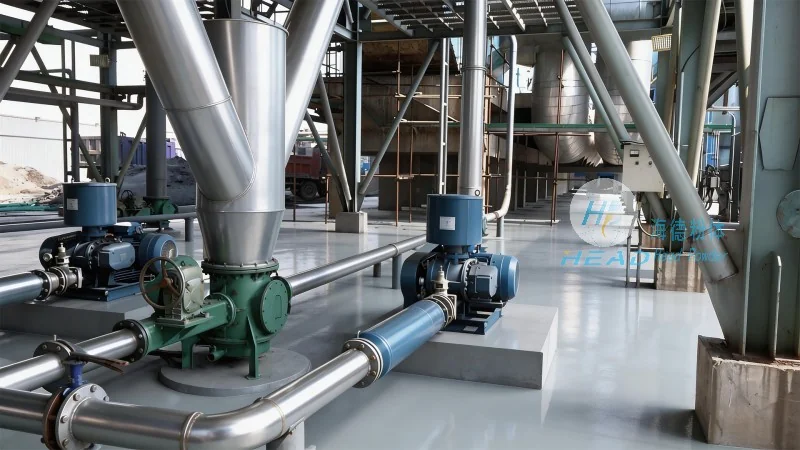
Second, the system design must account for the pressure drop along the pipeline. This is influenced by factors such as pipe diameter, length, and the presence of fittings, bends, and valves. Proper sizing of the pipeline and the use of smooth, low-friction materials are essential to minimize energy consumption and maintain system efficiency. The pressure drop also affects the required power of the air supply unit, making it a critical factor in system design.
Implementing a rubber granule pneumatic conveying system offers several advantages over traditional mechanical conveying methods. One of the primary benefits is the ability to transport materials over long distances without the need for intermediate transfer points or manual handling. This reduces labor costs and minimizes the risk of material contamination or loss. Additionally, pneumatic systems are highly flexible, allowing for easy integration with existing production lines and the ability to route material to multiple destinations.
Another advantage is the reduced risk of equipment wear and tear compared to mechanical systems. Since the material is conveyed through a pipeline without direct contact with mechanical components, the system has a longer operational life and lower maintenance requirements. Furthermore, pneumatic conveying can be integrated with dust collection systems, making it an environmentally friendly option for handling rubber granules.

Rubber granule pneumatic conveying is widely used in various industrial applications. In the rubber manufacturing industry, it is commonly employed to transport raw rubber granules from storage silos to processing plants, or to move finished rubber products from production lines to packaging areas. The system is also used in recycling facilities, where rubber granules are conveyed from sorting and grinding operations to storage or further processing stages.
Other applications include the handling of rubber granules in sports surfaces, where the material is transported from storage to the installation site for playgrounds or athletic fields. In these cases, the pneumatic system ensures a consistent and uniform distribution of rubber granules, contributing to the quality and safety of the final surface.
Rubber granule pneumatic conveying is a highly effective method for transporting rubber granules in industrial settings. By understanding the design principles and key components of such systems, manufacturers can optimize their operations, reduce costs, and improve overall efficiency. As a leading provider in this field, Shandong HeadPowder Engineering Co., Ltd. specializes in designing and implementing customized pneumatic conveying solutions tailored to the specific needs of rubber processing industries.

 Shandong Headpowder Engineering Co., Ltd.
 156-6277-7102(Manager Zhang)
  0531-83386006
  Zhangqiu District, Jinan City, Shandong Province, China
telephone
WeChatconsult
top