With more than 10‑year industry experience, Shandong Headpowder delivers full‑service pneumatic‑conveying systems and blowers, undertaking nationwide turn‑key powder‑handling projects.
When it comes to transporting calcium carbonate, the choice between positive pressure and negative pressure pneumatic conveying systems is a critical decision for industrial operations. Both methods offer distinct advantages and challenges, and understanding their differences is essential for optimizing material handling efficiency and cost-effectiveness. This analysis delves into the characteristics, applications, and performance metrics of both positive and negative pressure systems, providing a comprehensive overview for professionals in the powder handling industry.
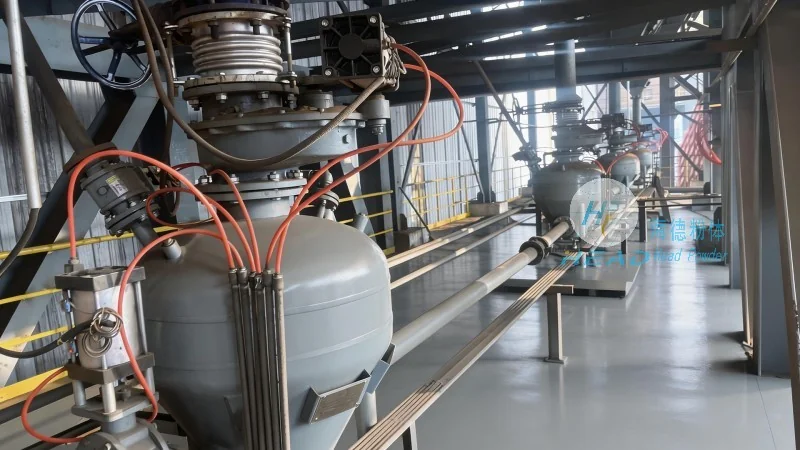
Pneumatic conveying is a widely used technique for transporting bulk materials like calcium carbonate through a pipeline using air or gas as the conveying medium. The two primary categories are positive pressure and negative pressure systems, each with unique operational principles and suitability for different scenarios. Positive pressure systems force air or gas into the material to create a pressure differential that propels the powder through the pipeline. This method is particularly effective for transporting calcium carbonate over longer distances and in complex layouts, as it can handle higher material loads and maintain consistent flow rates. The system typically includes a blower, a material feeder, and a pipeline network, with the air being supplied at a pressure higher than the ambient environment. For calcium carbonate, which is a fine, dry powder, positive pressure systems can achieve high conveying velocities, reducing the risk of blockages and ensuring reliable material transport. The equipment used in positive pressure systems, such as rotary valves and airlocks, is designed to handle abrasive materials like calcium carbonate, minimizing wear and extending equipment life. The primary advantage of this approach is its ability to handle high material throughput and maintain a continuous flow, making it suitable for large-scale industrial applications. However, positive pressure systems require careful consideration of air consumption and energy efficiency, as the blower must work against the pressure in the pipeline. Additionally, the system may generate dust and require proper filtration to comply with environmental regulations.
Negative pressure, or vacuum, pneumatic conveying systems create a vacuum in the pipeline to draw material from the source into the system. This method is often preferred for shorter conveying distances and when the material needs to be transported from a source that is difficult to access or where dust containment is a priority. The system consists of a vacuum pump, a material hopper, and a pipeline that connects to the receiving point. The vacuum is maintained by the pump, which pulls air and material through the pipeline, ensuring that the material is drawn efficiently. For calcium carbonate, negative pressure systems are effective for handling fine powders and can be used in applications where the material is sensitive to pressure or where the source is located at a higher elevation. The key benefits of negative pressure conveying include lower air consumption compared to positive pressure systems and reduced noise levels, as the vacuum pump operates at lower speeds. However, this method has limitations in terms of conveying distance and material load capacity, as the vacuum can only draw material over shorter distances without significant pressure losses. The system also requires more careful sealing to prevent air leakage, which could compromise the vacuum and reduce conveying efficiency. In addition, negative pressure systems may be more susceptible to clogging if the material contains moisture or agglomerates, which can affect the flow and require additional conditioning steps.
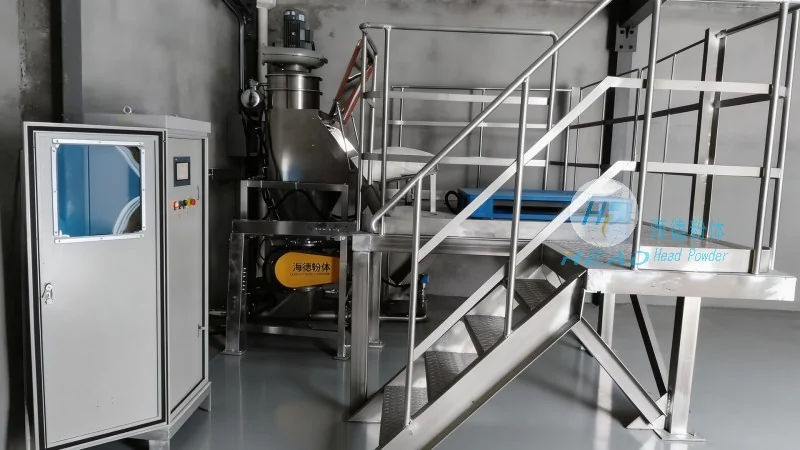
When comparing positive and negative pressure pneumatic conveying systems for calcium carbonate, several factors must be considered to determine the most suitable option. The primary differences lie in operational pressure, energy consumption, material handling capacity, and environmental impact. Positive pressure systems generally consume more energy due to the need to maintain higher pressure, but they can handle larger volumes and longer distances. Negative pressure systems are more energy-efficient and produce less noise, but they are limited in conveying distance and material throughput. The choice also depends on the specific application, such as whether the material is being transported from a silo to a processing plant or from a production line to a storage area. For example, if the conveying distance is over 100 meters and the material load is high, a positive pressure system may be more appropriate. Conversely, if the distance is short and the material is sensitive to pressure, a negative pressure system could be preferred. The cost of equipment and maintenance is another critical factor, as positive pressure systems may require more robust components to handle higher pressures and abrasive materials. Negative pressure systems, while less expensive in terms of energy, may need more frequent maintenance due to the vacuum pump and sealing components. Environmental considerations also play a role, as positive pressure systems may generate more dust and require additional filtration, whereas negative pressure systems are generally more contained and easier to manage from a dust control perspective.
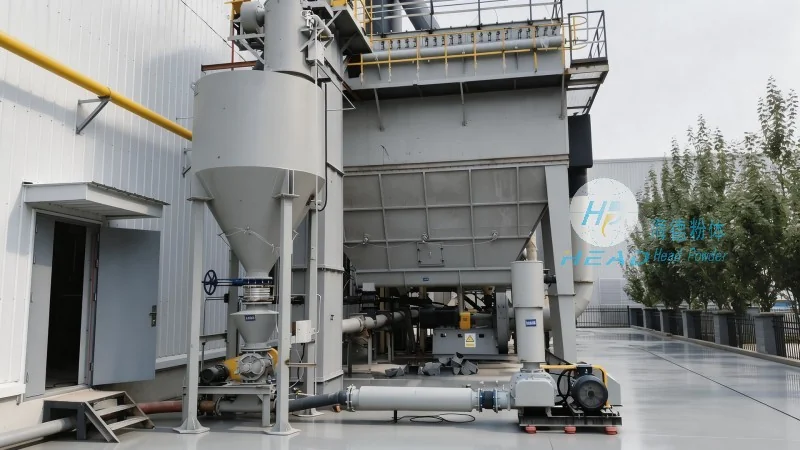
The suitability of positive or negative pressure conveying for calcium carbonate applications varies based on the specific operational requirements. Positive pressure systems are commonly used in large-scale industrial settings where high throughput and long-distance transport are required, such as in the production of calcium carbonate-based products like paper, plastics, or coatings. These systems are also advantageous when the material needs to be transported through complex piping networks or when the receiving point is located at a higher elevation. For instance, in a paper mill, positive pressure conveying may be used to transport calcium carbonate from a storage silo to a paper machine, covering distances of several hundred meters with consistent material flow. Negative pressure systems, on the other hand, are often employed in smaller-scale operations or in applications where dust containment is paramount, such as in pharmaceutical or food processing industries. These systems are ideal for transporting calcium carbonate from a production line to a storage bin or for handling materials that are sensitive to moisture or agglomeration. Practical considerations include the need for proper filtration and dust collection to comply with environmental regulations, as both systems can generate fine dust particles. The selection of the appropriate system also depends on the availability of space and the layout of the facility, as positive pressure systems may require more room for the blower and material handling equipment. Additionally, the cost of installation and maintenance should be evaluated, as positive pressure systems may have higher upfront costs due to the need for robust components, while negative pressure systems may have lower initial costs but higher long-term maintenance expenses.
In conclusion, both positive and negative pressure pneumatic conveying systems offer viable solutions for transporting calcium carbonate, each with its own set of advantages and limitations. The choice between the two depends on factors such as conveying distance, material load, energy efficiency, and environmental requirements. Positive pressure systems are generally more suitable for high-volume, long-distance applications, while negative pressure systems are better suited for shorter distances and applications where dust containment is critical. For industrial operations, it is essential to conduct a thorough analysis of the specific requirements and constraints to select the most efficient and cost-effective system. This analysis should consider the material properties of calcium carbonate, the layout of the facility, and the operational goals of the organization. By understanding the differences between positive and negative pressure conveying, companies can optimize their material handling processes, reduce costs, and improve overall operational efficiency. As the demand for calcium carbonate continues to grow in various industries, the choice of an appropriate pneumatic conveying system will remain a key factor in ensuring smooth and reliable material transport. For those seeking expert guidance on selecting and implementing the right system, Shandong HeadPowder Engineering Co., Ltd. provides comprehensive solutions tailored to the unique needs of industrial applications. With a focus on efficiency, reliability, and environmental compliance, HeadPowder offers advanced pneumatic conveying systems that enhance material handling capabilities and support sustainable industrial operations.

 Shandong Headpowder Engineering Co., Ltd.
 156-6277-7102(Manager Zhang)
  0531-83386006
  Zhangqiu District, Jinan City, Shandong Province, China
telephone
WeChatconsult
top