With more than 10‑year industry experience, Shandong Headpowder delivers full‑service pneumatic‑conveying systems and blowers, undertaking nationwide turn‑key powder‑handling projects.
Rice flour, a staple ingredient in numerous culinary and industrial applications, demands efficient and reliable handling to preserve its quality and ensure operational efficiency. Pneumatic conveying systems have become the preferred method for transporting rice flour due to their ability to handle fine powders with minimal degradation. Two primary approaches dominate the industry: negative pressure (vacuum) conveying and positive pressure conveying. Understanding the distinct features, advantages, and drawbacks of each method is essential for selecting the most appropriate system for specific rice flour handling needs.
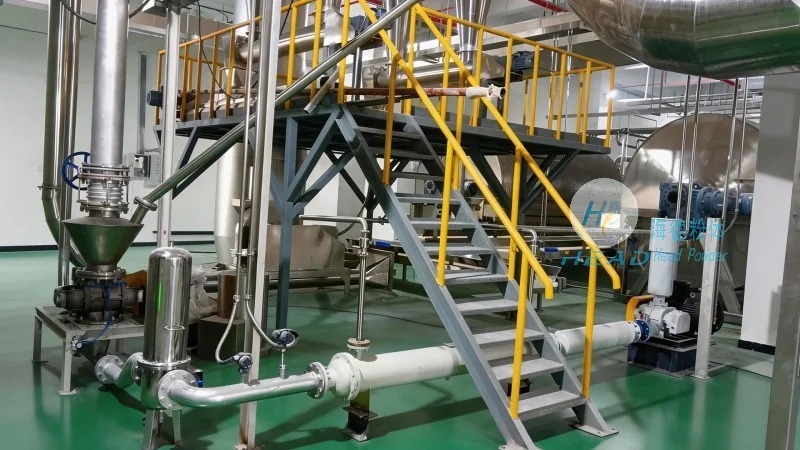
Pneumatic conveying systems utilize air or gas to transport bulk materials like rice flour through a pipeline network. These systems are classified based on the pressure differential between the conveying line and the ambient environment. Negative pressure systems create a vacuum in the line, drawing material from the source into the system. Positive pressure systems, conversely, generate pressure within the line, pushing material from the source to the destination. Both methods have been widely adopted in the rice flour industry, each offering unique benefits and challenges.
Negative pressure conveying, or vacuum conveying, is defined by its ability to draw material under a vacuum. This method is particularly effective for fine, light powders such as rice flour, as it minimizes product degradation and maintains a clean, dust-free environment. The system typically includes a vacuum pump, a hopper or feed device, and a conveying line connecting to the receiving vessel. The vacuum is created by the pump, pulling air and material particles from the source into the line for transport.
One of the main advantages of negative pressure conveying is its gentle handling of delicate materials. The low air velocity and controlled vacuum pressure reduce the risk of particle breakage or agglomeration, preserving the texture and quality of rice flour. This is critical in applications where the flour's properties, such as particle size distribution and moisture content, must remain consistent. Additionally, negative pressure systems are well-suited for applications requiring material transfer from multiple sources or over longer distances, as the vacuum can be maintained throughout the entire pipeline network.
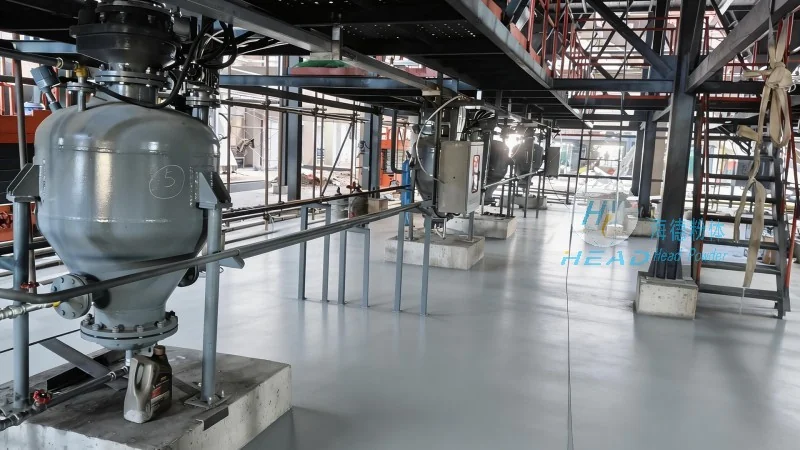
Despite its benefits, negative pressure conveying has limitations. A significant drawback is the potential for dust and particulate matter to escape into the environment, leading to air quality concerns and the need for additional filtration systems. This can increase operational costs and maintenance requirements. Furthermore, the system's performance is highly dependent on the source material's characteristics, such as moisture content and particle size, which may affect conveying efficiency and require adjustments to the vacuum pump settings. Another challenge is the risk of system backflow or blockages, particularly if the conveying line is not properly sealed or maintained.
Positive pressure conveying, or pressure conveying, operates by pressurizing the conveying line with air or gas, forcing material from the source to the destination. This method is often preferred for handling bulkier or more abrasive materials, but it is also effective for rice flour, especially in high-volume or high-speed applications. The system typically includes a blower or compressor, a hopper or feed device, and a conveying line delivering material to the receiving vessel. The pressure is generated by the blower, pushing air and material particles through the line for consistent transport.
Positive pressure conveying offers several advantages for rice flour handling. The primary benefit is its ability to handle high volumes of material at high speeds, making it suitable for large-scale production facilities. The pressurized system also reduces the risk of product contamination from external sources, as the line is sealed and pressurized, preventing dust ingress. Additionally, positive pressure systems are generally more compact and easier to install, as they do not require extensive vacuum pump infrastructure. This can lead to lower capital costs and reduced space requirements for the conveying system.
However, positive pressure conveying has its own challenges. The high air velocity and pressure can cause wear and tear on the conveying line and components, leading to increased maintenance and replacement costs over time. The system is also more susceptible to blockages if the material contains foreign objects or agglomerates, which can disrupt flow and require manual intervention. Furthermore, the pressurized environment may pose safety risks, particularly if the line is not properly sealed or if there are leaks, which could lead to air pollution or injury. Another limitation is the potential for product degradation due to higher air velocity, affecting the quality of rice flour in sensitive applications.
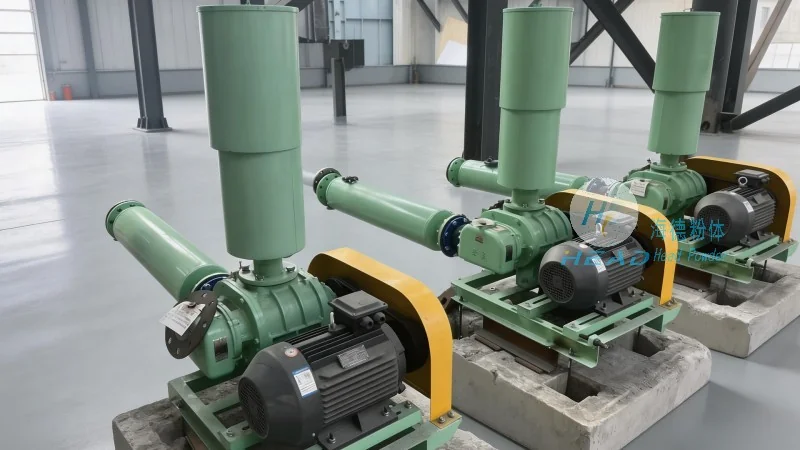
When evaluating the suitability of negative pressure versus positive pressure pneumatic conveying for rice flour, several factors must be considered. The choice depends on material characteristics, conveying distance, volume, and environmental regulations. Negative pressure systems are preferred for gentle handling and longer distances or multiple source points, while positive pressure systems are better for high-volume, high-speed applications with limited space and lower environmental impact concerns.
For rice flour manufacturers and processors, selecting the appropriate pneumatic conveying system is critical to maintaining product quality, operational efficiency, and compliance with industry standards. The choice between negative and positive pressure systems should be based on a thorough analysis of the material's properties, system capacity requirements, and operational environment. For instance, in applications where rice flour is highly sensitive to particle breakage or where dust control is a major concern, negative pressure conveying may be the preferred option. Conversely, in high-volume production facilities where speed and space efficiency are paramount, positive pressure conveying may offer more advantages.
In conclusion, both negative pressure and positive pressure pneumatic conveying systems provide viable solutions for rice flour handling, each with distinct advantages and disadvantages. Negative pressure systems excel in gentle material handling and longer-distance transport, while positive pressure systems are better suited for high-volume, high-speed applications. The optimal choice depends on the specific operational needs and constraints of the rice flour processing facility. By carefully evaluating each system's characteristics and considering the material's properties, manufacturers can select the most suitable pneumatic conveying solution to ensure efficient, reliable, and cost-effective rice flour handling. Shandong HeadPowder Engineering Co., Ltd., a leading provider of pneumatic conveying systems, offers tailored solutions to meet the diverse needs of the rice flour industry, combining expertise in both negative and positive pressure technologies to deliver high-quality, efficient conveying systems.

 Shandong Headpowder Engineering Co., Ltd.
 156-6277-7102(Manager Zhang)
  0531-83386006
  Zhangqiu District, Jinan City, Shandong Province, China
telephone
WeChatconsult
top