With more than 10‑year industry experience, Shandong Headpowder delivers full‑service pneumatic‑conveying systems and blowers, undertaking nationwide turn‑key powder‑handling projects.
Barite, a heavy mineral with high density, is widely used in various industrial applications such as oil drilling, chemical manufacturing, and medical imaging. The efficient and reliable transport of barite powder is crucial for maintaining production efficiency and ensuring product quality. Pneumatic conveying systems, particularly those designed for barite materials, offer a solution that minimizes dust generation, reduces material loss, and enhances operational safety. This article provides an in-depth look at the operation process and working principle of a barite material pneumatic conveying machine, highlighting the key components, operational steps, and technical advantages.
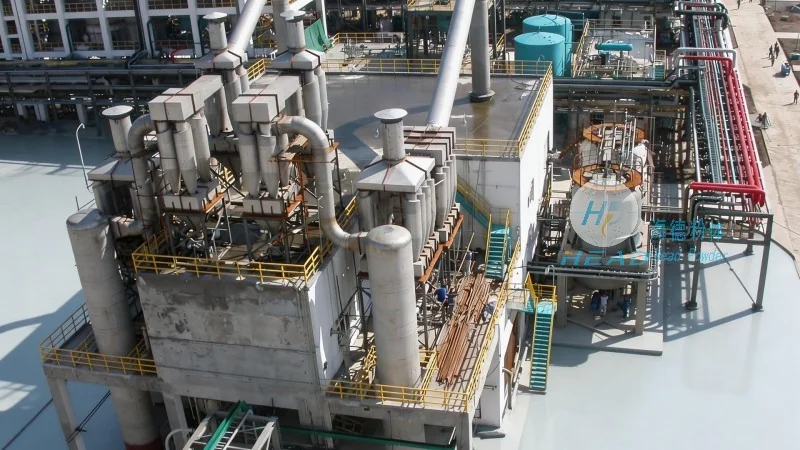
The barite material pneumatic conveying machine consists of several critical components that work in tandem to achieve efficient material transport. The main components include a hopper for material storage, a feeder to control the flow rate, a conveying line (often equipped with pressure vessels or vacuum systems), a separator to separate air and material, and a discharge unit for material collection. Each component plays a vital role in the overall system performance. The hopper is designed to hold a sufficient quantity of barite powder, ensuring a continuous feed to the feeder. The feeder, typically a rotary valve or a screw feeder, regulates the material flow into the conveying line, preventing overloading and maintaining consistent pressure. The conveying line, which can be either positive pressure or negative pressure (vacuum) system, transports the barite particles along with the air stream. The separator, often a cyclone or a bag filter, separates the barite particles from the air, allowing the material to be collected in a designated container and the air to be discharged or recycled. The discharge unit, such as a silo or a storage bin, collects the conveyed barite powder for further processing or use.
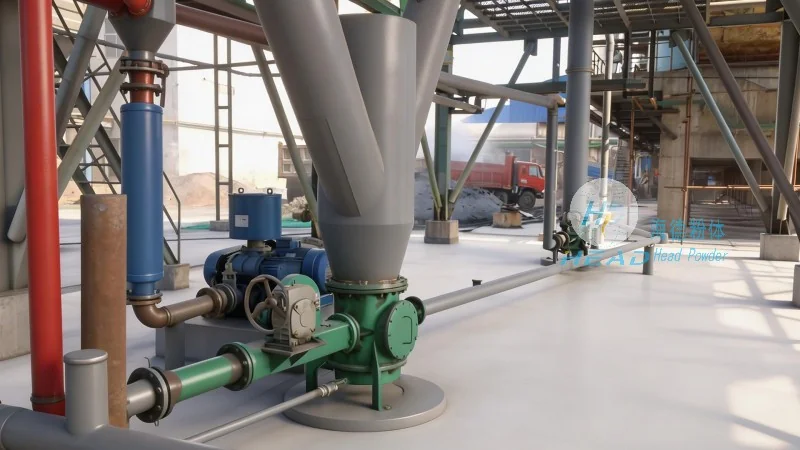
The operation process of the barite material pneumatic conveying machine involves several sequential steps that ensure smooth and efficient material transport. The process begins with the loading of barite powder into the hopper. The feeder then starts to discharge the material at a controlled rate, feeding it into the conveying line. Simultaneously, the air compressor (in a positive pressure system) or the vacuum pump (in a negative pressure system) generates the necessary air flow to move the material. The air and material mixture travels through the conveying line, with the barite particles suspended in the air stream. Upon reaching the separator, the air and material are separated, and the barite powder is collected in the discharge unit. The air, now free of particles, is either discharged to the atmosphere or recycled back into the system to improve energy efficiency. The entire process is automated, with sensors and control systems monitoring the flow rate, pressure, and material level to maintain optimal performance. The system can be adjusted to handle different barite particle sizes and flow rates, ensuring flexibility in various industrial applications.
The working principle of the barite material pneumatic conveying machine is based on the fundamental physics of fluid dynamics and particle suspension. In a positive pressure system, the air compressor increases the pressure in the conveying line, creating a high-pressure air stream that propels the barite particles forward. The barite powder is entrained in the air stream, and the velocity of the air is sufficient to keep the particles suspended, preventing them from settling or clogging the line. The pressure drop along the conveying line is carefully managed to ensure that the material reaches the destination without excessive energy consumption. In a negative pressure (vacuum) system, the vacuum pump creates a low-pressure environment at the discharge end, drawing the barite particles and air into the conveying line. The air flow is directed from the hopper towards the separator, with the barite particles being carried along by the air stream. The separation process relies on the difference in density between the barite particles and the air, with the heavier particles settling out in the separator and the air being filtered or discharged. The working principle also involves the concept of particle size and flow rate, as larger particles may require higher air velocities to remain suspended, while smaller particles can be transported at lower velocities. The system's efficiency is influenced by factors such as the air-to-material ratio, conveying distance, and the design of the hopper and feeder.
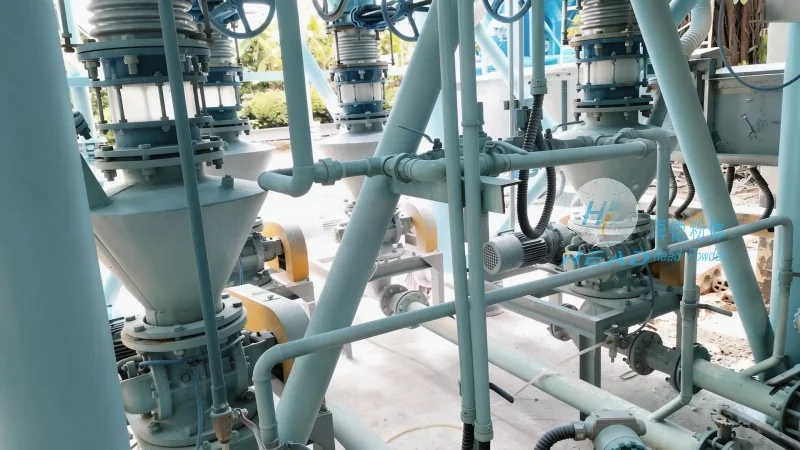
The barite material pneumatic conveying machine offers several technical advantages that make it an ideal choice for industrial applications. One of the primary advantages is the reduction of dust generation, as the material is enclosed within the conveying line, minimizing exposure to the environment and improving workplace safety. This is particularly important for barite, which can cause respiratory issues if inhaled. Another advantage is the reduction of material loss, as the system is fully enclosed, preventing spillage and ensuring that all material is transported to the destination. The system also provides flexibility in terms of conveying distance and material handling, as it can transport barite over long distances and handle varying flow rates. Additionally, the automated control systems allow for precise monitoring and adjustment of the process, ensuring consistent product quality. The applications of this equipment are diverse, including the transportation of barite from storage silos to processing plants, the feeding of barite into mixing equipment, and the delivery of barite to end-users. The system is particularly suitable for industries where dust control and material integrity are critical, such as the oil and gas industry, chemical manufacturing, and pharmaceuticals.

 Shandong Headpowder Engineering Co., Ltd.
 156-6277-7102(Manager Zhang)
  0531-83386006
  Zhangqiu District, Jinan City, Shandong Province, China
telephone
WeChatconsult
top