With more than 10‑year industry experience, Shandong Headpowder delivers full‑service pneumatic‑conveying systems and blowers, undertaking nationwide turn‑key powder‑handling projects.
Flake graphite powder, a material widely used in various industrial applications such as lubricants, refractories, and battery anodes, often requires efficient and reliable transport methods. Pneumatic conveying emerges as a key technology for handling this type of material, offering advantages in terms of safety, cleanliness, and operational flexibility. This article explores the fundamental principles of pneumatic conveying for flake graphite powder and highlights the distinctive characteristics of its working scenes, providing insights into how this technology is applied in practical industrial settings.
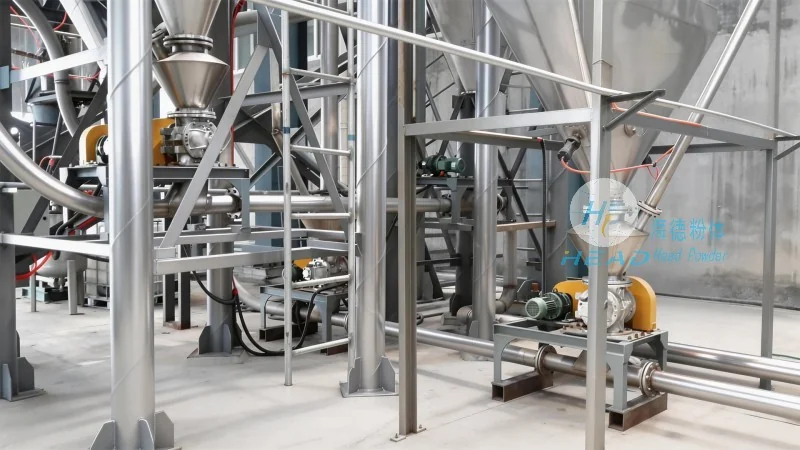
Pneumatic conveying operates by transporting solid particles through a pipeline using a gas stream, typically air or a combination of air and other gases. The process can be categorized into two main types: dilute-phase and dense-phase conveying. Dilute-phase systems rely on high-velocity air to suspend particles, moving them through the pipeline with minimal pressure drop. In contrast, dense-phase systems use lower velocities and higher pressure to push particles along, often with the aid of a positive displacement blower or compressor. For flake graphite powder, the choice between these systems depends on factors like particle size, moisture content, and the required conveying distance. The principle of fluidization is central to both types, as the gas flow must be sufficient to keep the particles in a suspended state, preventing clogging and ensuring smooth transport. Additionally, the design of the conveying system, including the inlet, pipeline diameter, and outlet, plays a critical role in optimizing performance and minimizing energy consumption.
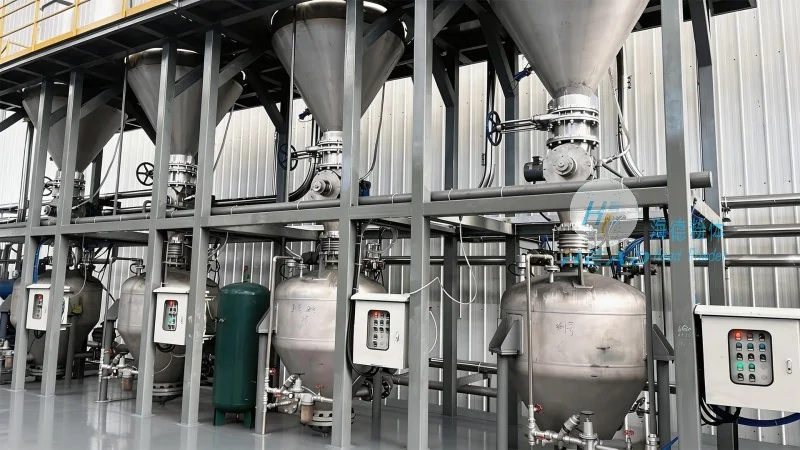
The working scenes where pneumatic conveying is applied for flake graphite powder vary significantly based on the specific industrial processes involved. In manufacturing facilities, for instance, the system may be integrated into a production line where graphite powder is transferred from storage silos to processing equipment, such as mixers or extruders. The characteristics of these scenes include high throughput requirements, often ranging from several tons per hour to tens of tons per hour, and the need for precise control over the material flow to maintain consistent product quality. Another common working scene is in mining and processing plants, where flake graphite is extracted from ore and then conveyed to refining or grinding units. Here, the system must handle larger particle sizes and potentially higher moisture content, which can affect the conveying efficiency and require additional equipment like desiccants or filters to maintain optimal conditions. Furthermore, in applications related to battery production, the conveying of flake graphite powder may occur in a cleanroom environment, where strict contamination control is essential. This necessitates the use of closed-loop systems and high-purity air to prevent particle loss and ensure the purity of the final product. The working scenes also vary in terms of the scale of operation, from small-scale laboratory setups to large-scale industrial plants, each with its own set of challenges and requirements that influence the design and implementation of the pneumatic conveying system.
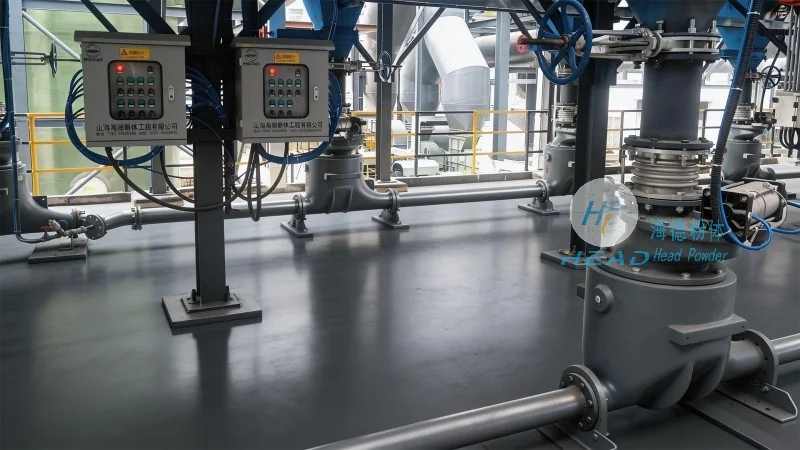
When designing a pneumatic conveying system for flake graphite powder, several key factors must be considered to ensure efficient and reliable operation. Particle properties, such as size distribution, shape, and density, are critical as they directly impact the fluidization behavior and the required air velocity. For flake graphite, which typically has a plate-like structure, the risk of particle agglomeration and blockage is higher, making it essential to incorporate features like vibration or mechanical agitation in the conveying line to maintain particle suspension. The moisture content of the powder is another important factor, as excessive moisture can lead to caking and reduced conveying efficiency. Therefore, moisture control measures, such as drying units or desiccant beds, may be integrated into the system to maintain optimal conditions. Additionally, the conveying distance and elevation changes must be carefully evaluated to determine the appropriate pressure and air volume requirements. For longer distances or significant vertical lifts, higher pressure systems or multiple stages of conveying may be necessary to overcome the resistance and maintain the flow of particles. The choice of materials for the pipeline and components is also crucial, as flake graphite can be abrasive and may cause wear on metal surfaces. Stainless steel or specialized coatings are often used to minimize wear and extend the lifespan of the equipment. Finally, the integration of the system with existing processes and the need for maintenance and monitoring capabilities are important considerations to ensure long-term reliability and operational efficiency.
Real-world applications of pneumatic conveying for flake graphite powder provide valuable insights into the technology's effectiveness and adaptability. In a lubricant manufacturing plant, for example, a dilute-phase pneumatic conveying system was implemented to transport flake graphite from a storage silo to a mixing tank. The system was designed to handle a throughput of 10 tons per hour, with a conveying distance of 50 meters. By optimizing the air velocity and pipeline diameter, the system achieved a low pressure drop and minimal particle loss, resulting in improved product consistency and reduced downtime. Another case study involves a battery anode production facility, where a dense-phase system was used to convey flake graphite to a grinding and mixing unit. The system was configured with a positive displacement blower and a closed-loop design to maintain high purity. The results showed that the system could handle larger particle sizes and higher moisture content, with the ability to adjust the conveying rate to meet production demands. These examples illustrate how pneumatic conveying can be tailored to specific industrial needs, offering solutions that enhance efficiency, reduce costs, and improve product quality. The success of these applications underscores the importance of proper system design and operation, as well as the expertise required to implement and maintain such systems effectively.
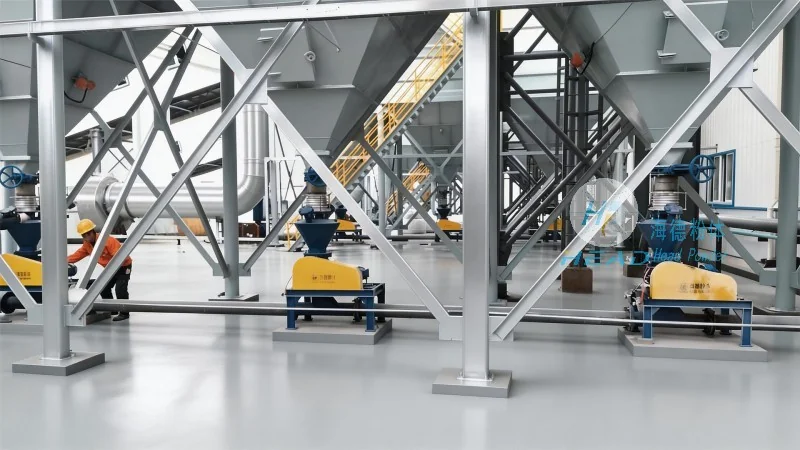
Pneumatic conveying remains a vital technology for the efficient transport of flake graphite powder in various industrial applications. The principles of fluidization and the choice between dilute-phase and dense-phase systems are fundamental to optimizing the performance of the conveying system. The working scene characteristics, including throughput requirements, particle properties, and environmental conditions, play a critical role in determining the most suitable system design. As industrial processes continue to evolve, the demand for more efficient and reliable material handling solutions will drive further advancements in pneumatic conveying technology. Future trends may include the integration of advanced control systems, such as sensors and automation, to enhance monitoring and control capabilities, as well as the development of more energy-efficient components, such as high-efficiency blowers and optimized pipeline designs. Additionally, the increasing focus on sustainability and environmental compliance may lead to the adoption of greener technologies, such as using compressed air from renewable sources or implementing recycling systems to minimize waste. For companies like Shandong HeadPowder Engineering Co., Ltd., which specializes in engineering solutions for material handling, staying at the forefront of these trends is essential to meet the evolving needs of the industry and provide innovative solutions for the transport of flake graphite powder and other materials.

 Shandong Headpowder Engineering Co., Ltd.
 156-6277-7102(Manager Zhang)
  0531-83386006
  Zhangqiu District, Jinan City, Shandong Province, China
telephone
WeChatconsult
top