With more than 10‑year industry experience, Shandong Headpowder delivers full‑service pneumatic‑conveying systems and blowers, undertaking nationwide turn‑key powder‑handling projects.
HeadPowder, a leading provider in the field of material handling solutions, specializes in the design, manufacturing, and implementation of advanced pneumatic conveying systems. This article provides an overview of BaCO3 (barium carbonate) pneumatic conveying, detailing the fundamental principles and operational mechanics of such systems.
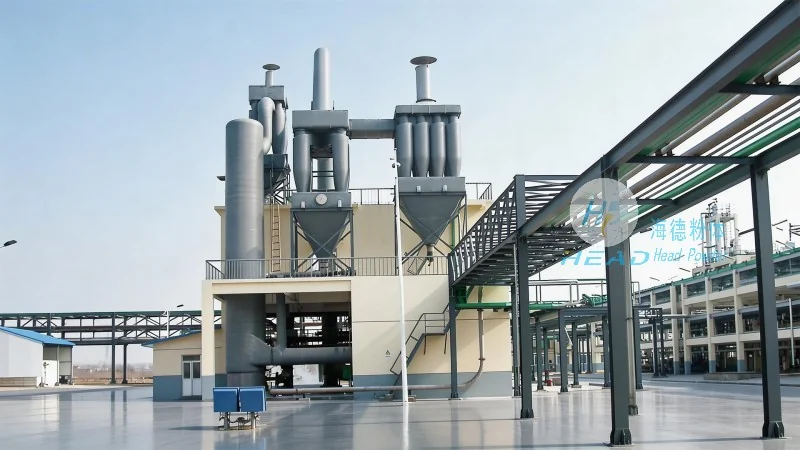
Pneumatic conveying systems are engineered to transport bulk materials through a pipeline using a pressurized air or gas stream. These systems are widely used across various industries, including chemical processing, pharmaceuticals, and food processing, due to their efficiency, flexibility, and ability to handle a wide range of materials, including powders and granules. The core components of a typical pneumatic conveying system include a material feed hopper, a conveyor line (pipeline), a pressure source (such as a blower or compressor), and a discharge mechanism.
The effectiveness of a pneumatic conveying system largely depends on its key components. The material feed hopper is responsible for storing and feeding the bulk material into the system. It often includes a rotary valve or a feeder to control the flow rate of the material. The conveyor line, typically made of stainless steel or other corrosion-resistant materials, is designed to withstand the pressure and abrasion from the conveyed material. The pressure source, which can be a positive displacement blower or a centrifugal fan, generates the necessary air or gas flow to move the material through the pipeline. Finally, the discharge mechanism, such as a rotary valve or a venturi, controls the release of the material at the destination point.
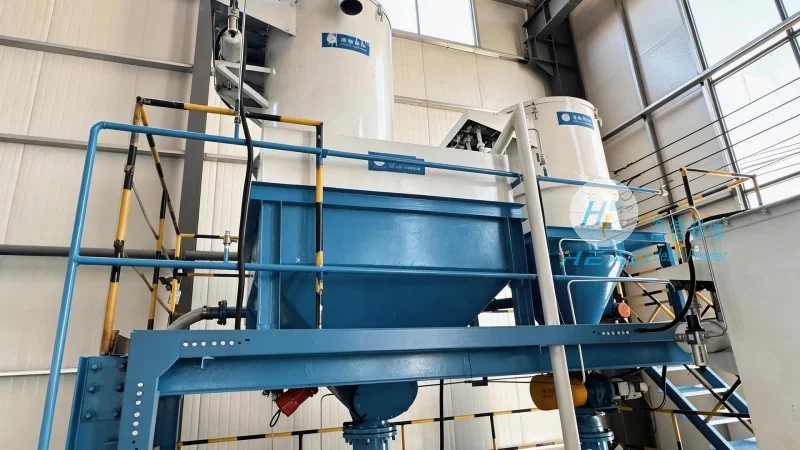
When dealing with BaCO3, a fine powder commonly used in industrial applications, special considerations are required to ensure efficient and safe operation. BaCO3 is a white crystalline powder with a relatively high density and potential for static charge accumulation. To mitigate these issues, the system design may incorporate features such as anti-static coatings on the pipeline, proper grounding, and specialized feeders to prevent material buildup and ensure smooth flow. Additionally, the material's particle size and moisture content can affect the conveying velocity and system pressure, necessitating adjustments to the air flow rate and pressure settings.
The operational principle of a pneumatic conveying system is based on the Bernoulli effect, where the pressure drop in the pipeline creates a vacuum that draws the material into the air stream. The material is then carried along the pipeline by the moving air, reaching the discharge point. The efficiency of the system is influenced by several factors, including the material's properties (density, particle size, moisture content), the conveying distance, and the system's pressure and flow rate. Proper system sizing and maintenance are crucial to ensure optimal performance and minimize energy consumption.
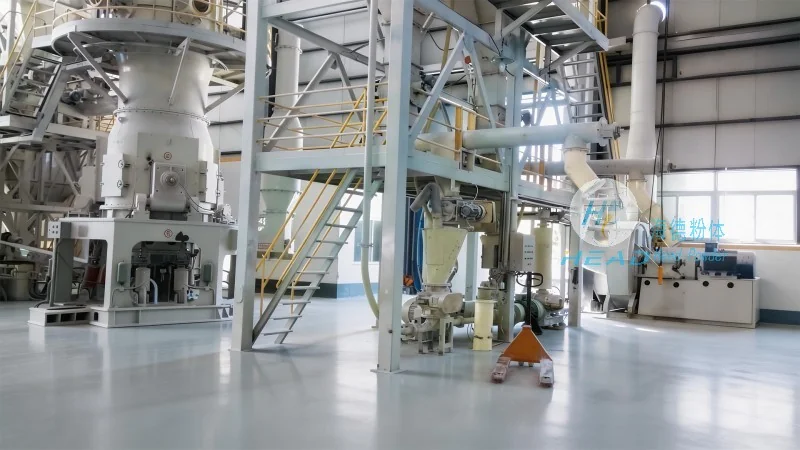
BaCO3 pneumatic conveying systems are widely used in various industrial applications, including the production of ceramics, glass, and pharmaceuticals. The benefits of using such systems include reduced labor costs, improved safety by minimizing manual handling of powders, and enhanced process control. Additionally, pneumatic conveying systems can be integrated with other processing equipment, such as mixers and reactors, to create a seamless material handling workflow. The flexibility of these systems allows for easy expansion or modification to accommodate changing production needs.
HeadPowder, with its headquarters in Shandong, China, offers comprehensive solutions for BaCO3 pneumatic conveying systems, leveraging advanced technology and engineering expertise to meet the diverse needs of industrial clients. By understanding the fundamental principles and key components of pneumatic conveying systems, and tailoring the design to the specific characteristics of BaCO3, companies can achieve efficient, reliable, and cost-effective material handling solutions.

 Shandong Headpowder Engineering Co., Ltd.
 156-6277-7102(Manager Zhang)
  0531-83386006
  Zhangqiu District, Jinan City, Shandong Province, China
telephone
WeChatconsult
top