With more than 10‑year industry experience, Shandong Headpowder delivers full‑service pneumatic‑conveying systems and blowers, undertaking nationwide turn‑key powder‑handling projects.
HeadPowder, a leading engineering company based in Shandong, China, specializes in the design and implementation of advanced pneumatic conveying systems for heavy powder applications. This article provides a detailed comparison of negative pressure and positive pressure conveying methods, highlighting their respective advantages and disadvantages to help industrial clients make informed decisions when selecting the most suitable conveying solution for their operations.
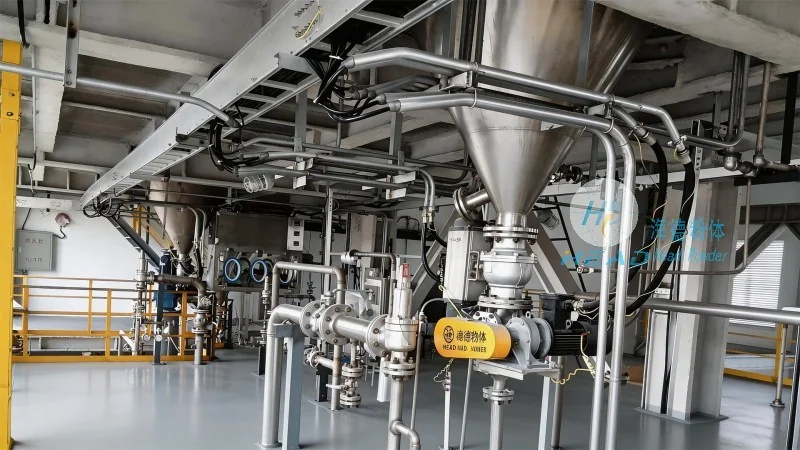
Pneumatic conveying is a method of transporting bulk materials, such as powders and granules, using a gas stream, typically air or other gases. The two primary types of pneumatic conveying systems are negative pressure (or suction) conveying and positive pressure (or pressure) conveying. Each method operates on different principles and is suited to various material characteristics and operational requirements.
Negative pressure conveying, also known as suction conveying, operates by creating a vacuum in the conveying line to draw material from the source to the destination. This method is often used for applications where material is located in a hopper or silo and needs to be transported to a processing unit or storage area. The key advantages of negative pressure conveying include effective dust control, as the system draws material into the line, minimizing the release of airborne particles. Additionally, this method is generally more energy-efficient for shorter conveying distances and can handle materials that are sensitive to pressure or temperature changes.
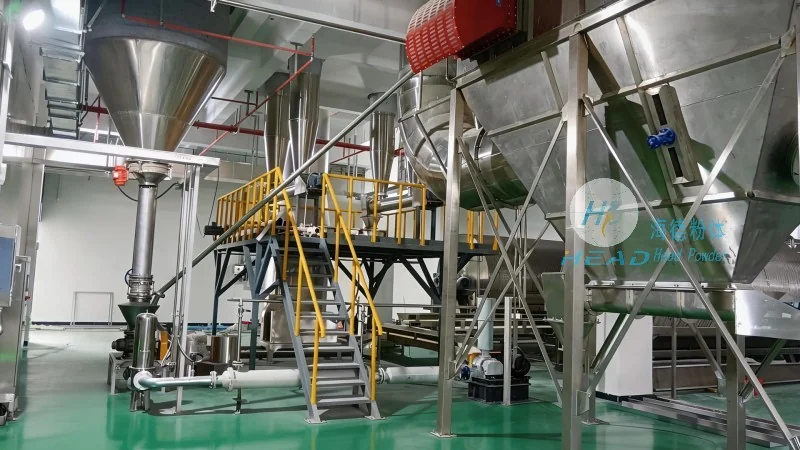
However, negative pressure conveying has limitations, particularly when dealing with heavy powders or materials that are prone to bridging or clogging. The suction force may not be sufficient to maintain a consistent flow rate, leading to uneven material transport. Moreover, the system can be more complex to maintain, as it requires careful management of the vacuum levels and the prevention of backflow or material leakage. For heavy powder applications, the risk of material degradation due to prolonged exposure to low pressure or the potential for air leakage can also be a concern.
Positive pressure conveying, or pressure conveying, works by forcing air or gas through the conveying line under pressure, pushing material from the source to the destination. This method is commonly used for longer distances and for materials that require higher flow rates or are more abrasive. The primary advantages of positive pressure conveying include its ability to handle heavy powders with higher throughput, as the pressurized air maintains a consistent flow. It is also more suitable for materials that are prone to bridging or clogging, as the pressure helps to break up agglomerates and maintain a smooth flow. Additionally, positive pressure systems are generally more straightforward to operate and maintain, as they do not require complex vacuum management.
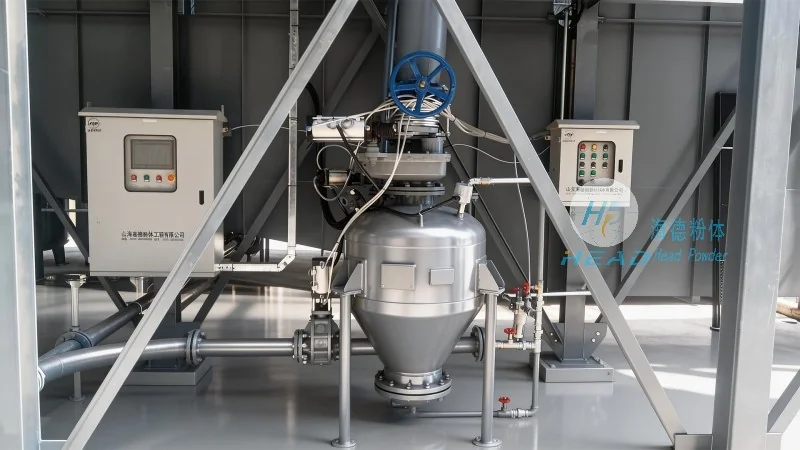
Nevertheless, positive pressure conveying has its drawbacks, especially in terms of dust control. Since the system forces air out of the line, there is a higher risk of dust emissions, which can be a significant issue in industrial environments. The energy consumption is also higher compared to negative pressure systems, as more power is required to maintain the pressure. Furthermore, for heavy powder applications, the pressure can cause material degradation, such as compaction or heat generation, which may affect the material's quality. The system also requires robust sealing to prevent air leakage and material spillage, adding to the overall complexity and cost.
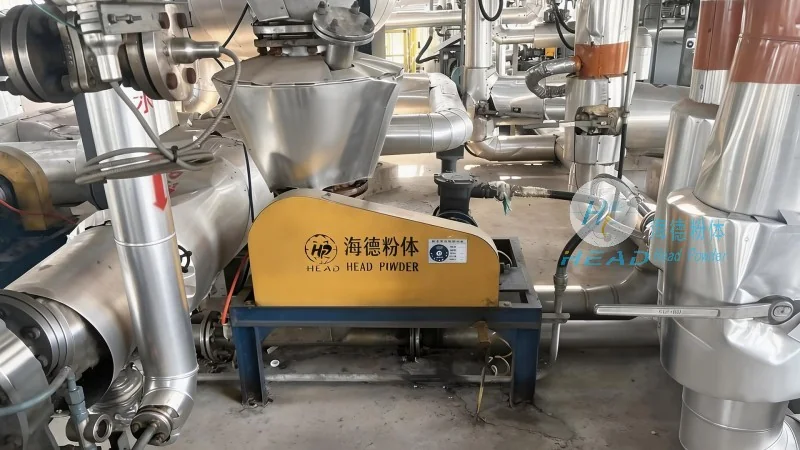
When selecting between negative and positive pressure conveying for heavy powder applications, several factors must be considered. The choice depends on the material characteristics, such as particle size, moisture content, and flowability, as well as the operational requirements, including conveying distance, throughput, and environmental regulations. For example, if the primary concern is dust control and the material is relatively light and non-abrasive, negative pressure conveying may be the preferred option. Conversely, if the application involves heavy powders with high flow rates and longer distances, positive pressure conveying is likely more suitable.
HeadPowder, with its expertise in heavy powder handling, offers customized solutions that integrate the best features of both systems. Our engineers conduct thorough material analysis and operational assessments to determine the optimal conveying method. By leveraging advanced technology and years of experience, HeadPowder ensures that clients receive efficient, reliable, and cost-effective pneumatic conveying systems tailored to their specific needs.

 Shandong Headpowder Engineering Co., Ltd.
 156-6277-7102(Manager Zhang)
  0531-83386006
  Zhangqiu District, Jinan City, Shandong Province, China
telephone
WeChatconsult
top