With more than 10‑year industry experience, Shandong Headpowder delivers full‑service pneumatic‑conveying systems and blowers, undertaking nationwide turn‑key powder‑handling projects.
Fine powder handling is a critical process in many industrial applications, from pharmaceutical manufacturing to chemical processing. Efficient and reliable conveyance of these fine materials is essential to ensure product quality, maintain process safety, and optimize operational costs. The choice of conveying method depends on various factors including the properties of the powder, the required conveying distance, and the specific application requirements. In this article, we will explore the common methods used for fine powder conveying, focusing on the technologies and solutions provided by Shandong HeadPowder Engineering Co., Ltd., a leading provider in the field.
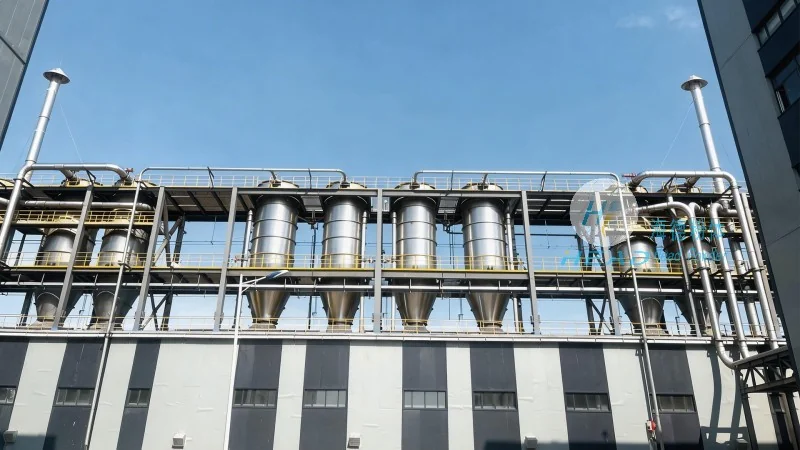
Before delving into the specific methods, it is important to understand the key factors that influence the selection of a conveying system. The properties of the fine powder, such as particle size, moisture content, and flowability, play a significant role. For example, powders with high moisture content may require different handling approaches compared to dry, free-flowing powders. The distance over which the material needs to be conveyed also impacts the choice of method, as some systems are better suited for short distances while others are designed for long-distance transport. Additionally, factors like environmental regulations, space constraints, and the need for dust control are crucial considerations. Shandong HeadPowder Engineering Co., Ltd. specializes in designing customized conveying solutions that address these specific needs, ensuring optimal performance and compliance with industry standards.
There are several common methods used for fine powder conveying, each with its own advantages and applications. The primary methods include pneumatic conveying, mechanical conveying, and hybrid systems. Pneumatic conveying uses air or other gases to transport the powder particles through a pipeline. This method is particularly effective for fine powders that are prone to caking or require dust-free handling. Shandong HeadPowder Engineering Co., Ltd. offers advanced pneumatic conveying systems, including pressure and vacuum systems, which are designed to handle a wide range of fine powders with high efficiency and minimal product degradation. The company's expertise in material properties allows them to select the most appropriate air velocity and pipeline design to ensure smooth and reliable transport.
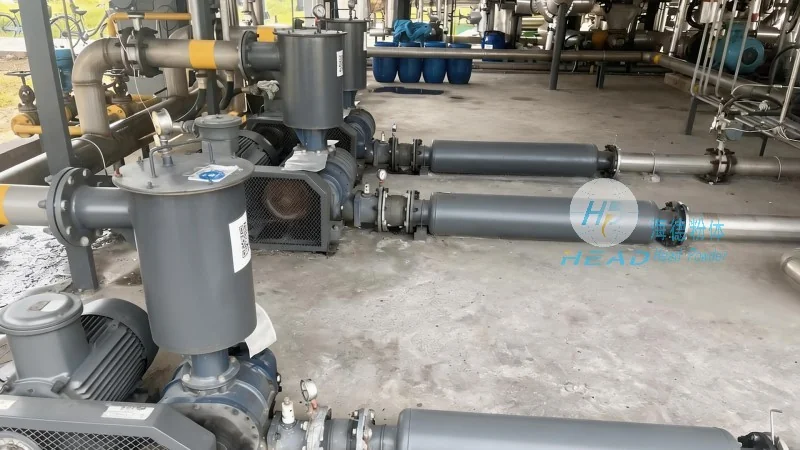
Pneumatic conveying is one of the most widely used methods for fine powder transport due to its flexibility and ability to handle a variety of materials. There are two main types of pneumatic conveying systems: pressure and vacuum. Pressure systems use compressed air to push the powder through the pipeline, while vacuum systems use a vacuum to draw the material from the source. Both systems can be further categorized into dilute-phase and dense-phase conveying. Dilute-phase systems are suitable for short to medium distances and low to medium particle sizes, while dense-phase systems are used for longer distances and larger particles, providing higher material density in the pipeline. Shandong HeadPowder Engineering Co., Ltd. provides comprehensive pneumatic conveying solutions, including the design and installation of pipelines, air compressors, and control systems. Their systems are engineered to minimize pressure drops, reduce energy consumption, and ensure consistent material flow, making them ideal for continuous production processes.
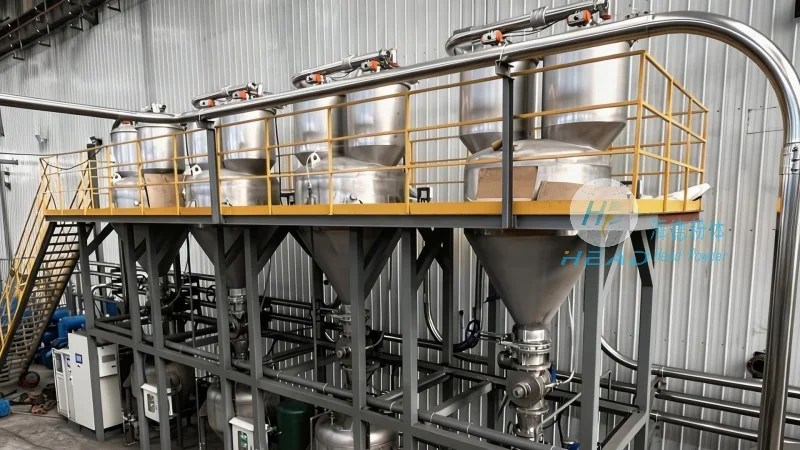
Mechanical conveying methods, such as screw conveyors, belt conveyors, and bucket elevators, are also commonly used for fine powder handling. Screw conveyors use a rotating screw to move the material along a trough, while belt conveyors use a continuous belt to transport the powder. These systems are often preferred for short to medium distances and when the powder is free-flowing. However, they may not be suitable for powders that are cohesive or prone to bridging. Shandong HeadPowder Engineering Co., Ltd. offers customized mechanical conveying solutions, including the selection of appropriate screw pitch, material of construction, and trough design to prevent material buildup and ensure smooth operation. For applications requiring vertical transport, bucket elevators are an effective choice, as they can handle fine powders with high capacity and minimal product degradation. The company's mechanical conveying systems are designed to meet the specific requirements of each application, ensuring reliable and efficient material transport.
Hybrid conveying systems combine pneumatic and mechanical methods to leverage the advantages of both. For example, a pneumatic system may be used to transport the fine powder from a storage silo to a mechanical conveyor, where it is then moved to the final destination. This approach allows for the benefits of both methods, such as the flexibility of pneumatic transport and the reliability of mechanical systems. Shandong HeadPowder Engineering Co., Ltd. specializes in designing hybrid conveying systems that integrate the best features of pneumatic and mechanical technologies. These systems are particularly useful in complex industrial settings where multiple material handling requirements need to be addressed. The company's expertise in system integration ensures that the hybrid system operates seamlessly, optimizing material flow and reducing downtime.

 Shandong Headpowder Engineering Co., Ltd.
 156-6277-7102(Manager Zhang)
  0531-83386006
  Zhangqiu District, Jinan City, Shandong Province, China
telephone
WeChatconsult
top