With more than 10‑year industry experience, Shandong Headpowder delivers full‑service pneumatic‑conveying systems and blowers, undertaking nationwide turn‑key powder‑handling projects.
For industries dealing with foamed plastic materials, efficient and reliable conveying systems are crucial for maintaining production flow and ensuring material integrity. The choice of conveying method significantly impacts operational efficiency, material handling costs, and overall process safety. Understanding the common methods used for foamed plastic conveying helps businesses select the most suitable solution based on their specific requirements and operational conditions.
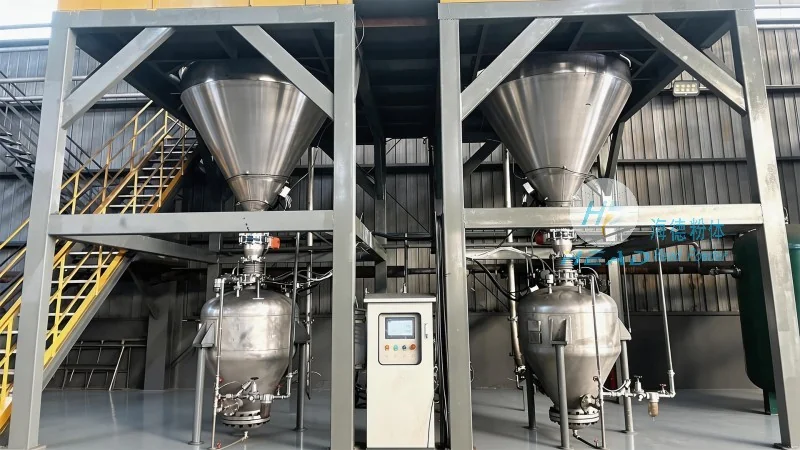
Foamed plastic materials, such as expanded polystyrene (EPS), polyethylene foam, and other lightweight, porous plastics, present unique challenges during material handling due to their low density and irregular shapes. Traditional bulk material handling methods may not be suitable for these materials, as they can lead to material degradation, dust generation, or inefficient transport. Specialized conveying systems are designed to address these challenges, ensuring that foamed plastics are moved safely and effectively from storage to processing or packaging stages.
When choosing a foamed plastic conveying method, several factors must be considered to optimize performance and cost-effectiveness. These include the material's physical properties (density, moisture content, and particle size), the required conveying distance and volume, the need for contamination control, and the available space for installation. Additionally, the system's energy consumption, maintenance requirements, and compatibility with existing production lines are critical decision points.
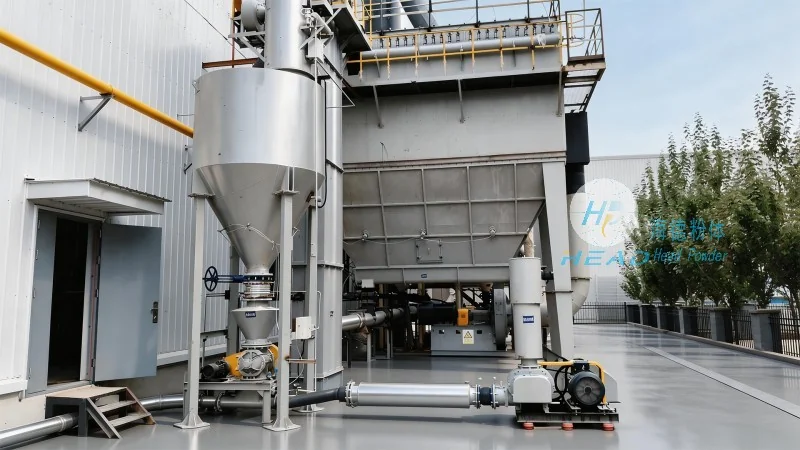
Several methods are commonly employed for the transportation of foamed plastic materials. Each method has its advantages and is suitable for different applications. The primary methods include vacuum conveying, pneumatic (air-assisted) conveying, and mechanical conveying systems.
Vacuum conveying is a widely used method for handling lightweight, low-density materials like foamed plastic. This system operates by creating a negative pressure in a collection hopper, which draws the material into a hose or pipeline. The material is then transported to a destination hopper or processing unit under controlled pressure. Vacuum conveying is particularly effective for materials that are difficult to move by gravity or mechanical means due to their low bulk density. It offers advantages such as gentle material handling, minimal dust generation, and the ability to convey materials over long distances without the need for complex infrastructure. The system typically includes a vacuum pump, collection hopper, conveying hose, and destination hopper, all designed to handle the unique characteristics of foamed plastic.
Pneumatic conveying, also known as air-assisted conveying, uses compressed air to move materials through a pipeline. In this method, the foamed plastic is fed into a hopper, and compressed air is introduced to create a flow that carries the material through the system. Pneumatic conveying can be further classified into pressure, vacuum, or a combination of both. For foamed plastic, pressure pneumatic systems are often preferred as they provide consistent material flow and can handle larger volumes. This method is suitable for applications requiring high throughput and the ability to transport materials over moderate distances. The system components include a hopper, air compressor, pipeline, and destination vessel. Pneumatic conveying is effective for materials that are not overly abrasive and can tolerate some air exposure, though special considerations are needed to prevent material degradation or dust accumulation.
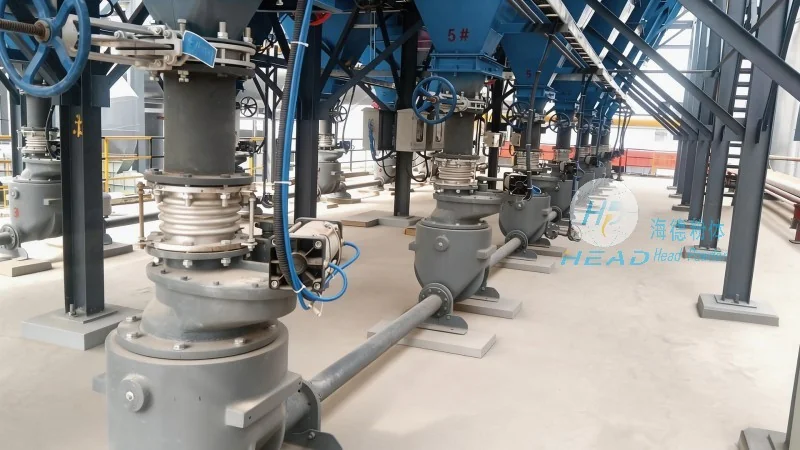
Mechanical conveying systems utilize mechanical components such as belts, screws, or buckets to move foamed plastic materials. These systems are often used for shorter conveying distances and are particularly effective when the material needs to be elevated or moved horizontally over a limited range. Screw conveyors, for example, are commonly used for foamed plastic due to their ability to handle bulk materials and maintain a consistent flow. The screw mechanism pushes the material forward through a tube, ensuring that the material is transported without excessive pressure or damage. Mechanical conveyors are generally more cost-effective for short-distance applications and can be integrated into existing production lines with minimal modifications. They are suitable for materials that are relatively uniform in size and do not require gentle handling, though they may generate more dust compared to vacuum or pneumatic systems.
The choice of conveying method for foamed plastic is often integrated with the overall production process to ensure seamless material flow. For example, in manufacturing facilities where foamed plastic is used for packaging or insulation, the conveying system may feed directly into a molding or cutting machine. The system must be designed to maintain material quality and prevent contamination, which is critical for applications requiring high purity or specific material properties. Companies like Shandong HeadPowder Engineering Co., Ltd. specialize in designing and manufacturing customized conveying solutions tailored to the unique needs of each client. Their expertise in handling foamed plastic materials ensures that the selected system optimizes operational efficiency while meeting industry standards for safety and performance.

 Shandong Headpowder Engineering Co., Ltd.
 156-6277-7102(Manager Zhang)
  0531-83386006
  Zhangqiu District, Jinan City, Shandong Province, China
telephone
WeChatconsult
top