With more than 10‑year industry experience, Shandong Headpowder delivers full‑service pneumatic‑conveying systems and blowers, undertaking nationwide turn‑key powder‑handling projects.
Efficient material handling is a critical aspect of modern corn flour processing operations. Among the various methods available, pneumatic conveying stands out as a versatile and effective solution for transporting corn flour and related powders. This technology involves the use of air to move materials through a pipeline system, offering advantages such as reduced contamination, improved safety, and enhanced process control. Understanding the nuances of different pneumatic conveying modes is essential for optimizing production efficiency and ensuring product quality. This article provides a detailed analysis of corn flour pneumatic conveying technology, focusing on the comparison between positive and negative pressure modes.
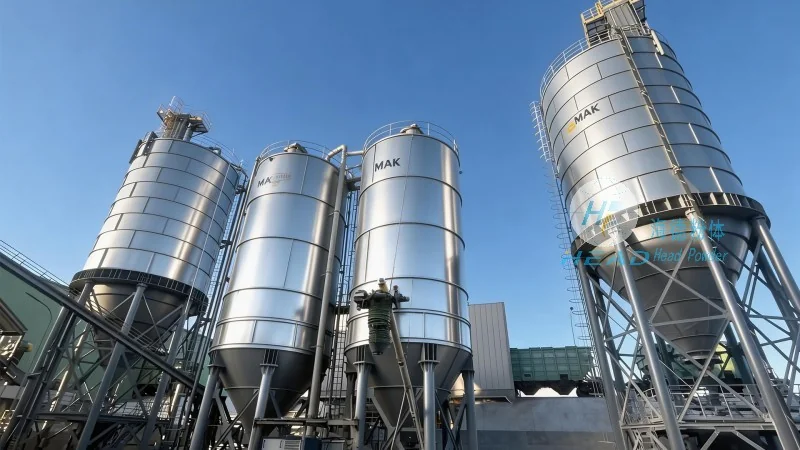
Pneumatic conveying systems are widely utilized in the corn flour industry due to their ability to handle fine powders like corn flour without the need for mechanical components that might cause contamination or product degradation. These systems operate by creating a pressure differential to move materials through a pipeline. The choice between positive and negative pressure modes depends on factors such as material characteristics, system layout, and operational requirements. Both modes have distinct advantages and limitations, making it crucial for processors to select the appropriate system for their specific needs.
Positive pressure systems, also known as pressure conveying, operate by pressurizing the conveying line with air or a gas mixture. The pressure is maintained above atmospheric pressure, which forces the corn flour particles through the pipeline. This mode is particularly effective for long-distance or high-rise applications, as it can maintain consistent flow rates and pressure levels over extended distances. The primary advantage of positive pressure systems is their ability to handle abrasive or sticky materials without significant wear on the system components. Additionally, they are well-suited for applications where the receiving hopper or silo is located at a higher elevation than the source material.
In a positive pressure system, a blower or compressor generates the necessary pressure, and the material is drawn from the source hopper into the conveying line. The system typically includes a hopper, a rotary valve for material feed, a filter to remove dust from the exhaust air, and a receiver where the corn flour is deposited. The pressure differential ensures that the material moves smoothly through the pipeline, minimizing the risk of blockages or clogging. However, positive pressure systems may require more robust equipment and higher energy consumption compared to negative pressure systems, especially for large-scale operations.
Negative pressure systems, or vacuum conveying, operate by creating a vacuum in the conveying line, which draws the corn flour particles from the source into the pipeline. The system uses a vacuum pump to maintain the pressure below atmospheric levels, pulling the material through the line. This mode is ideal for applications where the source material is located at a higher elevation than the receiving point, as the vacuum helps to lift the material downward. Negative pressure systems are often preferred for short-distance conveying or when the material is sensitive to high pressures, as they operate at lower pressures compared to positive pressure systems.
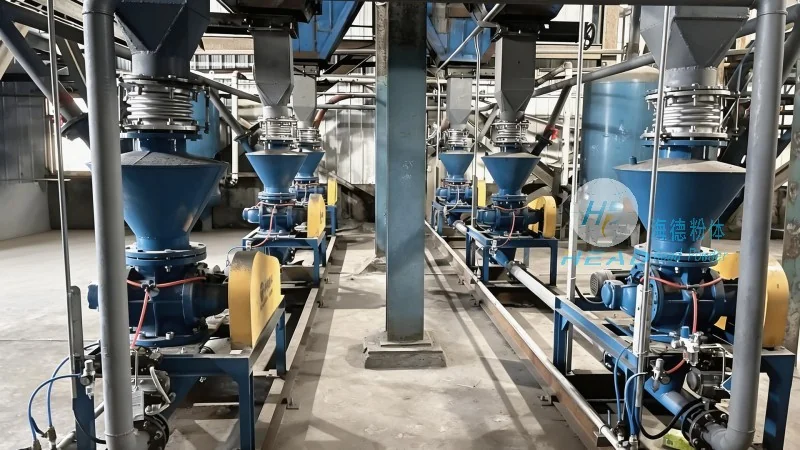
A negative pressure system typically includes a vacuum pump, a hopper with a rotary valve, a filter to capture dust from the intake air, and a receiver where the corn flour is collected. The vacuum is maintained by the pump, which draws air and material from the source and transports them to the receiver. The system is generally more energy-efficient for short distances but may struggle with long-distance or high-rise applications due to the limitations of maintaining a consistent vacuum over extended pipelines. Additionally, negative pressure systems may be more susceptible to clogging if the material is fine or has high moisture content, as the low pressure can cause particles to settle and block the line.
When evaluating the suitability of positive versus negative pressure pneumatic conveying for corn flour applications, several key factors must be considered. The primary difference lies in the direction of material flow and the pressure differential. Positive pressure systems push material through the line, while negative pressure systems pull material. This fundamental difference impacts system design, energy consumption, and operational efficiency.
Energy consumption is a significant consideration. Positive pressure systems generally require more energy to maintain the higher pressure levels, especially for long-distance conveying. Negative pressure systems are more energy-efficient for short distances but may consume more energy for long runs due to the need to maintain a consistent vacuum. The choice of system also affects the equipment required; positive pressure systems may need larger blowers or compressors, while negative pressure systems rely on vacuum pumps.
Material characteristics play a crucial role in system selection. For corn flour, which is a fine powder, positive pressure systems are often preferred because they can handle abrasive particles without excessive wear. However, if the corn flour contains high moisture content or is prone to clogging, negative pressure systems may be more suitable due to their lower pressure levels, which reduce the risk of particle agglomeration. The system layout and available space also influence the choice; positive pressure systems are better suited for horizontal or slightly inclined pipelines, while negative pressure systems can handle vertical or inclined pipelines more effectively.
Implementing an effective pneumatic conveying system for corn flour processing requires careful consideration of several technical and operational factors. The first step is to assess the specific characteristics of the corn flour, including particle size, moisture content, and flowability. These properties will determine the appropriate conveying velocity and system design. For example, finer particles may require higher conveying velocities to prevent clogging, while coarser particles can be handled at lower velocities.
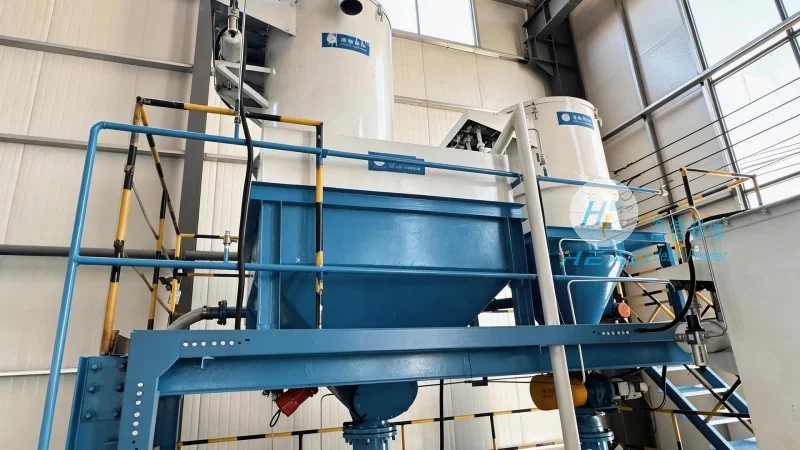
The system layout is another critical factor. The distance between the source and receiving points, the elevation difference, and the number of turns or bends in the pipeline all impact the choice of pressure mode and equipment. For long horizontal runs, positive pressure systems are often more reliable, while for vertical lifts or short horizontal runs, negative pressure systems may be sufficient. The choice of equipment, such as the blower or vacuum pump, must be matched to the system's capacity and pressure requirements to ensure optimal performance.
Maintenance and operational costs are also important considerations. Positive pressure systems may require more frequent maintenance due to the higher pressures and potential for wear on components, while negative pressure systems may have lower maintenance needs but higher energy costs for vacuum maintenance. The overall cost of ownership, including initial investment, energy consumption, and maintenance, should be evaluated to determine the most cost-effective solution for the corn flour processing operation.
Pneumatic conveying technology offers significant benefits for corn flour processing, enabling efficient and clean material handling. The choice between positive and negative pressure modes depends on the specific requirements of the operation, including material characteristics, system layout, and operational constraints. Positive pressure systems are generally more suitable for long-distance or high-rise applications and can handle abrasive materials effectively, while negative pressure systems are ideal for short distances and sensitive materials. By carefully evaluating these factors and selecting the appropriate system, corn flour processors can optimize their production efficiency, improve product quality, and reduce operational costs.
Shandong HeadPowder Engineering Co., Ltd., a leading provider of pneumatic conveying solutions, specializes in designing and manufacturing customized systems tailored to the unique needs of corn flour processing facilities. With years of experience in the industry, the company offers expert consultation and high-quality equipment to ensure optimal performance and reliability. Based in Shandong, China, HeadPowder Engineering is committed to delivering innovative solutions that enhance the efficiency and productivity of corn flour processing operations worldwide.

 Shandong Headpowder Engineering Co., Ltd.
 156-6277-7102(Manager Zhang)
  0531-83386006
  Zhangqiu District, Jinan City, Shandong Province, China
telephone
WeChatconsult
top