With more than 10‑year industry experience, Shandong Headpowder delivers full‑service pneumatic‑conveying systems and blowers, undertaking nationwide turn‑key powder‑handling projects.
HeadPowder, a leading provider of engineering solutions in the field of bulk material handling, specializes in the design, manufacturing, and installation of pneumatic conveying systems for dry powders. This article delves into the operation process and working principle of such systems, offering insights into how these technologies efficiently transport dry powders in industrial applications.
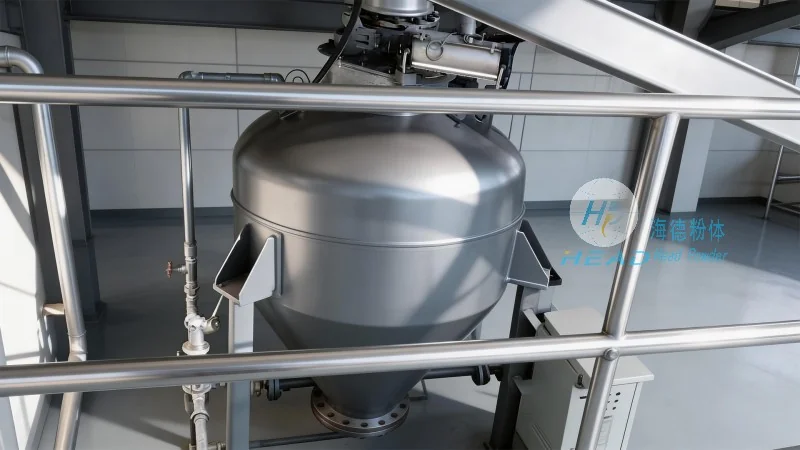
Pneumatic conveying systems are widely used in various industries, including pharmaceuticals, food processing, chemicals, and minerals, to transport dry powders and bulk materials from one location to another. These systems operate by using a gas stream, typically air or other gases, to move the material through a pipeline. The primary advantage of pneumatic conveying is its ability to handle materials that are difficult to transport using traditional methods, such as those with high moisture content, abrasive properties, or those that are prone to caking or segregation.
HeadPowder, with its headquarters in Shandong, China, is dedicated to delivering high-quality pneumatic conveying solutions tailored to the specific needs of its clients. The company leverages advanced engineering expertise and state-of-the-art technology to design systems that ensure efficient, reliable, and cost-effective material transport. By focusing on innovation and customer satisfaction, HeadPowder has established itself as a trusted partner in the bulk material handling industry.
The core of a pneumatic conveying system lies in its working principle, which involves the creation of a pressure differential to move the material. In a typical system, the dry powder is introduced into a hopper or feeder, where it is then drawn into a pipeline by a vacuum or pressure source. The gas stream, often supplied by a blower or compressor, propels the powder through the pipeline, ensuring that the material is transported without the need for mechanical components like belts or buckets.
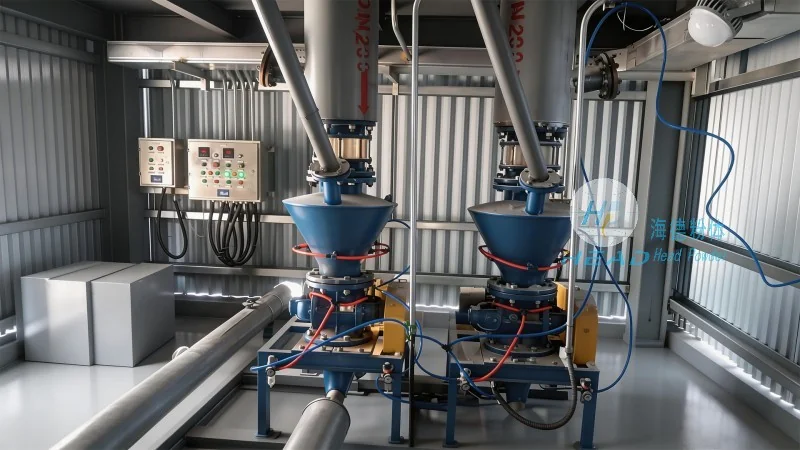
The operation process of a pneumatic conveying system for dry powders typically involves several key steps. First, the dry powder is stored in a hopper or silo, from which it is fed into the system. The feeder then controls the flow rate of the material into the pipeline. Next, the gas stream is generated by a blower or compressor, creating the necessary pressure or vacuum to move the powder. The material is then conveyed through the pipeline to the destination point, such as a storage tank or processing unit. Finally, the system is equipped with control mechanisms to regulate the flow rate, pressure, and other parameters to ensure optimal performance and safety.
Several critical components are integral to the operation of a pneumatic conveying system for dry powders. These include the hopper or feeder, which stores and feeds the material; the blower or compressor, which generates the gas stream; the pipeline, which transports the material; and the control system, which regulates the operation. Each component plays a vital role in ensuring the system operates efficiently and reliably. For example, the feeder ensures a consistent flow of material, while the blower provides the necessary pressure or vacuum to move the powder. The pipeline must be designed to handle the specific characteristics of the dry powder, such as its density, particle size, and flowability.
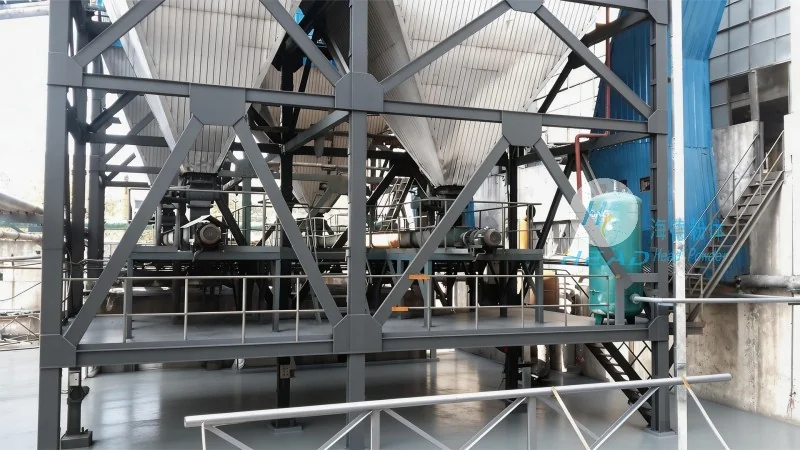
Pneumatic conveying systems offer numerous advantages when transporting dry powders. These include the ability to handle a wide range of materials, including those with high moisture content or abrasive properties. The systems are also relatively simple to install and maintain, with fewer moving parts compared to traditional mechanical systems. Additionally, pneumatic conveying can be designed to operate in a closed system, minimizing dust emissions and improving safety in the workplace. The flexibility of these systems allows them to be adapted to various industrial applications, making them a preferred choice for many industries.
The applications of pneumatic conveying systems for dry powders are diverse and widespread. In the pharmaceutical industry, these systems are used to transport active pharmaceutical ingredients (APIs) and excipients with high precision and minimal contamination. In the food processing industry, they are used to transport ingredients like flour, sugar, and spices, ensuring that the products remain fresh and free from contamination. In the chemical industry, pneumatic conveying is used to transport various chemicals, including powders and granules, with high efficiency and safety. The versatility of these systems makes them suitable for a wide range of industrial applications, from small-scale operations to large-scale manufacturing facilities.
HeadPowder's expertise in pneumatic conveying systems for dry powders is evident in the efficient and reliable solutions they provide to their clients. By understanding the operation process and working principle of these systems, industries can leverage the benefits of pneumatic conveying to improve their material handling processes. With a focus on innovation and customer satisfaction, HeadPowder continues to be a leader in the bulk material handling industry, offering high-quality solutions that meet the evolving needs of modern industrial applications.

 Shandong Headpowder Engineering Co., Ltd.
 156-6277-7102(Manager Zhang)
  0531-83386006
  Zhangqiu District, Jinan City, Shandong Province, China
telephone
WeChatconsult
top