With more than 10‑year industry experience, Shandong Headpowder delivers full‑service pneumatic‑conveying systems and blowers, undertaking nationwide turn‑key powder‑handling projects.
For detailed information on the operation process and working principle of automatic quantitative powder pneumatic conveying systems, please refer to the following professional analysis provided by Shandong HeadPowder Engineering Co., Ltd., a leading manufacturer in the field of powder handling technology.
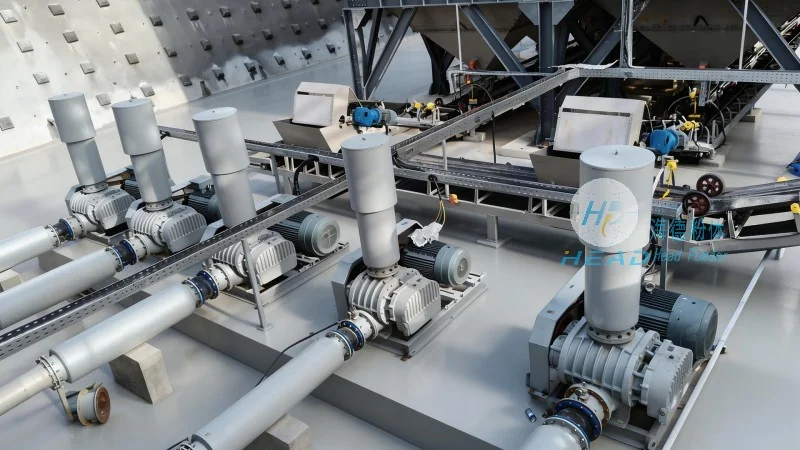
Automatic quantitative powder pneumatic conveying systems are advanced industrial solutions designed to efficiently transport and meter powders and bulk materials through a pneumatic system. These systems are widely used in various industries, including pharmaceuticals, food processing, chemical manufacturing, and more, due to their ability to handle delicate materials with precision and minimal product degradation. The core of such systems lies in the integration of automated control mechanisms, precise metering devices, and robust pneumatic conveying technology to ensure consistent and reliable material transfer.
The automatic quantitative powder pneumatic conveying system consists of several critical components that work in tandem to achieve efficient operation. These components include a hopper or storage silo for material storage, a feeder or metering device to control the flow rate of the powder, a conveying line (typically made of stainless steel or other corrosion-resistant materials) to transport the material, a vacuum or pressure source to generate the conveying air, and a receiver or discharge hopper at the destination. Each component plays a vital role in the overall performance and reliability of the system.
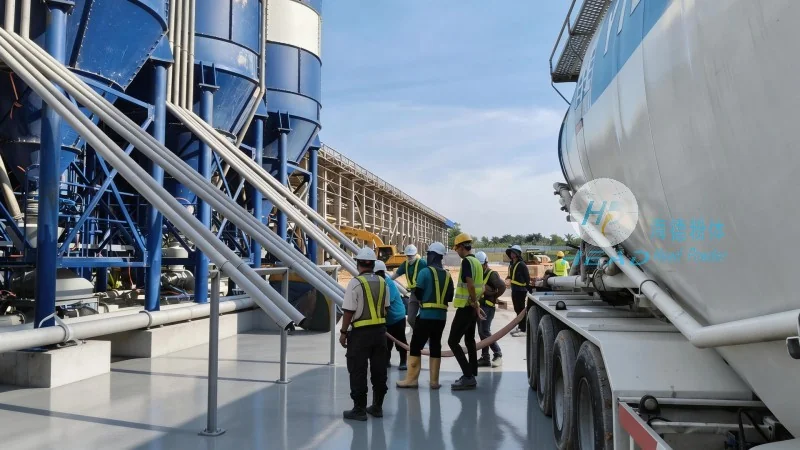
The working principle of the automatic quantitative powder pneumatic conveying system is based on the movement of powder particles through a conveying medium, usually air. The process begins with the material being fed from the storage hopper into the metering device. The metering device, often an auger feeder or a rotary valve, precisely controls the flow rate of the powder, ensuring that the correct quantity is conveyed to the next stage. Simultaneously, the conveying air is generated by a vacuum pump or a blower, which creates a pressure differential between the source and the destination. This pressure differential propels the powder particles through the conveying line, where they are suspended and transported as a slurry or dilute phase flow. The air and powder mixture then reaches the receiver, where the powder is separated from the air through a cyclone or filter system, and the air is either recirculated or discharged.
The operation process of the automatic quantitative powder pneumatic conveying system involves several sequential steps that ensure smooth and controlled material transfer. The first step is the preparation phase, where the material is loaded into the storage hopper and the system is checked for proper operation. The second step is the start-up phase, where the vacuum or pressure source is activated, and the metering device begins to feed the powder into the conveying line. The third step is the conveying phase, where the powder is transported from the source to the destination under the influence of the air flow. The fourth step is the discharge phase, where the powder is collected in the receiver and the system is prepared for the next batch. The final step is the shutdown phase, where the system is turned off, and the conveying line is cleaned to prevent material buildup.
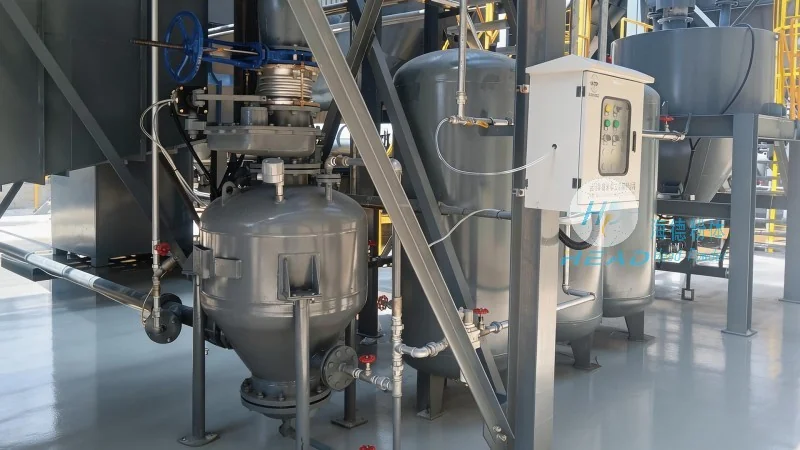
Automatic quantitative powder pneumatic conveying systems offer numerous advantages over traditional mechanical conveying methods. These advantages include improved material handling efficiency, reduced product contamination, enhanced safety due to enclosed systems, and the ability to handle a wide range of powder characteristics, including fine, cohesive, or abrasive materials. The automated control features of these systems also contribute to increased operational consistency and reduced labor costs, making them a cost-effective solution for industrial applications.
The automatic quantitative powder pneumatic conveying systems manufactured by Shandong HeadPowder Engineering Co., Ltd. are suitable for a variety of applications across different industries. In the pharmaceutical industry, these systems are used to transport active pharmaceutical ingredients (APIs) and excipients with high precision and minimal contamination. In the food processing industry, they are employed to handle powders such as flour, sugar, and spices, ensuring product quality and safety. In the chemical manufacturing industry, they are used to convey raw materials and intermediates, supporting efficient production processes. Additionally, these systems are utilized in the cosmetics and personal care industry for the handling of powders like pigments and fillers.
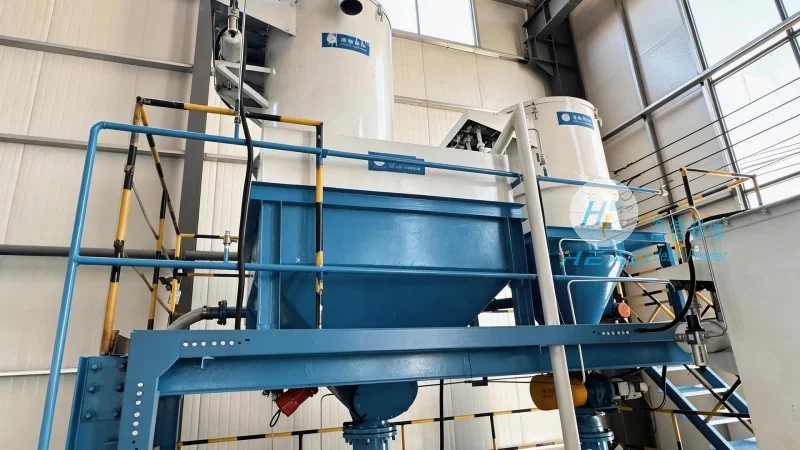
To ensure the long-term performance and reliability of the automatic quantitative powder pneumatic conveying system, regular maintenance is essential. This includes cleaning the conveying line and components to prevent material buildup, checking the condition of the metering device and air source, and inspecting the seals and connections for any signs of wear or damage. Common troubleshooting issues may include blockages in the conveying line, variations in the powder flow rate, or air leaks, which can be addressed by following the manufacturer's guidelines and performing routine checks.
Automatic quantitative powder pneumatic conveying systems are sophisticated industrial solutions that combine advanced technology with precise control to achieve efficient and reliable material transfer. The operation process and working principle of these systems, as explained by Shandong HeadPowder Engineering Co., Ltd., involve the integration of key components and the application of pneumatic conveying principles to handle powders with accuracy and minimal product degradation. With their numerous advantages and wide range of applications, these systems are an essential part of modern industrial operations, contributing to increased productivity and product quality.

 Shandong Headpowder Engineering Co., Ltd.
 156-6277-7102(Manager Zhang)
  0531-83386006
  Zhangqiu District, Jinan City, Shandong Province, China
telephone
WeChatconsult
top