With more than 10‑year industry experience, Shandong Headpowder delivers full‑service pneumatic‑conveying systems and blowers, undertaking nationwide turn‑key powder‑handling projects.
HeadPowder, a leading manufacturer based in Shandong, China, specializes in the design and production of advanced dust-free material feeding and conveying systems. These systems are engineered to handle a wide range of powders and bulk materials with precision and efficiency, ensuring minimal contamination and optimal performance in industrial applications. The following sections detail the operational process and underlying principles of such systems, highlighting key components and their functions.
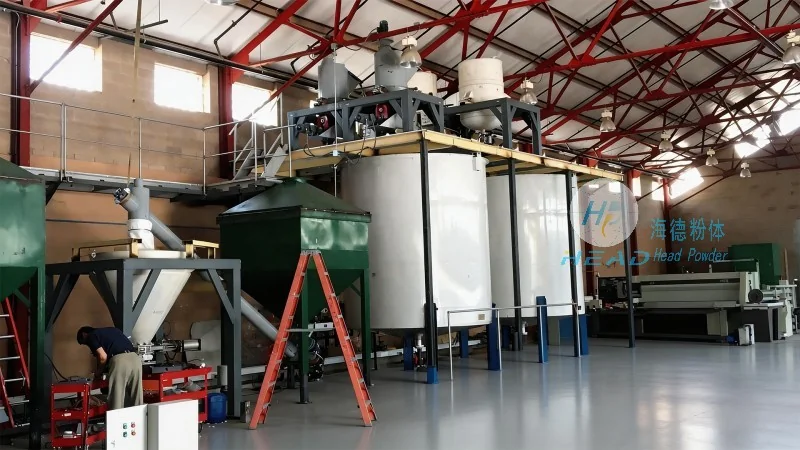
The dust-free material feeding and conveying system typically consists of several core components that work in tandem to achieve seamless material handling. The primary elements include a hopper for material storage, a feeder mechanism to control the flow rate, a conveyor system for transporting the material, and a dust collection unit to maintain a clean environment. Each component is designed with precision to ensure that the material is handled gently, preventing degradation or agglomeration, while maintaining a high level of cleanliness throughout the process.
The operation begins with the material being fed into the system's hopper. The hopper is usually made of stainless steel or other corrosion-resistant materials to accommodate various types of powders, such as chemicals, pharmaceuticals, or food products. A rotary valve or a vibratory feeder is then used to regulate the flow of material from the hopper into the conveyor. The feeder is equipped with adjustable speed controls, allowing operators to fine-tune the material discharge rate based on the specific requirements of the downstream process. This step is crucial as it determines the uniformity of material flow and prevents overloading or underloading of the conveyor.
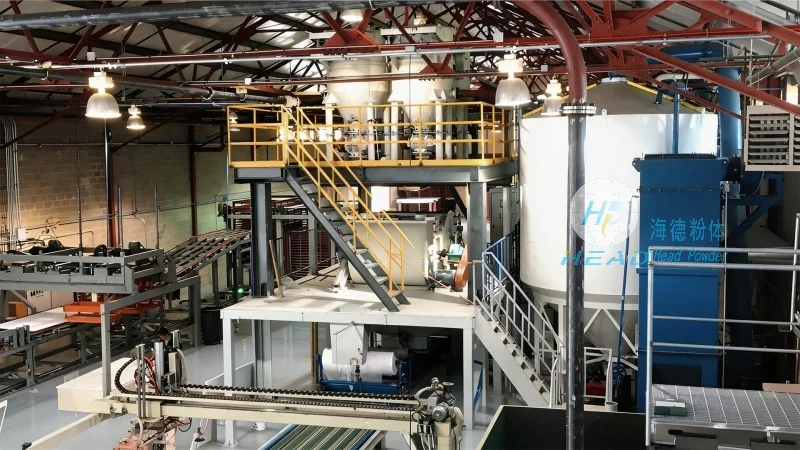
Once the material is fed into the conveyor, the system employs a dust-free conveying method, often using a pneumatic or mechanical conveyor. The mechanical conveyor, such as a screw or belt conveyor, is enclosed in a sealed housing to prevent dust from escaping into the environment. The screw conveyor, for instance, consists of a rotating screw inside a tube, which pushes the material forward. The rotation speed of the screw is controlled to maintain a consistent material velocity, ensuring that the material is transported without breakage or segregation. The pneumatic conveyor, on the other hand, uses compressed air to transport the material through a pipeline. This method is particularly effective for fine powders and can achieve high transport speeds while maintaining a dust-free environment.
A critical aspect of the dust-free system is the integrated dust collection unit. This unit is designed to capture any airborne particles that may be generated during the feeding and conveying process. The system typically includes a filter or a cyclone separator that removes dust from the air before it is released into the environment. The collected dust is then returned to the hopper or disposed of according to regulatory requirements. This feature not only ensures compliance with environmental standards but also maintains a safe working environment for personnel.
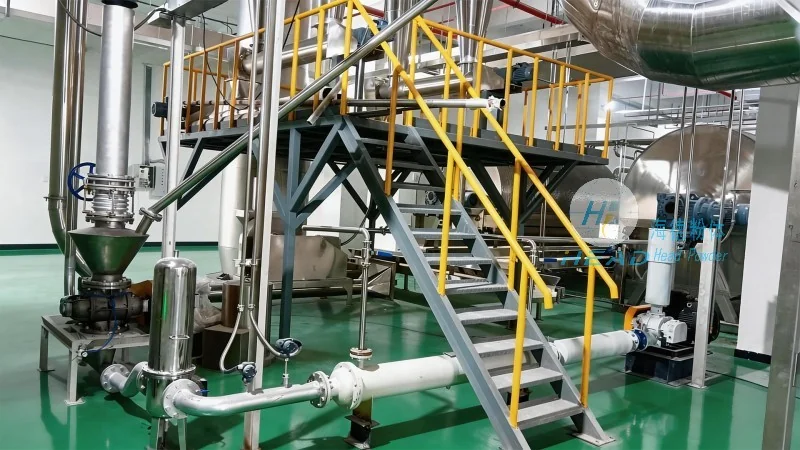
Modern dust-free material feeding and conveying systems are often integrated with automation controls to enhance operational efficiency and reliability. The system may include sensors to monitor material levels in the hopper, conveyor speed, and dust levels in the air. These sensors feed data to a control panel, which can automatically adjust the feeder speed or activate the dust collection unit as needed. This automation minimizes human intervention, reduces the risk of errors, and ensures consistent performance over extended periods. The system can also be connected to a central control system, allowing for remote monitoring and management from a central location.
The dust-free material feeding and conveying systems from HeadPowder are widely used in industries such as pharmaceuticals, food processing, chemicals, and cosmetics. The primary benefits of these systems include improved product quality through reduced contamination, enhanced safety by minimizing dust exposure, and increased operational efficiency through precise material control. The systems are also designed for easy maintenance and cleaning, ensuring that they can be quickly restored to operational status after maintenance activities. By leveraging advanced engineering and materials, HeadPowder's systems provide reliable and cost-effective solutions for material handling needs in various industrial settings.

 Shandong Headpowder Engineering Co., Ltd.
 156-6277-7102(Manager Zhang)
  0531-83386006
  Zhangqiu District, Jinan City, Shandong Province, China
telephone
WeChatconsult
top