With more than 10‑year industry experience, Shandong Headpowder delivers full‑service pneumatic‑conveying systems and blowers, undertaking nationwide turn‑key powder‑handling projects.
Intelligent powder bulk material pneumatic conveying systems represent a sophisticated approach to handling and transporting dry powders in industrial settings. These systems are designed to enhance efficiency, accuracy, and safety in material transfer processes, particularly in applications requiring precise batching and controlled flow of powders. The operation process and working principle of such systems involve a series of interconnected components working in harmony to achieve reliable and consistent material movement, as developed by Shandong HeadPowder Engineering Co., Ltd. from China.
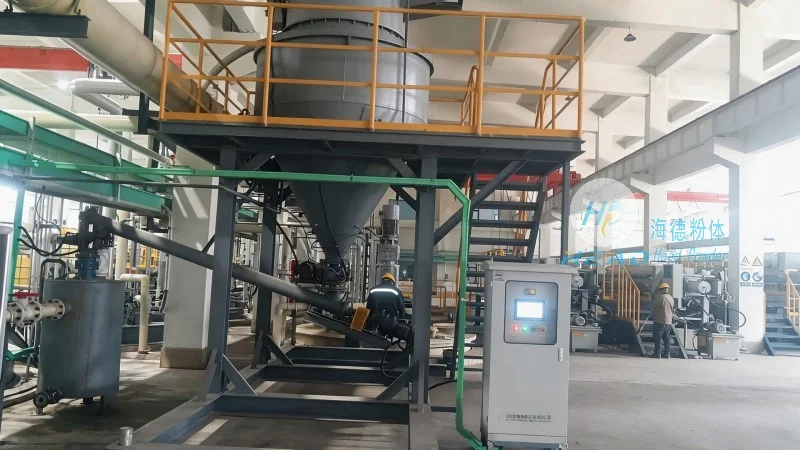
The core of intelligent powder bulk material pneumatic conveying lies in a network of components that collaborate to manage powder flow. This includes hoppers for storage, feeding mechanisms to control discharge rate, air compressors to generate conveying pressure, and pipeline networks. Advanced control systems are integrated to enable real-time monitoring and adjustment of parameters, ensuring optimal performance and minimizing downtime.
The system's performance depends on the functionality of its key components. Material hoppers store powders under controlled conditions to prevent degradation. Feeding devices—such as screw feeders, rotary valves, or vibrating feeders—regulate material flow from the hopper into the conveying line, maintaining consistent feed rates. Air compressors serve as the power source, generating compressed air to propel powder particles through the pipeline. Compressor type (rotary lobe, screw, or centrifugal) is selected based on material characteristics and conveying distance requirements.
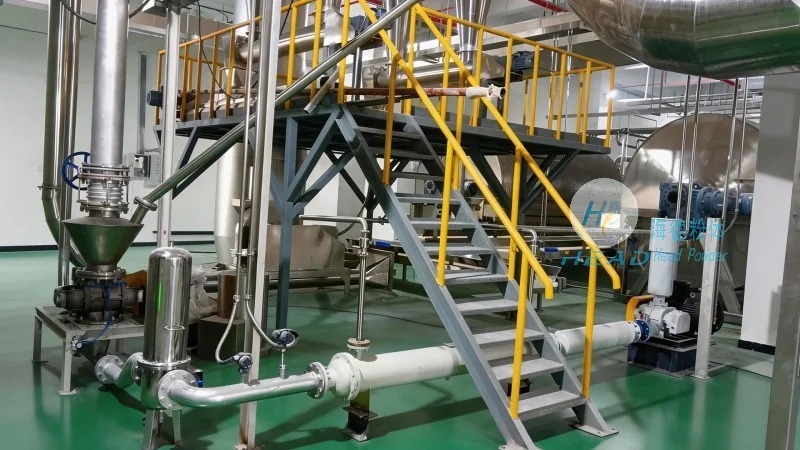
The operation process follows a sequence to ensure smooth material transfer. Initially, powders are stored in hoppers. When activated, the feeding device discharges material at a pre-set rate while the air compressor supplies compressed air to the pipeline. This creates a pressure differential that propels powder particles forward through the pipeline, which may include bends, elbows, or vertical sections. At the receiving end, a separator or cyclone separates powder from air, depositing material into the target container. The air, now free of powder, is filtered and recirculated or vented, depending on design and regulations.
The working principle is based on fluid dynamics and particle suspension. Compressed air creates a high-velocity flow that entrains powder particles, lifting them from the hopper and transporting them through the pipeline. Maintaining the powder in a suspended state requires controlling air pressure, flow rate, and pipeline dimensions. The control system continuously monitors pressure, flow rate, and material levels, adjusting feeding rate or air supply as needed to maintain optimal conditions. This dynamic adjustment ensures efficiency even with varying material properties or load conditions.
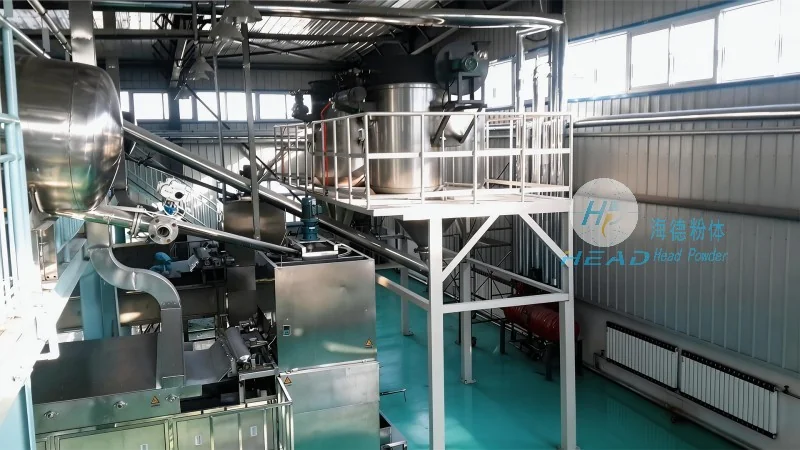
Intelligent systems offer advantages over traditional mechanical conveying. They reduce equipment wear and tear, as there are no moving parts in direct contact with powder, minimizing contamination risk. The system provides precise batching and dosing control, critical in industries like pharmaceuticals and food processing. Enclosed pipeline design prevents dust emissions, enhancing workplace safety and regulatory compliance. Advanced control systems improve reliability with real-time monitoring and automated adjustments, minimizing downtime and maximizing productivity.
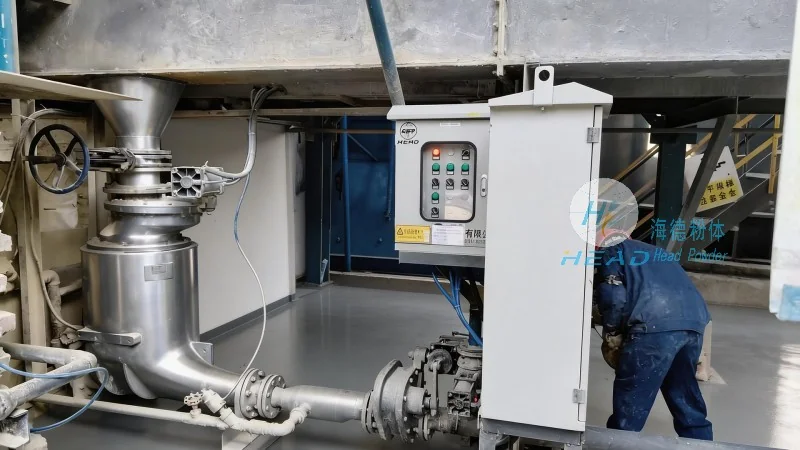
Intelligent powder pneumatic conveying systems are widely used across industries. In pharmaceuticals, they transport active pharmaceutical ingredients (APIs) and excipients with high precision, ensuring product quality and regulatory compliance. In the food industry, they handle powders like flour and spices, maintaining product integrity. The chemical industry uses them for bulk chemicals, while the minerals processing sector handles ores and concentrates. The ability to handle diverse powder types and sizes, combined with system flexibility and control capabilities, makes it ideal for modern manufacturing.
Intelligent powder bulk material pneumatic conveying systems represent a significant advancement in material handling, offering enhanced efficiency, precision, and safety. By integrating advanced control technologies with traditional pneumatic principles, these systems provide a reliable solution for transporting powders in various industrial applications. As technology evolves, we can expect further improvements in capacity, distance, and control algorithms. The continued development of intelligent powder conveying systems will play a crucial role in meeting modern manufacturing demands, ensuring processes remain efficient, accurate, and environmentally friendly.

 Shandong Headpowder Engineering Co., Ltd.
 156-6277-7102(Manager Zhang)
  0531-83386006
  Zhangqiu District, Jinan City, Shandong Province, China
telephone
WeChatconsult
top