With more than 10‑year industry experience, Shandong Headpowder delivers full‑service pneumatic‑conveying systems and blowers, undertaking nationwide turn‑key powder‑handling projects.
Organic fertilizer powder pneumatic conveying is a critical technology in contemporary agricultural and fertilizer processing sectors. This method facilitates the transport of organic fertilizer powders through a pipeline system utilizing air as the conveying medium. As a leading manufacturer in this domain, Shandong HeadPowder Engineering Co., Ltd. specializes in delivering efficient and reliable solutions for the pneumatic conveying of organic fertilizers. The following content will detail the operation process and working principles of this technology, highlighting its benefits and practical applications.
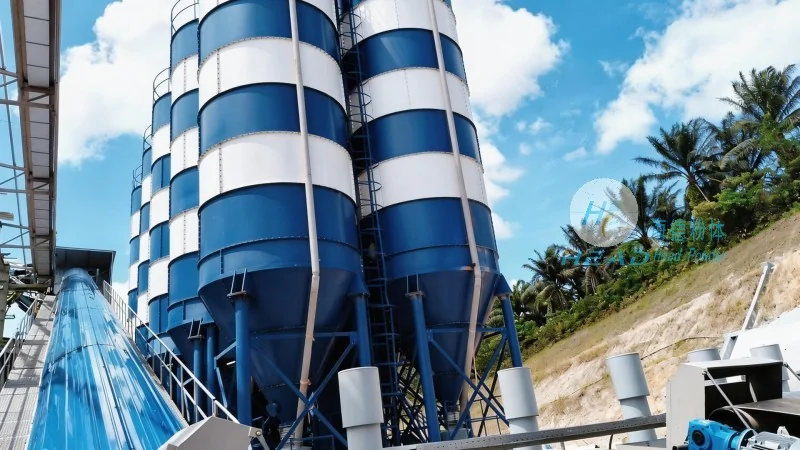
The pneumatic conveying system for organic fertilizer powders typically comprises several essential components. These include a hopper or storage silo for holding the organic fertilizer, a feeder to regulate the flow rate of the material, a blower or compressor to generate the air pressure, a pipeline network for transporting the material, and a receiver or discharge unit for final delivery. Each component plays a crucial role in ensuring smooth and efficient operation. The hopper ensures a consistent supply of the organic fertilizer, while the feeder regulates material flow to match conveying requirements. The blower or compressor provides the necessary air pressure to move the powder through the pipeline. The pipeline network, often constructed from stainless steel or other corrosion-resistant materials, is designed to handle the abrasive nature of organic fertilizers. The receiver collects the conveyed material and can be equipped with a discharge valve or other equipment for further processing or storage.
The working principle of organic fertilizer powder pneumatic conveying is based on the use of air to create a flow of the powder material. There are two main types of pneumatic conveying systems: dilute-phase and dense-phase. Dilute-phase systems operate at higher air velocities, typically around 20-30 m/s, and are suitable for short to medium distance transport. In this system, the air and powder are mixed in a relatively low concentration, allowing the powder to be carried through the pipeline by the air flow. Dense-phase systems, conversely, operate at lower air velocities and higher material concentrations, making them ideal for long-distance transport or when handling materials prone to clogging. In dense-phase systems, the powder is conveyed in a more concentrated form, often with the air flowing in a counter-current or co-current manner to ensure stable transport.
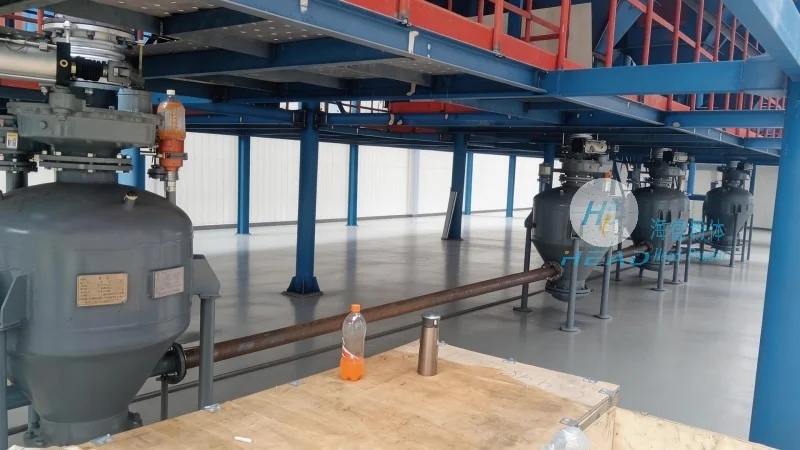
The operation process of the organic fertilizer powder pneumatic conveying system begins with loading the organic fertilizer into the hopper. The feeder then controls the flow rate of the material, ensuring a steady supply to the blower or compressor. The blower generates the required air pressure, which is then introduced into the pipeline through the feeder. As the air flows through the pipeline, it carries the organic fertilizer particles along with it. The mixture of air and powder travels through the pipeline network to the receiver, where the material is deposited. The receiver may include a filter or separator to remove any excess air and prevent dust from escaping into the environment. The system is designed to maintain a consistent pressure and flow rate throughout operation, ensuring efficient and reliable transport of the organic fertilizer.
Organic fertilizer powder pneumatic conveying offers several advantages over traditional methods such as belt conveyors or manual handling. One primary benefit is the ability to transport material over long distances without intermediate storage or transfer points. This reduces the risk of material degradation and contamination, especially important for organic fertilizers sensitive to moisture and temperature changes. Additionally, pneumatic conveying systems are more compact and can be installed in confined spaces, suitable for various industrial settings. The system provides better control over material flow rate and pressure, enabling precise and efficient operation. Furthermore, using air as the conveying medium eliminates the need for mechanical components in contact with the organic fertilizer, reducing wear and maintenance costs. The system is also more hygienic and can be easily cleaned and sanitized, crucial for maintaining organic fertilizer quality.
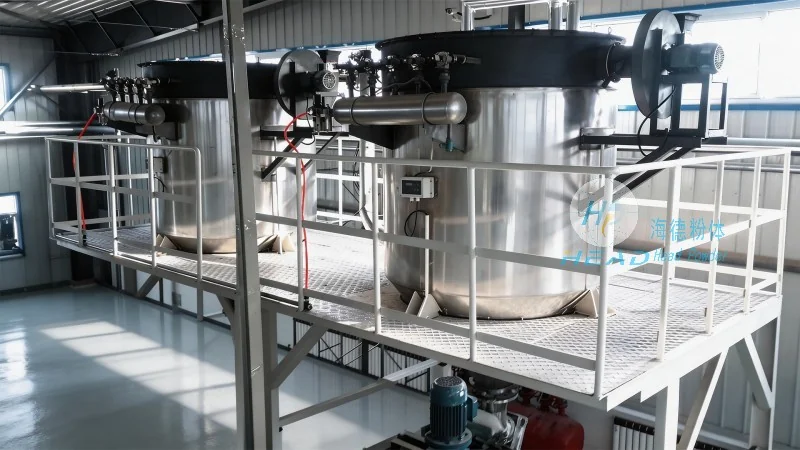
The organic fertilizer powder pneumatic conveying system is widely used across various industries, including agricultural fertilizer production, organic waste processing, and composting facilities. In agricultural fertilizer production, the system transports raw organic materials from storage silos to processing units or delivers finished organic fertilizers to storage or packaging areas. In organic waste processing, it helps move composted materials from the composting site to storage or distribution points. Composting facilities also utilize the system to convey composted material to the final product line or storage area. The versatility of the pneumatic conveying system makes it suitable for small-scale operations to large industrial facilities.
Organic fertilizer powder pneumatic conveying is a highly efficient and reliable method for transporting organic fertilizers. The technology, as provided by Shandong HeadPowder Engineering Co., Ltd., offers numerous benefits including long-distance transport, reduced material degradation, and improved hygiene. The system's components work together seamlessly to ensure smooth and consistent operation, making it an ideal solution for the modern fertilizer industry. As the demand for organic fertilizers grows, the importance of efficient and reliable conveying systems will only increase. Shandong HeadPowder Engineering Co., Ltd. remains committed to providing cutting-edge solutions for the pneumatic conveying of organic fertilizers, ensuring the industry meets the rising demands for sustainable and high-quality agricultural products.

 Shandong Headpowder Engineering Co., Ltd.
 156-6277-7102(Manager Zhang)
  0531-83386006
  Zhangqiu District, Jinan City, Shandong Province, China
telephone
WeChatconsult
top