With more than 10‑year industry experience, Shandong Headpowder delivers full‑service pneumatic‑conveying systems and blowers, undertaking nationwide turn‑key powder‑handling projects.
HeadPowder, a leading manufacturer based in Shandong, China, specializes in the design and production of advanced pneumatic conveying systems tailored for the battery materials industry. These systems are crucial for efficiently transporting bulk materials like lithium carbonate, nickel oxide, and graphite powders used in the production of lithium-ion batteries. The following article details the operational process and working principles of such systems, highlighting their efficiency and reliability in industrial applications.
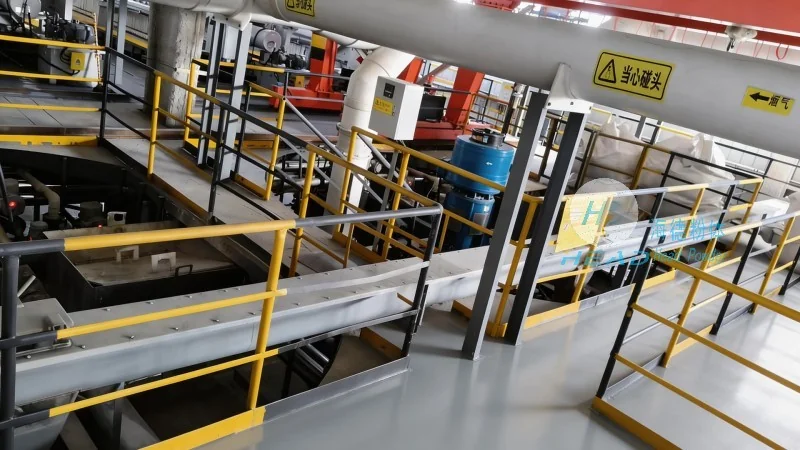
A typical pneumatic conveying line for battery materials consists of several key components that work in tandem to ensure smooth material transport. The main parts include a material hopper, a rotary airlock valve, a conveying pipe system, a pulse jet filter, and a dust collection system. The material hopper stores the bulk powder, while the rotary airlock valve controls the flow of material into the conveying pipe. The conveying pipe, often made of stainless steel or other corrosion-resistant materials, is designed to handle the specific properties of battery materials, such as fine particle size and potential moisture content. The pulse jet filter and dust collection system are essential for maintaining air quality and preventing dust contamination in the processing environment.
The operation of a pneumatic conveying line for battery materials relies on the principle of air flow to move solid particles. There are two primary types of pneumatic conveying systems: dilute-phase and dense-phase. Dilute-phase systems use high-velocity air to suspend particles in the air stream, allowing for long-distance transport with minimal pressure drops. Dense-phase systems, on the other hand, use lower air velocities and higher pressure to push particles through the pipe, which is ideal for handling abrasive or sensitive materials like battery powders. In both systems, compressed air is introduced into the conveying pipe, creating a pressure differential that propels the material forward. The rotary airlock valve at the material inlet ensures a continuous and controlled feed, preventing blockages and maintaining consistent flow rates. The pulse jet filter continuously cleans the air by removing dust particles, ensuring the system operates efficiently and safely.
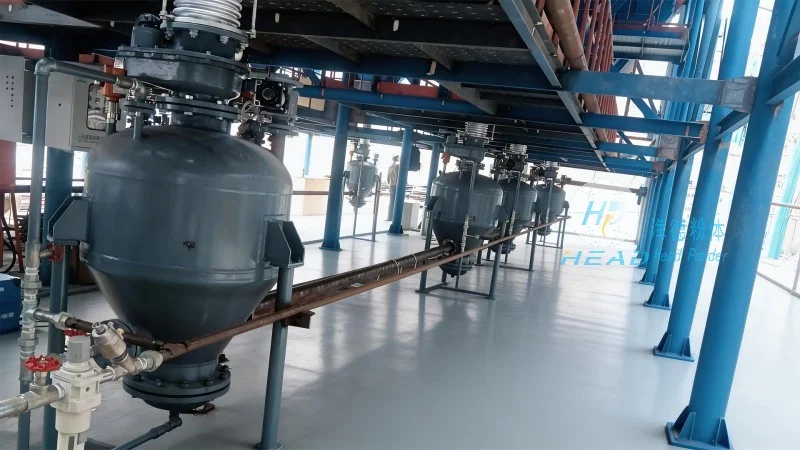
The operational process of a pneumatic conveying line for battery materials involves several sequential steps that ensure optimal performance and material handling. First, the bulk battery material is loaded into the material hopper. The rotary airlock valve then regulates the flow of material into the conveying pipe, controlled by the system's control panel. Compressed air is supplied to the conveying line, creating a pressure that moves the material through the pipe. The material travels to the receiving hopper or processing unit, where it is discharged. The pulse jet filter continuously cleans the air by discharging collected dust, maintaining air quality and preventing system clogging. The entire process is automated, with sensors and controls monitoring pressure, flow rate, and material level to ensure smooth operation and prevent downtime.
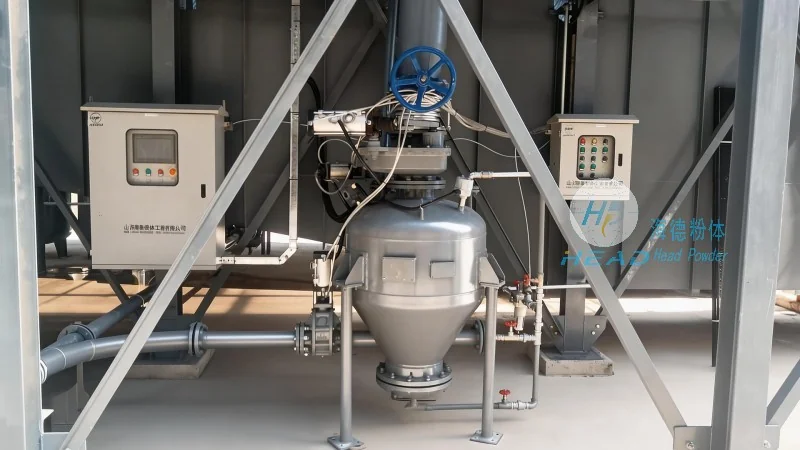
Pneumatic conveying systems offer several advantages over traditional mechanical conveying methods for battery materials. These include reduced material degradation due to minimal friction and impact, as the particles are suspended in air rather than being crushed or compacted. The systems also provide a closed-loop operation, minimizing dust emissions and environmental contamination, which is critical for compliance with industrial regulations. Additionally, pneumatic conveying allows for flexible and modular system designs, enabling easy integration with existing production lines and expansion as production needs grow. The high efficiency and reliability of these systems result in lower operational costs and increased productivity in battery material processing facilities.
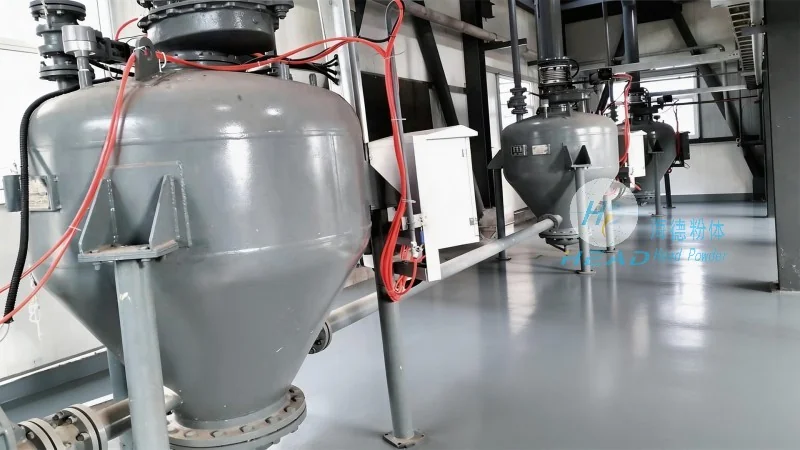
HeadPowder's pneumatic conveying lines are widely used in various stages of battery material production. For example, in the processing of lithium carbonate, the system efficiently transports raw lithium ore to the crushing and grinding units. In the production of nickel oxide, the conveying line moves fine nickel particles from the drying and milling stages to the mixing and packaging equipment. Similarly, for graphite anode materials, the system ensures consistent and clean transport from the purification and sizing processes to the battery cell assembly lines. The ability to handle different material types and particle sizes makes these systems versatile and essential for modern battery manufacturing operations.
Proper maintenance and safety measures are crucial for the long-term performance and reliability of pneumatic conveying systems for battery materials. Regular inspection of components such as the rotary airlock valve, conveying pipes, and pulse jet filter is necessary to prevent wear and tear. Cleaning the system after each batch of material helps maintain efficiency and prevent cross-contamination. Safety features, including pressure relief valves and dust explosion prevention systems, are integrated into the design to ensure operator safety and compliance with safety standards. HeadPowder provides comprehensive maintenance services and technical support to ensure that their systems operate at peak performance and meet the highest safety and quality standards in the industry.

 Shandong Headpowder Engineering Co., Ltd.
 156-6277-7102(Manager Zhang)
  0531-83386006
  Zhangqiu District, Jinan City, Shandong Province, China
telephone
WeChatconsult
top