With more than 10‑year industry experience, Shandong Headpowder delivers full‑service pneumatic‑conveying systems and blowers, undertaking nationwide turn‑key powder‑handling projects.
Starch pneumatic conveying equipment is a specialized system designed for the efficient and safe transport of starch materials. This equipment is widely used in the food, pharmaceutical, and chemical industries due to its ability to handle fine powders like starch with minimal dust and contamination. The operation of such systems involves a series of steps that ensure smooth material transfer from the source to the destination, while maintaining product quality and operational efficiency.
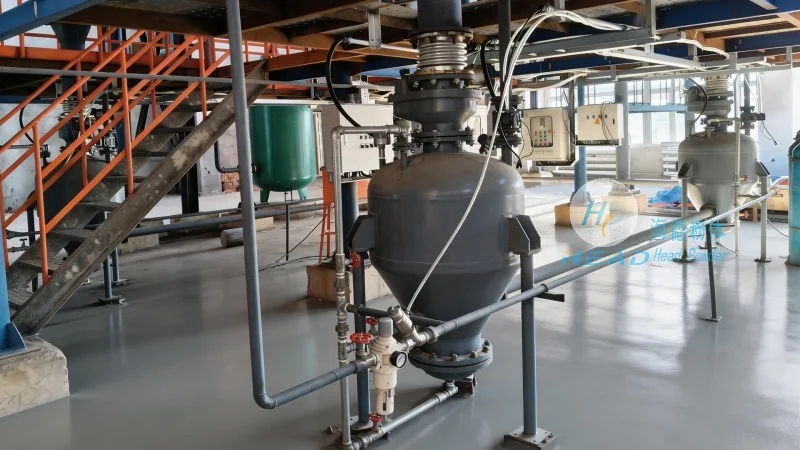
At the heart of a starch pneumatic conveying system are several key components that work in tandem to achieve effective material transport. These include the material hopper, which serves as the storage and feeding unit; the air compressor or blower, which generates the necessary airflow to move the starch particles; the conveying pipeline, which forms the path for the material and air mixture; and the control system, which regulates the pressure, flow rate, and other operational parameters. Each component plays a critical role in ensuring the system operates reliably and efficiently.
The operation of starch pneumatic conveying equipment typically follows a sequential process. First, the starch material is fed into the material hopper from the storage silo or batch container. The material hopper is equipped with a feeder, such as a rotary valve or screw feeder, which controls the flow rate of the starch into the system. Simultaneously, the air compressor starts and generates a high-pressure airflow. This airflow is then introduced into the conveying pipeline, creating a pressure differential that draws the starch particles into the air stream. As the starch particles are entrained by the air, they are transported through the pipeline to the destination point, such as a processing unit or storage silo. The control system continuously monitors the pressure and flow rates, adjusting the air compressor output as needed to maintain optimal conveying conditions. At the receiving end, a separator or cyclone separates the starch particles from the air, allowing the starch to be deposited in the target container while the air is either recirculated or vented to the atmosphere.
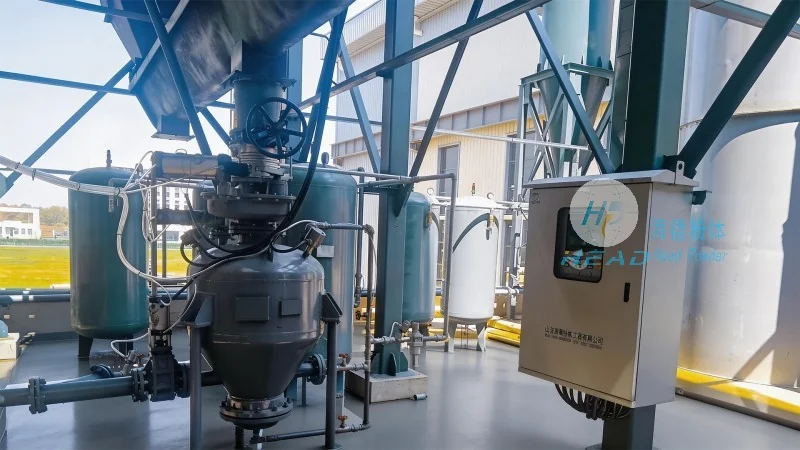
The working principle of starch pneumatic conveying equipment is based on the principle of pneumatic transport, where solid particles are suspended and transported by a moving air stream. In a typical system, the air compressor provides the necessary energy to create a flow of air through the pipeline. The starch particles are introduced into the air stream at the feeding point, and the air velocity is maintained above the minimum velocity required to keep the particles suspended (the terminal velocity). This ensures that the starch particles do not settle or deposit within the pipeline, preventing blockages and ensuring continuous operation. The system can operate in either positive pressure or negative pressure modes, depending on the application and the distance between the source and destination. Positive pressure systems are commonly used for short to medium distances, while negative pressure systems are preferred for longer distances or when the material needs to be transported from a higher elevation to a lower one.
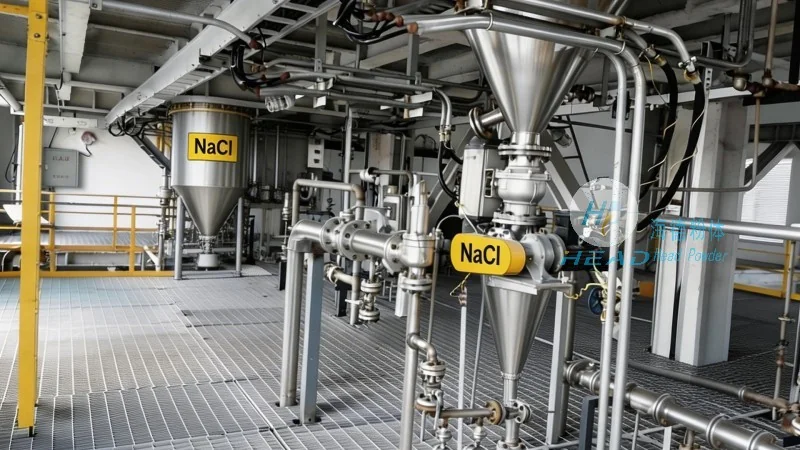
Starch pneumatic conveying equipment offers several advantages over traditional mechanical conveying methods. One of the primary benefits is the reduction in dust and contamination, as the material is enclosed within the pipeline and transported under controlled conditions. This is particularly important for starch, which is often used in food and pharmaceutical applications where product purity is critical. Additionally, pneumatic conveying systems are more flexible in terms of layout, as the pipeline can be installed in various configurations, including vertical, horizontal, or a combination of both, to accommodate different facility layouts. The system also provides better control over the material flow rate, allowing for precise dosing and processing. Furthermore, pneumatic conveying reduces the risk of product degradation due to less exposure to air and mechanical stress compared to mechanical conveyors.
HeadPowder, the company behind the development and manufacturing of starch pneumatic conveying equipment, is a leading provider of industrial conveying solutions. With its headquarters in Shandong, China, HeadPowder has established itself as a trusted name in the industry, offering high-quality, reliable equipment tailored to the specific needs of its clients. The company specializes in designing and manufacturing pneumatic conveying systems for a wide range of applications, including starch processing, chemical processing, and food production. HeadPowder's team of engineers and technicians brings extensive experience and expertise to each project, ensuring that the equipment is optimized for performance, efficiency, and durability. The company adheres to strict quality control standards and provides comprehensive after-sales support to ensure customer satisfaction and long-term operational success.

 Shandong Headpowder Engineering Co., Ltd.
 156-6277-7102(Manager Zhang)
  0531-83386006
  Zhangqiu District, Jinan City, Shandong Province, China
telephone
WeChatconsult
top