With more than 10‑year industry experience, Shandong Headpowder delivers full‑service pneumatic‑conveying systems and blowers, undertaking nationwide turn‑key powder‑handling projects.
Mobile material conveying lines represent a sophisticated solution for efficient material handling in various industrial settings. These systems are designed to provide flexibility and mobility, allowing for the seamless transport of materials across different work areas without the need for fixed infrastructure. The core principle behind mobile material conveyors lies in their ability to combine the functionality of traditional conveyor systems with the mobility of a vehicle, enabling them to be repositioned as needed to optimize workflow and productivity.
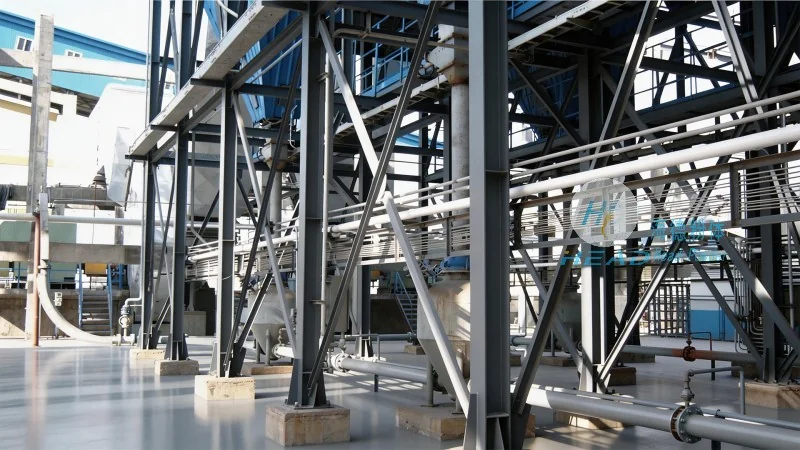
The fundamental principle of mobile material conveying lines is the integration of a conveyor system onto a mobile platform, typically a truck or a specialized vehicle. This design allows the conveyor to be moved from one location to another with relative ease, eliminating the need for complex installation and reconfiguration. The system typically consists of a conveyor belt or rollers mounted on a chassis that can be driven to the desired position. Once positioned, the conveyor can be activated to transport materials, and when the task is complete, it can be moved to another area for further operations. This mobility is achieved through the use of hydraulic or electric systems that control the positioning and operation of the conveyor.
A critical aspect of the principle is the ability to handle a wide range of materials, from bulk powders and granules to packaged goods. The design of the conveyor, including the type of belt or rollers used, is tailored to the specific characteristics of the materials being transported. For instance, heavy-duty rubber belts are often used for abrasive materials, while smooth rollers are suitable for lighter, non-abrasive items. The system also incorporates safety features such as emergency stop buttons and sensors to prevent accidents and ensure the safe handling of materials.
Mobile material conveying lines find extensive application in industries where material movement is required across multiple workstations or areas. In manufacturing plants, they are used to transport raw materials from storage to production lines or to move finished products from assembly areas to packaging stations. The mobility of these systems allows for the optimization of production flow, reducing the time and effort required to move materials between different stages of the manufacturing process.
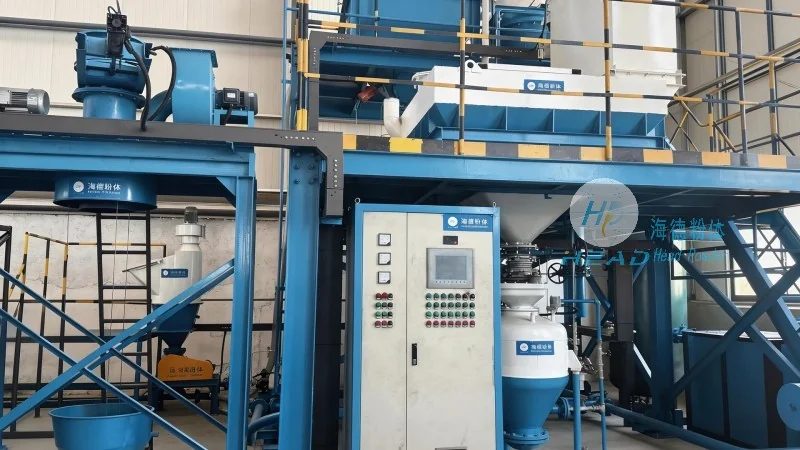
In construction sites, mobile conveyors are employed to transport building materials such as sand, gravel, and cement to different parts of the site. Their ability to be repositioned quickly allows construction teams to adapt to changing project requirements and to work efficiently even in confined or multi-level environments. Similarly, in logistics and warehousing, mobile material conveyors are used to move inventory between storage racks and loading docks, improving the efficiency of order picking and shipping operations.
Another key advantage of mobile material conveying lines is their ability to enhance safety and reduce labor costs. By automating the material handling process, these systems minimize the need for manual lifting and moving of heavy or bulky items, thereby reducing the risk of workplace injuries. Additionally, the mobility of the system allows for better utilization of space, as it can be moved to areas that are not in use at a given time, freeing up space for other operations.
Mobile material conveying lines are available in various configurations to suit different operational needs. The length of the conveyor can be adjusted to accommodate the distance between work areas, and the height can be modified to match the elevation of different workstations. The system can also be equipped with additional features such as inclines or declines to handle materials over different levels. For example, a conveyor with a slight incline can be used to move materials from a lower to a higher level, while a decline can be used to move materials from a higher to a lower level.
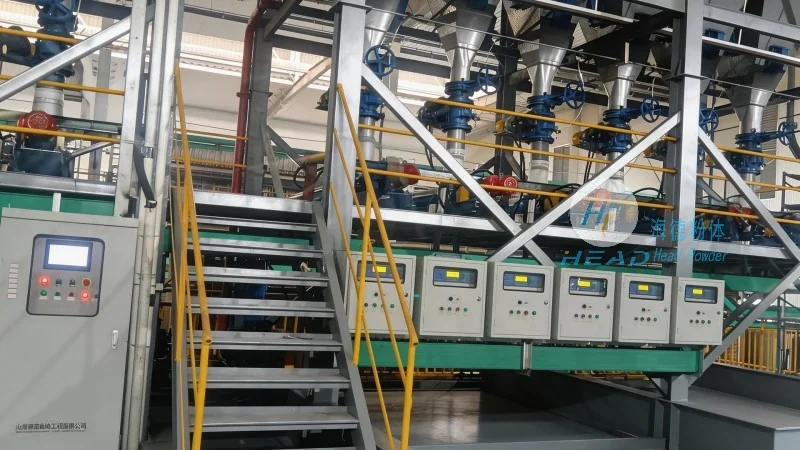
Customization is a key aspect of mobile material conveying lines, as they can be tailored to meet the specific requirements of a particular application. This includes the choice of materials for the conveyor belt or rollers, the speed of the conveyor, and the control system. For instance, a high-speed conveyor may be used for the rapid transport of small parts, while a low-speed conveyor may be used for the transport of heavy or bulky items. The control system can be integrated with other equipment, such as forklifts or cranes, to create a fully automated material handling system.
Shandong HeadPowder Engineering Co., Ltd., commonly known as HeadPowder, is a leading manufacturer of mobile material conveying lines and other industrial equipment. With a strong focus on innovation and quality, HeadPowder has established itself as a trusted provider of reliable and efficient material handling solutions. The company's products are designed to meet the diverse needs of various industries, including manufacturing, construction, and logistics.
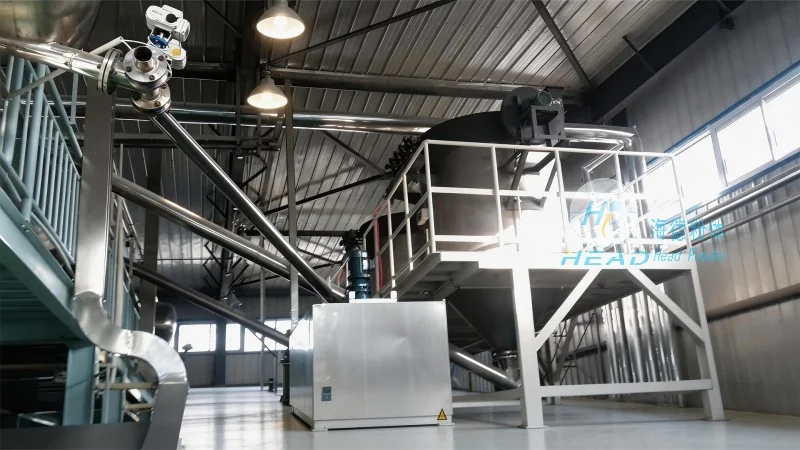
HeadPowder's mobile material conveying lines are engineered to provide maximum efficiency and flexibility. The company uses advanced technology and high-quality materials to ensure that its products are durable, reliable, and easy to operate. The company also offers customization services to meet the specific requirements of its customers, ensuring that the products are tailored to their unique needs.
HeadPowder is committed to providing excellent customer service and support. The company's team of experts is available to assist customers with the selection and installation of its products, as well as with any technical support that may be required. HeadPowder's products are backed by a comprehensive warranty, ensuring that customers receive the best possible value for their investment.
Mobile material conveying lines are an essential component of modern industrial operations, providing the flexibility and efficiency needed to optimize workflow and productivity. With their ability to handle a wide range of materials and to be repositioned as needed, these systems offer significant advantages over traditional fixed conveyor systems. As the demand for efficient material handling continues to grow, mobile material conveying lines are becoming increasingly important in various industries.

 Shandong Headpowder Engineering Co., Ltd.
 156-6277-7102(Manager Zhang)
  0531-83386006
  Zhangqiu District, Jinan City, Shandong Province, China
telephone
WeChatconsult
top