With more than 10‑year industry experience, Shandong Headpowder delivers full‑service pneumatic‑conveying systems and blowers, undertaking nationwide turn‑key powder‑handling projects.
For manufacturers and suppliers in the battery anode material industry, efficient and reliable material handling is crucial to production efficiency and product quality. Among various conveying methods, air-driven (pneumatic) conveying systems have become a preferred choice due to their flexibility, low maintenance requirements, and ability to handle fine powders and granules commonly used in battery anode production. This article explores the primary air-driven conveying structures employed in the handling of battery anode materials, highlighting their applications, advantages, and suitability for different production scenarios.
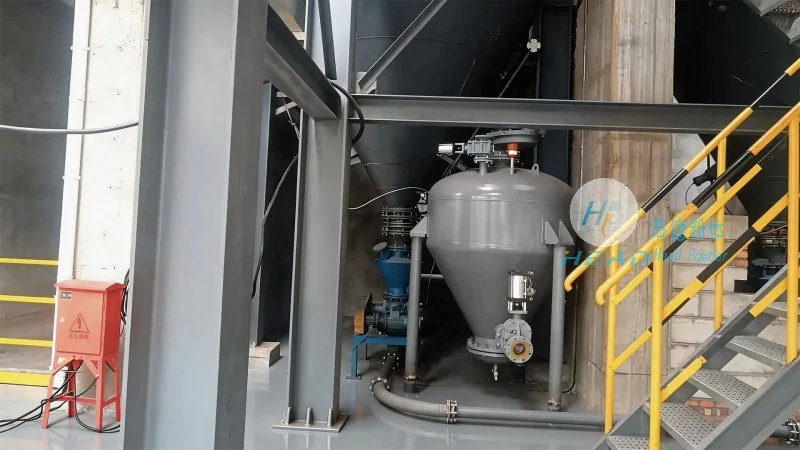
Before delving into specific structures, it's essential to understand the fundamental principles of air-driven conveying. These systems utilize compressed air or vacuum to transport solid materials through a pipeline network. For battery anode materials, which often include graphite, silicon, and other carbon-based powders, the choice of conveying structure depends on factors such as material properties (e.g., dustiness, moisture content), production scale, and the need for contamination control. The primary structures include positive pressure, negative pressure, and hybrid systems, each tailored to specific operational requirements.
Positive pressure conveying systems operate by blowing air into the pipeline, creating a pressure higher than the ambient environment. This method is widely used for transporting battery anode materials due to its ability to handle abrasive and fine powders without causing material degradation. The system typically consists of a blower, a material feed hopper, and a pipeline network. The blower generates compressed air that propels the material forward, while the pipeline design ensures minimal pressure loss and efficient material transport. A key advantage of positive pressure systems is their suitability for long-distance conveying (up to several hundred meters) and their ability to handle high material loads. For battery anode materials, this structure is particularly effective when dealing with large-scale production lines where material needs to be transported from storage silos to processing equipment. The positive pressure approach also reduces the risk of material contamination from external air, which is critical for maintaining the purity of anode materials used in high-performance batteries.
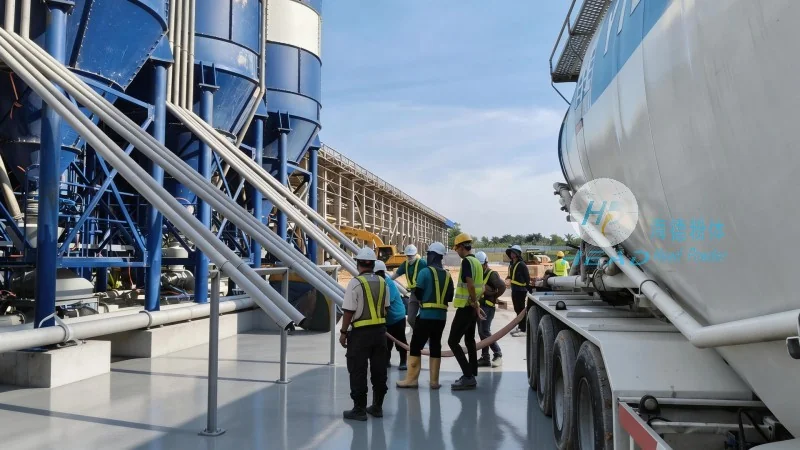
Negative pressure conveying systems, also known as vacuum systems, work by creating a vacuum in the pipeline, drawing material into the system. This method is ideal for applications requiring gentle material handling, such as transporting sensitive anode powders that are prone to agglomeration or degradation under high pressure. The system includes a vacuum pump, a material collection hopper, and a pipeline network. The vacuum pump creates a low-pressure environment, causing material to be drawn into the pipeline and transported to the processing area. Negative pressure systems are particularly advantageous when the material source is at a higher elevation than the destination, as the vacuum can pull material upward without the need for additional lifting equipment. For battery anode materials, this structure is often used in collection and transfer processes, such as moving material from a production line to a storage silo or from a processing unit to a packaging station. The gentle handling provided by vacuum systems helps preserve the material's particle size distribution and surface properties, which are vital for battery performance.
Hybrid conveying systems combine the benefits of both positive and negative pressure methods, offering greater flexibility and efficiency for complex material handling tasks. These systems use a combination of blowers and vacuum pumps to control the flow of material in different sections of the pipeline. For example, a hybrid system might use positive pressure to transport material from a storage silo to an intermediate hopper and then switch to negative pressure to transfer the material to the final processing equipment. This approach allows for optimized pressure control, reducing energy consumption and minimizing material degradation. In the context of battery anode materials, hybrid systems are particularly useful in multi-stage production lines where material needs to be transported over varying distances and elevations. They can handle both bulk material transfer and fine powder collection, making them a versatile solution for modern battery manufacturing facilities. The ability to adjust pressure dynamically also enhances the system's adaptability to different material types and production rates, ensuring consistent performance and product quality.
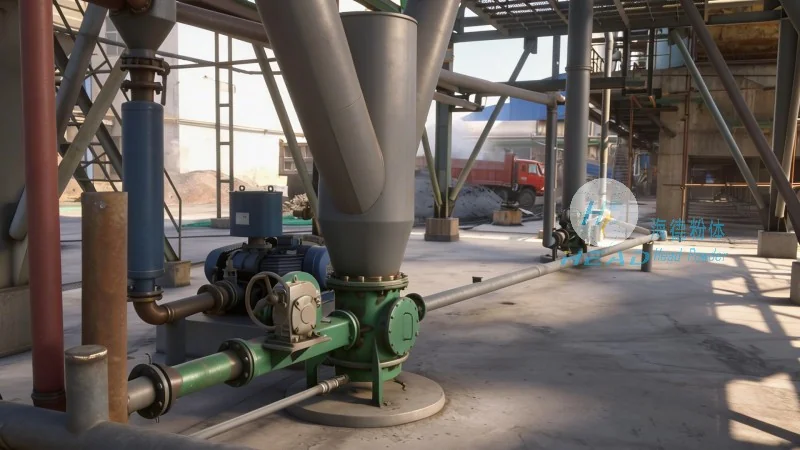
When selecting an air-driven conveying structure for battery anode material handling, several factors must be considered to ensure optimal performance and cost-effectiveness. First, the material's physical properties, such as particle size, moisture content, and dustiness, play a critical role. For example, fine powders with high dust content may require more robust filtration and sealing to prevent material loss and contamination. Second, the production scale and throughput requirements dictate the system's capacity and power. Large-scale battery manufacturing plants may need high-capacity positive pressure systems with multiple blowers to handle high material loads, while smaller operations might opt for compact vacuum systems. Third, the need for contamination control is paramount, as anode materials are sensitive to impurities that can affect battery performance. Air-driven systems with proper filtration and sealed components help maintain material purity. Finally, maintenance and operational costs should be evaluated, as different structures have varying maintenance requirements and energy consumption levels. By carefully assessing these factors, manufacturers can choose the most suitable air-driven conveying structure that meets their specific needs and enhances overall production efficiency.
Efficient material handling is a cornerstone of battery anode material production, and air-driven conveying systems offer a reliable and flexible solution for transporting these materials. The primary structures—positive pressure, negative pressure, and hybrid systems—each provide unique advantages tailored to different operational requirements. Positive pressure systems excel in high-volume, long-distance transport, while negative pressure systems offer gentle handling for sensitive materials. Hybrid systems combine the benefits of both, providing versatility for complex production lines. For manufacturers, selecting the right air-driven conveying structure involves considering material properties, production scale, contamination control needs, and operational costs. By leveraging these air-driven systems, battery anode material producers can enhance production efficiency, maintain product quality, and meet the demands of modern battery manufacturing. As the battery industry continues to grow, the importance of efficient material handling will only increase, making air-driven conveying structures a critical component of sustainable and high-performance battery production.

 Shandong Headpowder Engineering Co., Ltd.
 156-6277-7102(Manager Zhang)
  0531-83386006
  Zhangqiu District, Jinan City, Shandong Province, China
telephone
WeChatconsult
top