

Working Principle and Features of Bentonite Powder Material Pneumatic Conveying Lines
Bentonite powder, a widely used industrial material in sectors such as oil refining, paper manufacturing, and water treatment, requires efficient transportation to maintain quality and process efficiency. Pneumatic conveying lines use air to move dry powders like bentonite, offering a clean, dust-free, and energy-efficient alternative to traditional mechanical systems. This article explores the working principle and key features of bentonite powder pneumatic conveying lines, highlighting how they enhance operational performance and safety in industrial applications.

The Working Principle of Bentonite Powder Pneumatic Conveying Lines
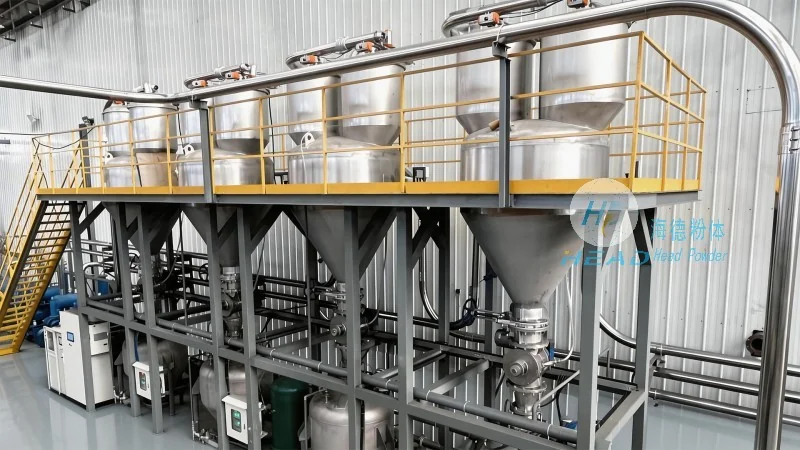
The core of a bentonite powder pneumatic conveying system involves using compressed air to transport powder particles through a pipeline. The process includes several components and steps: first, bentonite powder is fed into a hopper or feeder to regulate flow rate. Next, a blower or compressor generates high-pressure air, which enters the conveying line. The air creates a low-pressure zone that draws powder into the air stream, forming a suspension. This mixture travels to the destination (e.g., a storage silo or processing unit). At the receiving end, a separator or cyclone separates powder from air—powder is collected, and air is filtered or vented. Valves, sensors, and control panels manage the system to prevent blockages or overloading.
Key Features of Bentonite Powder Pneumatic Conveying Lines
Bentonite powder pneumatic conveying lines are designed with features that improve performance and suitability for industrial use. One advantage is handling fine, abrasive powders without damaging system components. The air medium reduces contamination and dust exposure, critical for applications requiring product purity (e.g., filter aids). These systems are flexible, allowing route or capacity changes without major infrastructure modifications. Compared to mechanical systems, they are energy-efficient—compressed air is recycled, lowering long-term costs. Integration with existing processes (hoppers, silos, equipment) minimizes downtime. Modern systems use advanced controls (real-time monitoring, automated adjustments) to maintain optimal performance and prevent issues like blockages or air leaks.
Benefits of Using Bentonite Powder Pneumatic Conveying Lines
Implementing such systems offers significant advantages for industrial operations. Product quality and consistency improve by avoiding mechanical contact, keeping bentonite free from contaminants. Labor costs and operational risks decrease—manual handling is eliminated, reducing dust inhalation and exposure risks, enhancing workplace safety and employee productivity. Energy efficiency lowers operational costs, as compressed air is reused. Flexibility allows scaling up/down for small or large-scale production. Reliability ensures consistent material delivery, critical for downstream processes (mixing, filtration, packaging).
Applications of Bentonite Powder Pneumatic Conveying Lines
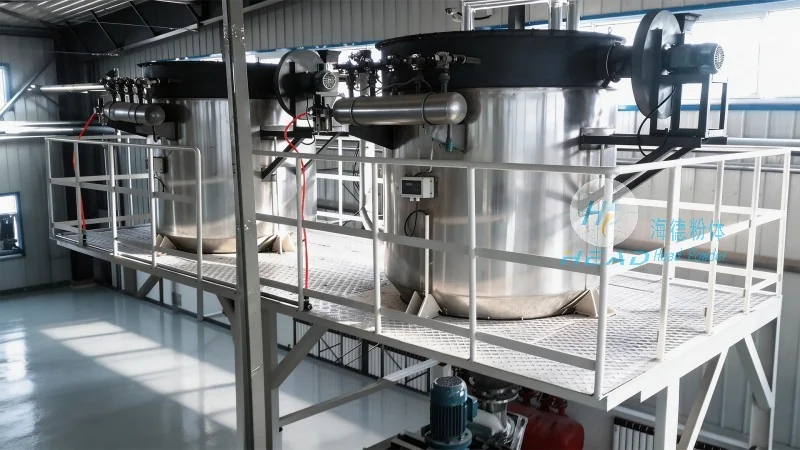
Bentonite powder pneumatic conveying lines are used across industries due to versatility. In oil and gas, bentonite is a drilling fluid additive; the system delivers it to sites, maintaining fluid consistency. In paper manufacturing, bentonite acts as a filler/coating; the line ensures uniform distribution, improving paper quality. In water treatment, bentonite is a coagulant; efficient transport enhances purification. Other uses include the food industry (thickening agents) and pharmaceuticals (excipients). In each case, the system delivers clean, controlled material to meet industry-specific requirements.