With more than 10‑year industry experience, Shandong Headpowder delivers full‑service pneumatic‑conveying systems and blowers, undertaking nationwide turn‑key powder‑handling projects.
HeadPowder, a leading manufacturer in the field of powder processing equipment, specializes in the design, production, and supply of advanced pneumatic conveying systems tailored for the handling of nanometer calcium carbonate. This article provides a comprehensive overview of the equipment involved, its structural design, and the underlying principles that enable efficient and reliable material transport in industrial applications.
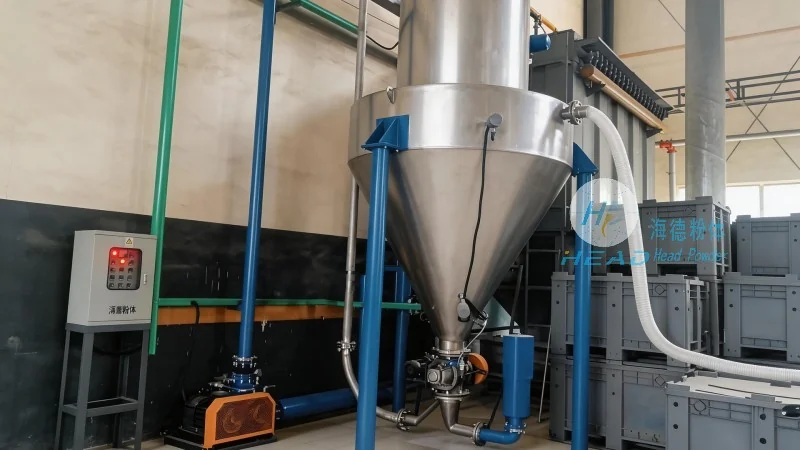
The pneumatic conveying system for nanometer calcium carbonate is a sophisticated piece of industrial equipment engineered to transport fine powders like nanometer calcium carbonate over long distances with minimal loss and high efficiency. At the core of this system are several key components that work in tandem to achieve optimal performance. The system is typically designed to handle powders with particle sizes ranging from a few microns to sub-micron levels, which poses unique challenges in terms of flowability, dust control, and system pressure management.
The system comprises several essential components, each playing a critical role in the overall operation. The primary equipment includes a feeding unit, a conveying pipeline system, a separation and recovery unit, and a control system. The feeding unit is responsible for introducing the nanometer calcium carbonate powder into the system, ensuring a consistent and controlled feed rate. This component often incorporates features such as a hopper with a discharge valve or a rotary valve to regulate the material flow. The conveying pipeline, usually made of stainless steel or other corrosion-resistant materials, is designed to withstand the abrasive nature of the nanometer calcium carbonate particles and maintain airtight integrity to prevent leakage and dust emissions.
The separation and recovery unit is a critical part of the system, as it separates the conveyed powder from the air stream and returns the powder to the process or storage. This unit typically consists of a cyclone separator or a bag filter, which uses centrifugal force or filtration to separate the powder from the air. The control system, often integrated with sensors and automation technology, monitors key parameters such as pressure, flow rate, and temperature, ensuring the system operates within safe and efficient limits. Additionally, the system may include accessories like silencers to reduce noise levels and pressure regulators to maintain stable air pressure.
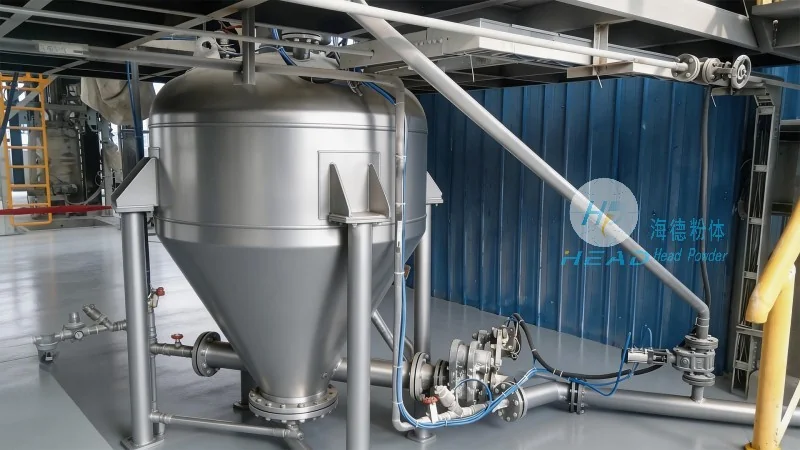
The structural design of the pneumatic conveying system for nanometer calcium carbonate is based on the fundamental principles of fluid dynamics and powder handling. The system operates on the principle of pneumatic transport, where the powder is suspended and carried by a high-velocity air stream. The key structural principles include the design of the conveying line to minimize pressure drop and ensure consistent flow, the selection of appropriate air velocities to maintain particle suspension without excessive wear, and the integration of components to handle the specific properties of nanometer calcium carbonate, such as its low bulk density and high surface area.
The system's structural layout is typically arranged in a linear or loop configuration, depending on the application requirements. The feeding point is usually located at the start of the conveying line, with the separation unit positioned at the end or at an intermediate point. The pipeline is designed with gradual bends and smooth transitions to avoid particle accumulation and reduce pressure losses. The use of stainless steel or other high-quality materials ensures durability and resistance to corrosion from the calcium carbonate particles, which can be acidic or abrasive under certain conditions. The system also incorporates features like explosion-proof designs and dust collection systems to enhance safety and compliance with industrial regulations.
The operational efficiency of the pneumatic conveying system is influenced by several factors, including the air velocity, pressure, and the characteristics of the nanometer calcium carbonate powder. The system is designed to achieve high conveying rates while maintaining low energy consumption. The use of appropriate air velocities ensures that the powder particles are fully suspended in the air stream, preventing blockages and ensuring smooth transport. The pressure drop across the system is minimized through the use of smooth pipelines, appropriate fittings, and efficient separation equipment. The system's performance is also affected by the particle size distribution, moisture content, and bulk density of the nanometer calcium carbonate, which can impact the flowability and handling characteristics.
HeadPowder's pneumatic conveying systems are engineered to provide reliable and consistent performance, even under varying operating conditions. The integration of advanced control systems allows for real-time monitoring and adjustment of key parameters, ensuring optimal operation. The system's design also considers factors such as maintenance and accessibility, with components arranged for easy inspection and repair. The use of high-quality materials and robust construction ensures a long service life, reducing downtime and maintenance costs for industrial users.
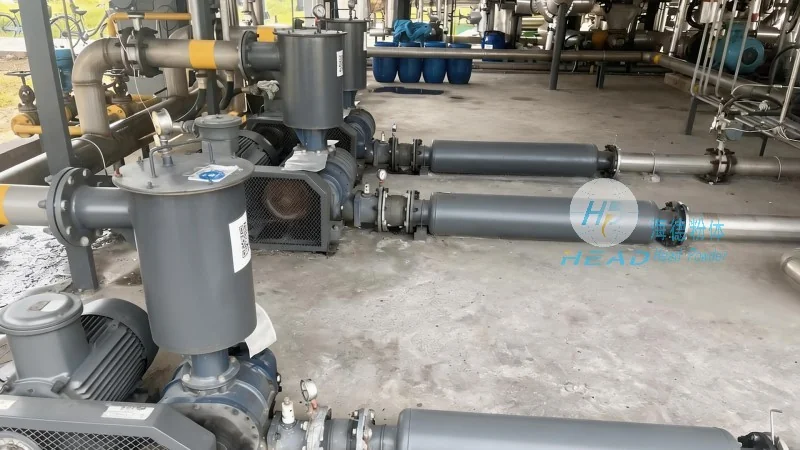
The pneumatic conveying system for nanometer calcium carbonate finds wide applications in various industrial sectors, including the chemical, plastic, and rubber industries. The system is particularly useful in processes where the powder needs to be transported from a storage silo to a processing unit or between different stages of production. The benefits of using a pneumatic conveying system include improved material handling efficiency, reduced labor costs, and enhanced safety compared to traditional manual or mechanical conveying methods. The system also minimizes dust emissions and environmental impact, making it a preferred choice for industries with strict environmental regulations.
For industries dealing with nanometer calcium carbonate, the efficiency and reliability of the conveying system directly impact the overall productivity and quality of the final product. The ability to transport fine powders with minimal loss and contamination is crucial, as even small amounts of impurities can affect the performance of the end product. HeadPowder's systems are designed to meet these stringent requirements, ensuring that the nanometer calcium carbonate is handled with precision and care throughout the conveying process.
In conclusion, the pneumatic conveying system for nanometer calcium carbonate is a sophisticated and essential piece of industrial equipment that enables efficient and reliable transport of fine powders. The system's design, based on fundamental principles of fluid dynamics and powder handling, incorporates advanced components and structural features to meet the specific challenges of handling nanometer calcium carbonate. HeadPowder, with its expertise in powder processing equipment, provides high-quality pneumatic conveying systems that enhance operational efficiency, safety, and environmental compliance for industrial applications. The system's performance and reliability make it a valuable asset for industries relying on nanometer calcium carbonate in their production processes.

 Shandong Headpowder Engineering Co., Ltd.
 156-6277-7102(Manager Zhang)
  0531-83386006
  Zhangqiu District, Jinan City, Shandong Province, China
telephone
WeChatconsult
top