With more than 10‑year industry experience, Shandong Headpowder delivers full‑service pneumatic‑conveying systems and blowers, undertaking nationwide turn‑key powder‑handling projects.
A wood fiber pneumatic conveying system is an industrial equipment designed to transport wood fibers and related materials through a pipeline using compressed air or gas as the conveying medium. This technology is widely utilized in industries such as pulp and paper, woodworking, and biomass processing, where efficient material handling is essential. The system typically comprises key components including a material hopper for storage, a feeder to control material flow, a pipeline network, and a receiver for discharged material. The design is tailored to the specific characteristics of wood fibers—like size, moisture content, and density—to ensure optimal performance and minimize operational issues.
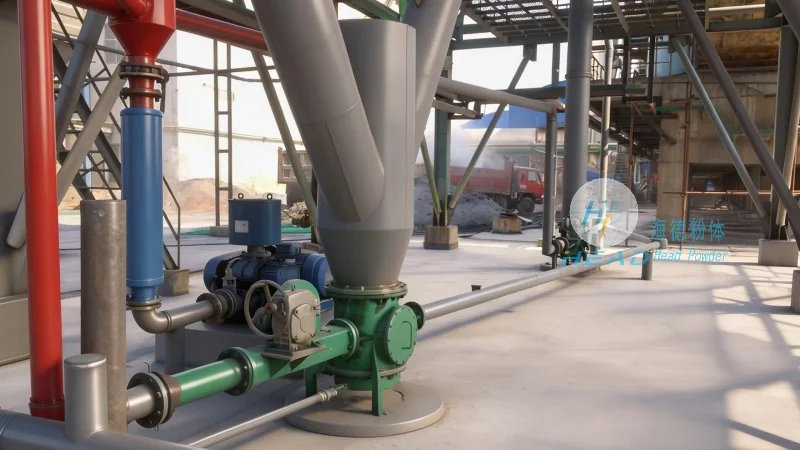
The core components of a wood fiber pneumatic conveying system include the material hopper, which serves as the storage container for wood fibers. The hopper is equipped with a feeding mechanism, such as a rotary valve or screw feeder, to regulate material flow into the conveying line. The feeder maintains a consistent feed rate, preventing blockages and ensuring smooth operation. The pipeline network, usually made of durable materials like stainless steel or high-density polyethylene, transports the wood fibers and withstands the abrasive nature of the material and conveying gas pressure. The receiver, at the end of the pipeline, collects discharged material and may include a dust collection system to control airborne particles. Additionally, the system incorporates a pressure regulator and a filter to maintain air quality and protect downstream equipment from contamination.
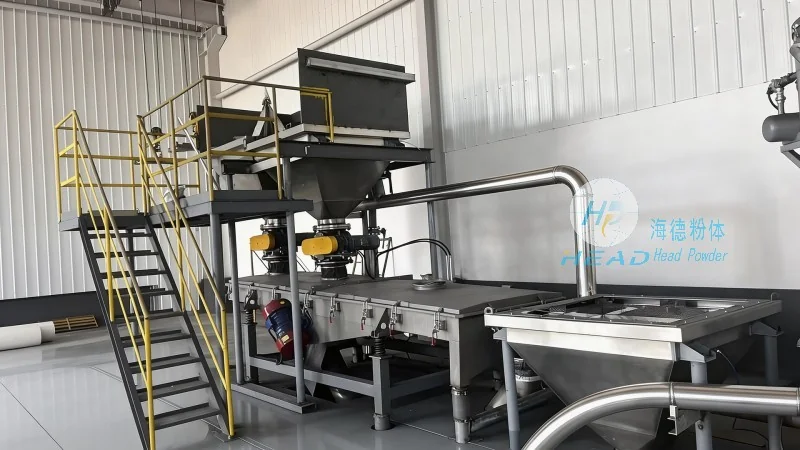
The design principle of a wood fiber pneumatic conveying system is based on fluidization and suspension. Compressed air introduces a low-pressure zone that draws wood fibers into the conveying stream. The pipeline's air velocity is controlled to keep material suspended, preventing settlement or clogging. Engineers from Shandong HeadPowder Engineering Co., Ltd. use advanced computational fluid dynamics (CFD) and material testing to optimize the system, matching air velocity and pressure to material characteristics. This approach minimizes energy use, reduces component wear, and maximizes efficiency and reliability.
Wood fiber pneumatic conveying systems are used in various applications across industries. In the pulp and paper industry, they transport wood chips and pulp from storage to processing plants. In woodworking, they move sawdust and wood shavings from production lines to recycling or disposal areas. In biomass processing, they facilitate transport of wood pellets and other biomass materials for energy production. Key benefits include improved handling efficiency, reduced labor costs, and enhanced safety compared to traditional methods like belt conveyors or manual handling. The system can be easily integrated into existing lines, with modular design allowing flexibility for expansion or modification. It also maintains a clean, dust-free environment, critical for air quality and worker safety in certain industries.
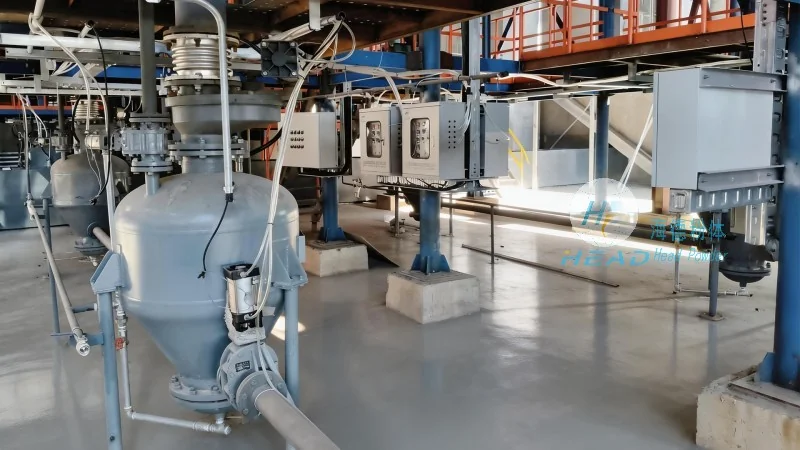
Shandong HeadPowder Engineering Co., Ltd. provides customized solutions for wood fiber pneumatic conveying systems, tailored to client needs. Engineers work with clients to understand material characteristics, conveying distance, and throughput, then design a system meeting those specs. Customization may involve adjusting hopper size, feeder type, pipeline diameter, or air pressure to optimize performance. Regular maintenance is vital for long-term reliability and efficiency. This includes cleaning pipelines and hoppers to prevent buildup, inspecting and replacing worn components like seals and bearings, and monitoring air pressure and flow rate to detect issues. Proper maintenance extends equipment lifespan, reduces downtime, and lowers operational costs.

 Shandong Headpowder Engineering Co., Ltd.
 156-6277-7102(Manager Zhang)
  0531-83386006
  Zhangqiu District, Jinan City, Shandong Province, China
telephone
WeChatconsult
top