With more than 10‑year industry experience, Shandong Headpowder delivers full‑service pneumatic‑conveying systems and blowers, undertaking nationwide turn‑key powder‑handling projects.
Urea, a vital nitrogen fertilizer, plays a crucial role in global agriculture. The efficient and reliable transportation of urea from production facilities to storage or distribution centers is essential for maintaining supply chain efficiency and ensuring timely delivery to farmers. Pneumatic conveying systems offer a sophisticated solution by utilizing air to move urea particles through pipelines, providing advantages such as reduced contamination, lower operational costs compared to mechanical systems, and enhanced safety for personnel. This article delves into the operation process and working principle of urea material pneumatic conveying, highlighting key components, operational steps, and the expertise of specialized engineering firms like Shandong HeadPowder Engineering Co., Ltd. in designing and implementing these systems.
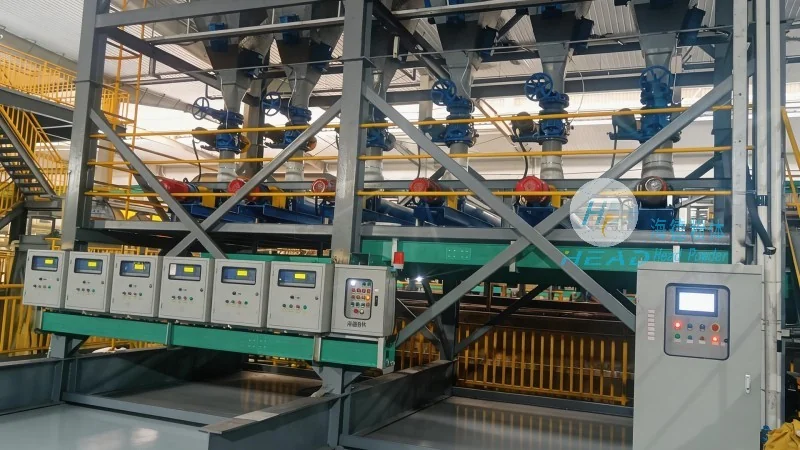
The effectiveness of a urea pneumatic conveying system relies on a carefully integrated set of components that work in harmony to transport material. The primary components include the feed hopper or storage bin, which holds and releases urea into the system; the air compressor or blower, which generates the necessary air pressure to propel the material; the conveying pipeline, which transports the urea particles from the source to the destination; and the receiver or discharge hopper, where the urea is collected. Auxiliary components such as filters, cyclones, and dust collectors are often incorporated to maintain air quality and prevent material buildup within the system. For urea, a hygroscopic material that can degrade when exposed to moisture, these components are engineered to minimize contact with air and maintain a dry environment, ensuring the material's quality is preserved throughout the conveying process.
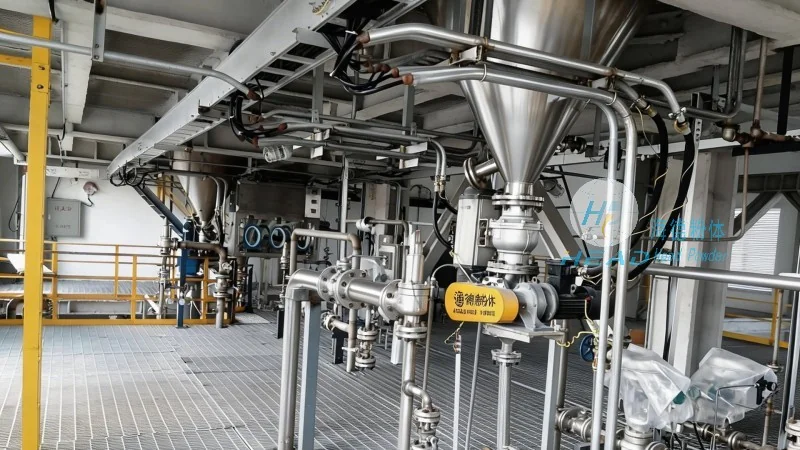
The working principle of urea pneumatic conveying involves the creation of an air stream that propels urea particles through the pipeline. In low-pressure systems, air is introduced into the hopper, creating a negative pressure that draws urea particles into the air stream. The mixture of air and urea then travels through the pipeline to the receiver, where a cyclone separator separates the urea from the air. In high-pressure systems, the air compressor generates a high-pressure air stream that pushes the urea particles through the pipeline, often using a positive displacement blower. The choice between low-pressure and high-pressure systems depends on factors such as the distance to be covered, the quantity of urea to be conveyed, and the system's energy efficiency. For urea, which is a fine powder with a particle size typically ranging from 0.1 to 2 mm, the system must be designed to handle fine particles without excessive pressure drop or material loss, ensuring efficient and reliable transport.
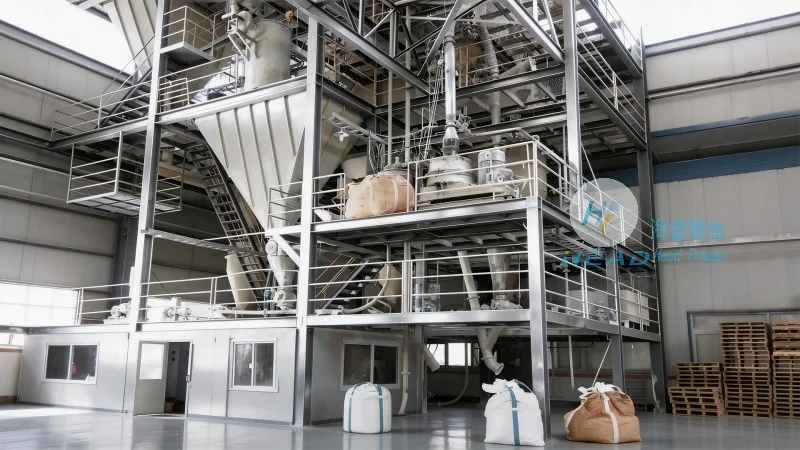
The operation process of a urea pneumatic conveying system involves sequential steps to ensure smooth material transport. First, the urea is stored in the feed hopper, which is equipped with a level sensor to monitor inventory levels. When the hopper is filled, the feeder mechanism (such as a rotary valve or screw conveyor) begins to discharge the urea into the conveying line. Simultaneously, the air compressor starts operating, generating the required air pressure. The air is then introduced into the hopper, creating a vacuum that draws the urea particles into the air stream. The mixture travels through the pipeline to the receiver, where a cyclone separator separates the urea from the air. The separated urea is collected in the receiver hopper, while the air is either recirculated back to the system or vented to the atmosphere. The operation process is typically automated, with control systems monitoring parameters such as air pressure, flow rate, and material level to ensure optimal performance. Regular maintenance, including cleaning of filters and cyclones, is essential to prevent clogging and maintain system efficiency, ensuring consistent and reliable urea delivery.

 Shandong Headpowder Engineering Co., Ltd.
 156-6277-7102(Manager Zhang)
  0531-83386006
  Zhangqiu District, Jinan City, Shandong Province, China
telephone
WeChatconsult
top