With more than 10‑year industry experience, Shandong Headpowder delivers full‑service pneumatic‑conveying systems and blowers, undertaking nationwide turn‑key powder‑handling projects.
Processing and handling soybeans require specialized equipment to ensure product integrity, operational efficiency, and hygiene standards. The method used to move soybeans from one stage of the production line to another plays a critical role in the overall productivity of the facility. Traditional mechanical conveying methods, such as belt conveyors or screw conveyors, often struggle with the delicate nature of soybeans, leading to excessive breakage and potential cross-contamination. To address these challenges, advanced systems for soybean conveying have become the industry standard. Among these, pneumatic conveying stands out as a superior technology, offering a clean, dust-free, and highly efficient method for moving bulk materials. Shandong Headpowder Engineering Co., Ltd., a leading provider of material handling solutions, specializes in designing and implementing robust soybean pneumatic conveying systems tailored to the specific needs of modern processing plants.
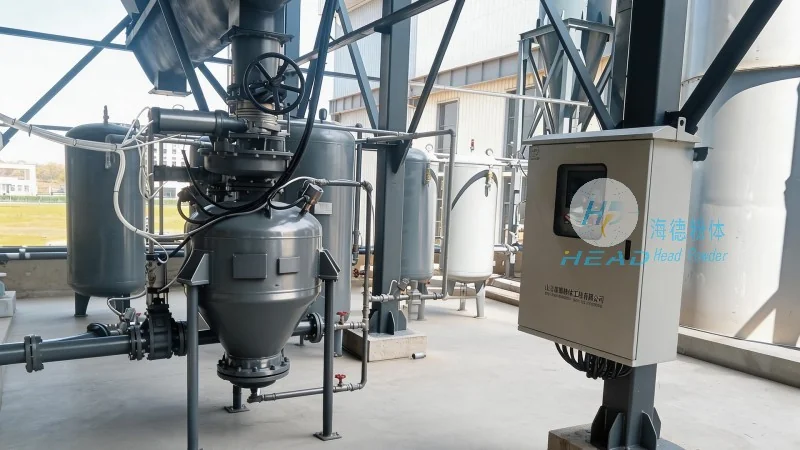
Pneumatic conveying systems operate by using air pressure to transport bulk materials through a pipeline. Unlike mechanical systems that rely on physical contact between the material and the equipment, pneumatic conveying uses the flow of air to carry the soybeans. This technology is particularly advantageous for food-grade products like soybeans because it minimizes physical stress on the kernels. By utilizing the force of air, the system can gently move the beans from storage silos to processing hoppers or packaging lines without the wear and tear associated with traditional machinery. Shandong Headpowder Engineering Co., Ltd. leverages this technology to provide reliable infrastructure for the food processing industry.
Located in Shandong, China, Shandong Headpowder Engineering Co., Ltd. has established itself as a premier engineering firm dedicated to solving complex material handling problems. The company’s expertise extends beyond simple machinery; they offer comprehensive engineering solutions that integrate seamlessly into existing production lines. When it comes to soybean conveying, Headpowder understands that every plant has unique requirements, such as distance, elevation changes, and specific throughput needs. Their team focuses on creating customized systems that optimize energy consumption while maximizing the flow rate of the soybeans, ensuring that the production process remains uninterrupted and efficient.
To fully appreciate the capabilities of pneumatic systems, it is essential to understand the specific methods employed in soybean pneumatic conveying. The choice of method depends largely on the layout of the facility and the physical properties of the soybeans. The two primary categories are dilute phase (or lean phase) and dense phase conveying.
Dilute Phase Conveying involves transporting the soybeans at high velocities with a low concentration of material in the air stream. This method is typically used for shorter distances and is known for its simplicity and speed. However, because the soybeans are moving at high speeds, there is a higher risk of abrasion and breakage if not carefully controlled. Headpowder Engineering designs these systems with optimized pipe diameters and air velocities to minimize kernel damage.
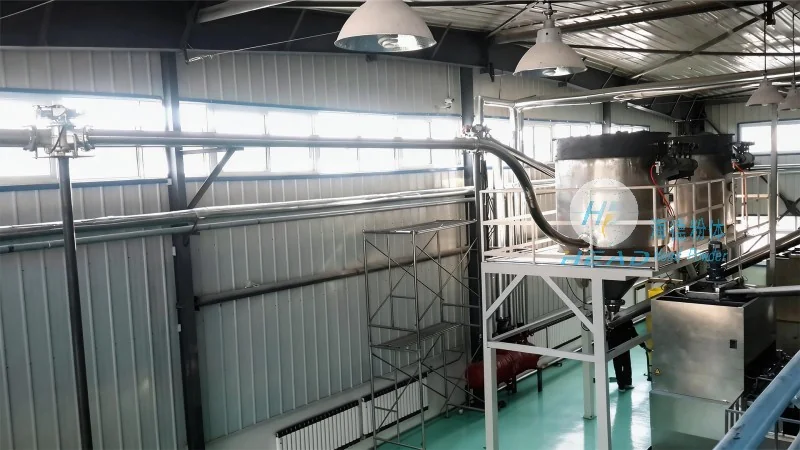
Dense Phase Conveying is the preferred method for longer distances and when handling fragile materials like soybeans. In this system, the material is transported at low velocities with a high concentration of material in the air stream. The soybeans are "pneumatically suspended" in the air, reducing the impact on the kernels and significantly decreasing wear on the pipeline. This method is energy-efficient and preserves the quality of the soybeans, making it ideal for large-scale industrial applications.
Within the realm of pneumatic conveying, the direction of the air flow is a critical design parameter. Shandong Headpowder Engineering Co., Ltd. implements both positive pressure and negative pressure systems depending on the project requirements.
Negative Pressure (Suction) Systems are often used when material needs to be collected from multiple points and transported to a central location. In this setup, the vacuum generated by the system pulls the soybeans into the pipeline. This is particularly useful for cleaning up spillage or moving material from various hoppers into a main processing silo. The suction method also helps contain dust, maintaining a cleaner working environment.
Positive Pressure (Pressure) Systems are generally used for transporting material from a central source to multiple destinations. Here, compressed air is used to push the soybeans through the pipeline. This method is highly effective for vertical lifts and long horizontal distances. Positive pressure systems are capable of handling high capacities and are often used when the material needs to be distributed across different parts of a large facility.
Implementing a pneumatic conveying system from a company like Headpowder offers numerous benefits that go beyond simple transportation. The most significant advantage is hygiene. Because the system is fully enclosed, there is no exposure to the external environment, which prevents contamination from dust, insects, or other pollutants. This is crucial for maintaining the safety and quality standards required in the food industry.
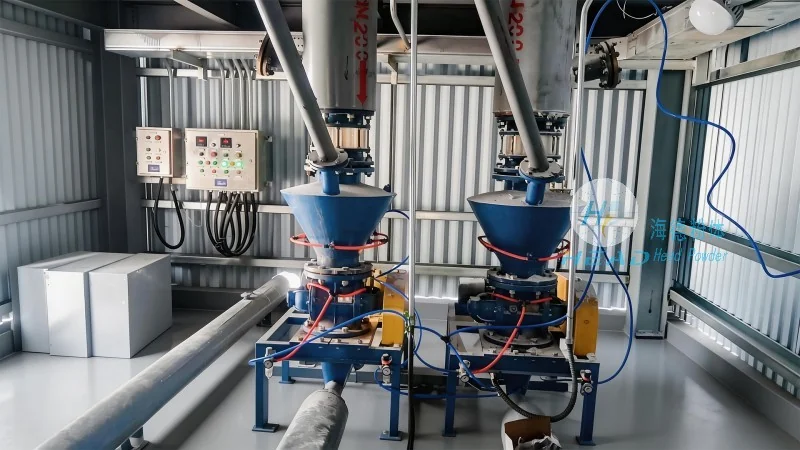
Furthermore, pneumatic conveying reduces the maintenance burden on a facility. Without moving mechanical parts that come into constant contact with the soybeans, the system has a longer lifespan and requires less frequent servicing. This reliability translates to lower operational costs and higher uptime for the production line.
Choosing the right conveying system is a complex decision that requires technical expertise and industry knowledge. Shandong Headpowder Engineering Co., Ltd. is committed to providing the highest quality soybean conveying and soybean pneumatic conveying solutions to clients worldwide. Whether you are looking to upgrade an existing system or design a new facility, their team of engineers is ready to assist.
For detailed consultations, technical support, or to discuss your specific project needs, please contact our dedicated team. You may reach out to Manager Zhang for personalized assistance. We encourage you to connect with us via WeChat at 15662777102 to discuss how Headpowder can optimize your material handling operations.
By partnering with Shandong Headpowder Engineering Co., Ltd., you ensure that your soybean processing plant operates with the highest level of efficiency, safety, and product quality.

 Shandong Headpowder Engineering Co., Ltd.
 156-6277-7102(Manager Zhang)
  0531-83386006
  Zhangqiu District, Jinan City, Shandong Province, China
telephone
WeChatconsult
top