With more than 10‑year industry experience, Shandong Headpowder delivers full‑service pneumatic‑conveying systems and blowers, undertaking nationwide turn‑key powder‑handling projects.
HeadPowder, a leading manufacturer based in Shandong, China, specializes in the design and production of advanced dust ash powder pneumatic conveying equipment. This article provides a detailed overview of the operation process and working principles of such systems, highlighting the key components and the efficient mechanisms that enable the reliable transport of dust ash materials.
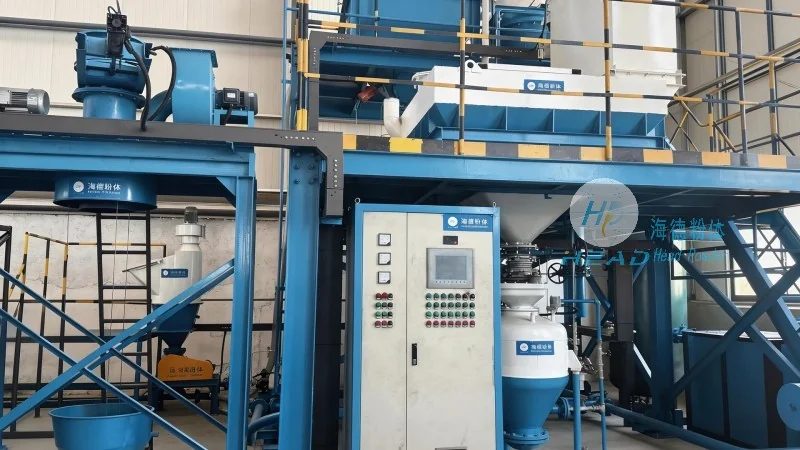
Dust ash, commonly generated in industrial processes such as power plants, cement production, and metal smelting, requires efficient and safe handling. Pneumatic conveying systems offer a solution by transporting these fine powders through a pressurized or vacuum environment using air or other gases. The equipment from HeadPowder is engineered to handle the unique challenges posed by dust ash, including its abrasive nature and potential for dust explosions, ensuring both operational efficiency and safety compliance.
The dust ash powder pneumatic conveying system consists of several critical components that work in tandem to facilitate material transport. These include the hopper for material storage, the feeder to control the flow rate, the conveying line (usually a pipeline), the air compressor or vacuum pump to generate the necessary pressure or suction, and the receiver for the discharged material. Each component plays a vital role in maintaining the system's performance and reliability.
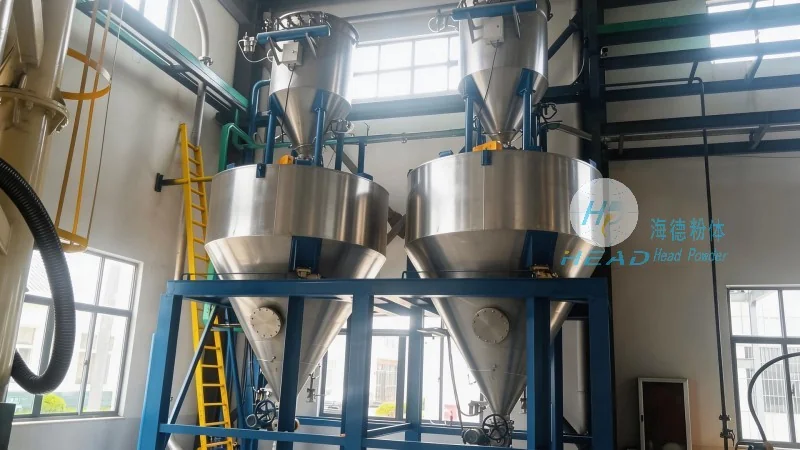
The operation of the dust ash pneumatic conveying equipment begins with the material being fed into the hopper. The feeder then regulates the flow of dust ash into the conveying line. Simultaneously, the air compressor or vacuum pump generates the required airflow, which can be either positive pressure (blowing air into the line) or negative pressure (suction from the line). The air and material mixture travels through the pipeline to the receiver, where the material is separated from the air and collected. The air is then either filtered and recycled or vented, depending on the system design.
The core working principle of the pneumatic conveying system lies in the interaction between the material particles and the air flow. In a positive pressure system, the air is forced into the pipeline at a high velocity, creating a turbulent flow that entrains the dust ash particles. The particles are suspended in the air stream and transported along the pipeline. In a negative pressure system, the air is drawn out of the pipeline, creating a vacuum that pulls the dust ash particles into the line. The design of the conveying line, including its diameter, length, and bends, is optimized to minimize pressure drop and ensure smooth material flow.
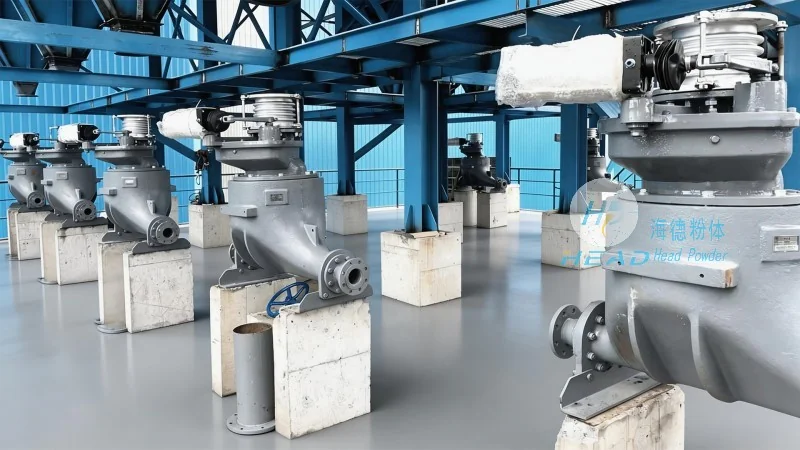
HeadPowder's dust ash powder pneumatic conveying equipment offers several advantages over traditional methods like belt conveyors or bucket elevators. These include reduced material degradation due to minimal mechanical contact, lower maintenance costs as there are fewer moving parts, and improved safety by eliminating the need for open material handling. Additionally, the systems are highly flexible, allowing for changes in material flow rates and destinations without major modifications.
HeadPowder Engineering Co., Ltd., based in Shandong, China, provides reliable and efficient dust ash powder pneumatic conveying equipment that adheres to industry standards and ensures safe and effective material transport. By understanding the operation process and working principles of these systems, users can make informed decisions about implementing or upgrading their dust ash handling solutions, ultimately improving operational efficiency and reducing costs.

 Shandong Headpowder Engineering Co., Ltd.
 156-6277-7102(Manager Zhang)
  0531-83386006
  Zhangqiu District, Jinan City, Shandong Province, China
telephone
WeChatconsult
top