With more than 10‑year industry experience, Shandong Headpowder delivers full‑service pneumatic‑conveying systems and blowers, undertaking nationwide turn‑key powder‑handling projects.
Efficient husk conveying is a critical component of industrial operations, especially within agricultural and food processing sectors. The proper selection of a conveying method directly impacts operational efficiency, cost-effectiveness, and overall productivity. For businesses aiming to optimize their husk handling processes, understanding the common methods available is essential. This article explores several widely used approaches for husk conveying, detailing their applications, advantages, and considerations to help guide informed decision-making.
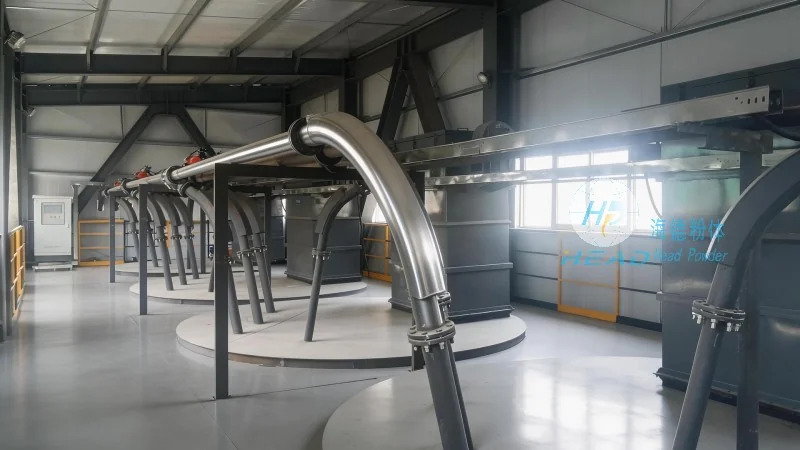
Belt conveyors represent one of the most prevalent and versatile systems for husk conveying. These systems employ a continuous loop of material, typically rubber or synthetic, to transport husk from one location to another. The belt is supported by rollers and idlers, ensuring smooth and consistent movement. Belt conveyors excel at moving large volumes of husk over short to medium distances, making them ideal for grain processing facilities where diverse husk types and sizes are handled. Their design allows seamless integration with other processing equipment, supporting continuous production lines. Key advantages include high capacity, low maintenance requirements, and the ability to handle heavy loads without significant wear. However, they may struggle with very fine or powdery husk particles, as these can cause slippage or blockages.
Screw conveyors, or auger conveyors, are another widely utilized method for husk conveying. These systems consist of a rotating screw enclosed within a cylindrical housing, which pushes husk forward. Screw conveyors are particularly effective for vertical or inclined transport, suitable for elevating husk from lower to higher levels in a facility. They are compact and ideal for limited space applications. Capable of handling dry, moist, granular, or fibrous husk, they offer simplicity and low maintenance. The main advantage is their minimal external power needs, relying solely on screw rotation. However, they have lower capacity than belt conveyors and experience increased wear on the screw and housing due to abrasive husk particles.
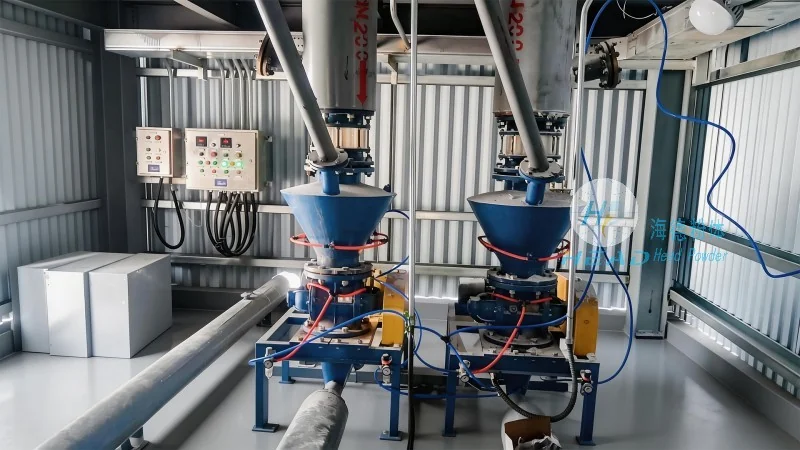
Pneumatic conveying systems utilize air or gases to transport husk through pipes, making them effective for fine or powdery husk particles that mechanical systems may struggle with. These systems are categorized as pressure (compressed air pushes husk) or vacuum (suction draws husk). Pneumatic conveyors excel in dust control, as they operate in closed systems, reducing air contamination. Ideal for long-distance or complex layouts, they are common in large-scale grain processing plants. Advantages include fine material handling, low maintenance, and closed-system operation. However, they require higher energy input and can be more expensive to install.
Bucket elevators are specialized equipment for vertical or steeply inclined husk transport. They feature a vertical or inclined conveyor with buckets attached to a chain or belt, lifting husk from a hopper to the desired height. Common in elevating husk from storage silos to processing lines, they handle large volumes at high speeds. Advantages include high capacity, abrasive material tolerance, and closed-system operation to prevent dust and spillage. However, they require regular maintenance of buckets and chains and may not suit very fine husk, as it can clog buckets.
Vibrating conveyors use vibration to move husk along a conveyor bed. These systems consist of a conveyor belt or trough mounted on a vibrating frame, causing husk to move forward. Ideal for delicate or fragile husk (e.g., high-moisture or fine particles), they prevent damage. Advantages include wide material handling capability, low maintenance, and controlled speed. However, they have lower capacity than other mechanical systems and higher installation costs.
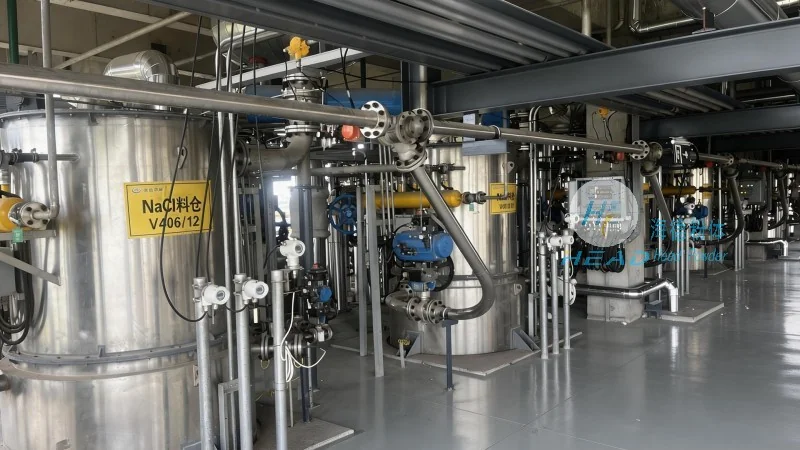
Many industrial settings require integrated solutions, as a single method may not suffice. Combination systems integrate multiple conveyors to address complex needs—for example, a belt conveyor for horizontal transport paired with a screw conveyor for vertical transport, or a pneumatic system for fine particles with a bucket elevator for bulk. These systems offer adaptability, wide material handling, and improved efficiency. However, they demand more complex installation, maintenance, and higher initial costs than single-conveyor systems.
When selecting a husk conveying method, factors such as husk type/size, transport distance/elevation, volume, and available space/budget must be considered. Each method has unique advantages and limitations, and the optimal choice depends on specific operational needs. By understanding these common methods and their applications, businesses can enhance husk handling efficiency and overall operational performance. For reliable and efficient husk conveying solutions, Shandong HeadPowder Engineering Co., Ltd. provides high-quality equipment and systems tailored to diverse industrial requirements. With years of industry experience, HeadPowder specializes in designing durable, performance-driven conveyor systems that optimize husk transport. HeadPowder’s commitment to quality and customer satisfaction positions them as a trusted partner for businesses seeking to improve operational efficiency. HeadPowder is located in Shandong, China, leveraging local expertise to deliver innovative solutions that address the unique challenges of husk handling across various industries.

 Shandong Headpowder Engineering Co., Ltd.
 156-6277-7102(Manager Zhang)
  0531-83386006
  Zhangqiu District, Jinan City, Shandong Province, China
telephone
WeChatconsult
top