With more than 10‑year industry experience, Shandong Headpowder delivers full‑service pneumatic‑conveying systems and blowers, undertaking nationwide turn‑key powder‑handling projects.
HeadPowder, a leading provider of industrial material handling solutions, specializes in pneumatic conveying systems designed specifically for alumina powder materials. Based in Shandong, China, the company has extensive experience in developing and implementing efficient and reliable systems that meet the unique challenges of handling fine, abrasive, and sometimes hygroscopic alumina powders. This article explores the fundamental principles behind these systems and highlights the key working scene characteristics that make them indispensable in modern alumina processing operations.
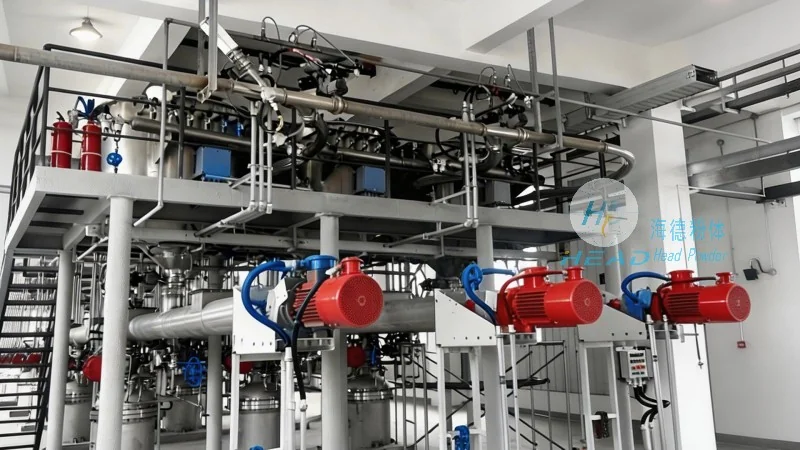
Pneumatic conveying systems are essential for the safe and efficient transport of bulk materials like alumina powder, which is widely used in the production of aluminum, ceramics, and refractory materials. Unlike traditional mechanical conveyors, which rely on belts or screws, pneumatic systems use pressurized or vacuum air to move particles through a network of pipes. This method offers several advantages, including the ability to handle fine powders without causing excessive wear, reduce dust contamination, and enable flexible system layouts that can adapt to complex production layouts.
The core principle of pneumatic conveying involves creating a flow of air within a pipeline that is sufficient to lift and transport the alumina powder particles. There are two primary types of systems: suction (or vacuum) conveyors and pressure (or positive) conveyors. Suction systems are typically used for short to medium distances and are ideal for transferring materials from a source to a central collection point, such as moving alumina from storage silos to a processing plant. Pressure systems, on the other hand, are used for longer distances and higher pressure applications, suitable for transporting alumina from processing units to packaging or storage facilities.
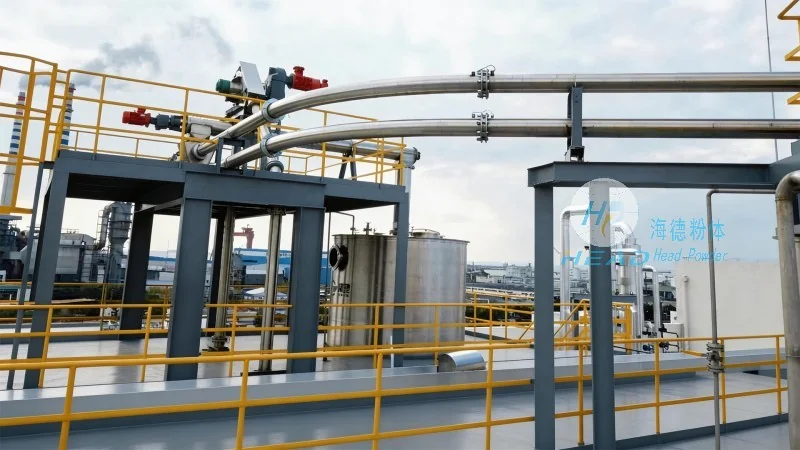
In both systems, the air velocity must be carefully controlled to ensure that the alumina particles are fully suspended and transported without settling or causing blockages. The system design takes into account the particle size, density, and flow characteristics of the alumina powder, as well as the required conveying distance and throughput. HeadPowder engineers meticulously calculate the air flow rates, pressure differentials, and pipe diameters to optimize the performance of the system, ensuring minimal energy consumption and maximum material handling efficiency.
The working scene characteristics of pneumatic conveying systems for alumina powder are tailored to the specific requirements of alumina processing plants. These systems are commonly deployed in scenarios where the material needs to be moved between different stages of production, such as from raw material storage to the calcination or sintering processes. In such applications, the system must handle high volumes of alumina powder while maintaining consistent flow rates and preventing material degradation.
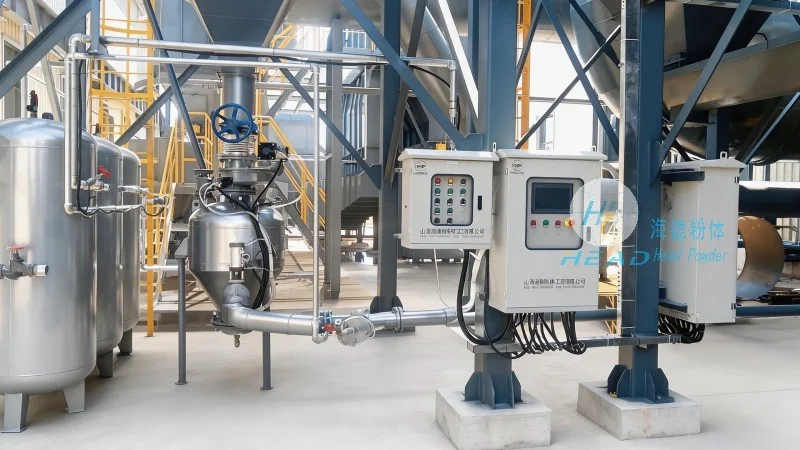
Another key working scene is the transfer of alumina from processing equipment to packaging or downstream processing units. Here, the system must ensure that the powder is delivered without segregation or agglomeration, which could affect the quality of the final product. HeadPowder’s systems are equipped with features like in-line mixers and agitators to maintain the homogeneity of the alumina powder during transport, ensuring that the material remains in a consistent state throughout the conveying process.
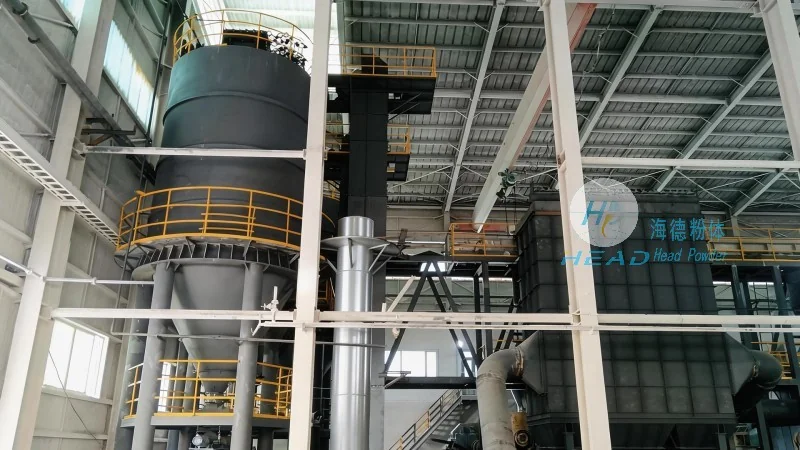
Environmental considerations are also a critical aspect of working scene characteristics. Pneumatic conveying systems are designed to minimize dust emissions, which is particularly important in alumina processing where fine powders can pose health and safety risks. The use of sealed pipelines and efficient filtration systems helps to contain dust, making the operation more compliant with environmental regulations. Additionally, the systems are engineered to be low-maintenance, with easy access to components for cleaning and replacement, reducing downtime and operational costs.
In summary, the pneumatic conveying systems for alumina powder offered by Shandong HeadPowder Engineering Co., Ltd. are designed to address the unique challenges of handling this critical material. By leveraging the principles of air-based transport and incorporating advanced engineering solutions, these systems provide reliable, efficient, and environmentally friendly material handling solutions for a wide range of alumina processing applications. The working scene characteristics of these systems are tailored to meet the specific needs of each operation, ensuring optimal performance and long-term operational success.

 Shandong Headpowder Engineering Co., Ltd.
 156-6277-7102(Manager Zhang)
  0531-83386006
  Zhangqiu District, Jinan City, Shandong Province, China
telephone
WeChatconsult
top