With more than 10‑year industry experience, Shandong Headpowder delivers full‑service pneumatic‑conveying systems and blowers, undertaking nationwide turn‑key powder‑handling projects.
HeadPowder, a leading engineering company based in Shandong, China, specializes in the design and implementation of advanced material handling systems. This article focuses on the pneumatic conveying line for lithium iron carbonate, a critical material in the battery manufacturing industry. The system's design and operational characteristics are tailored to meet the specific demands of processing this high-value material efficiently and safely.
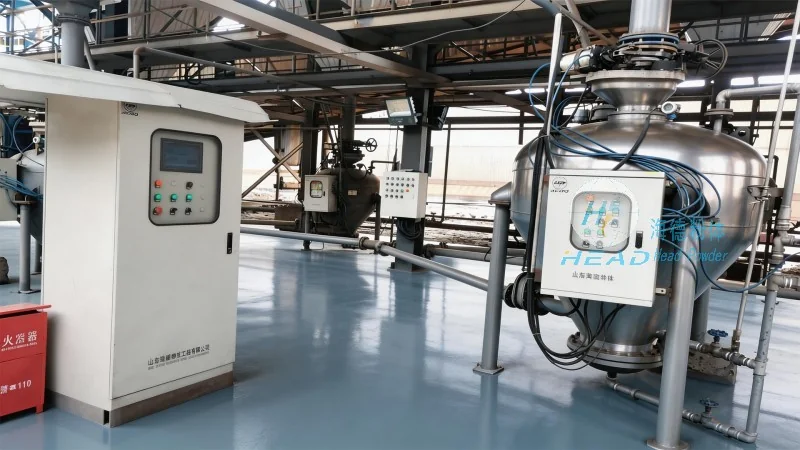
The pneumatic conveying line for lithium iron carbonate is a sophisticated system that utilizes air as the primary medium to transport the material from one location to another. This method offers several advantages over traditional mechanical conveying, including reduced equipment wear, lower maintenance costs, and the ability to handle materials in a dust-free environment. The system is particularly suitable for applications where the material needs to be transported over moderate distances within a production facility, such as from a storage silo to a processing unit or between different stages of the battery production line.
The core principle of the pneumatic conveying system is based on the creation of a pressure differential that propels the material through a pipeline. The system typically consists of a feeding device, a conveying pipeline, a control system, and a discharge device. The feeding device, often a rotary valve or a screw feeder, introduces the lithium iron carbonate into the pipeline. The control system regulates the air flow and pressure, ensuring consistent material transport. The conveying pipeline is designed with appropriate diameter and length to maintain the material's flow without causing blockages or excessive pressure drops. The discharge device, such as a rotary valve or a hopper, collects the material at the destination point.
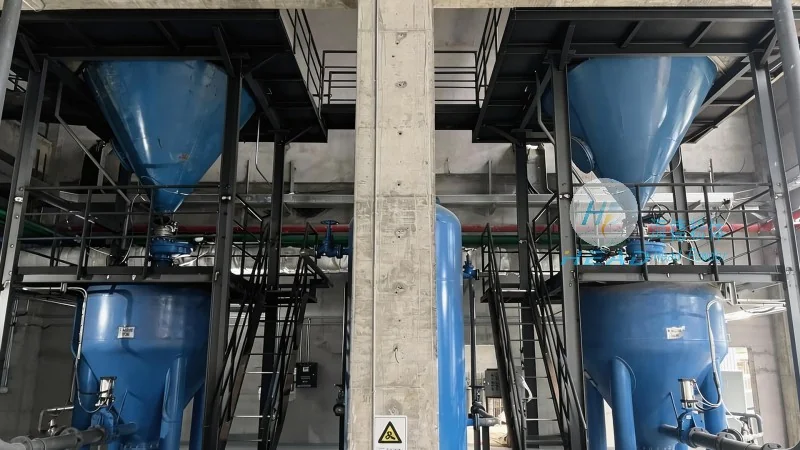
Several key components work in tandem to ensure the smooth operation of the pneumatic conveying line. The feeding device is crucial for controlling the material flow rate and preventing material buildup. The pipeline itself must be constructed from materials that are compatible with lithium iron carbonate, such as stainless steel or special coatings to avoid corrosion. The control system, which may include pressure sensors, flow meters, and valves, monitors and adjusts the air pressure and flow to maintain optimal conveying conditions. The discharge device ensures that the material is collected efficiently without spillage or re-entrainment of dust.
The working scene characteristics of the lithium iron carbonate pneumatic conveying line are tailored to the specific requirements of the battery manufacturing process. The system is designed to operate in a clean and controlled environment, minimizing dust generation and ensuring product purity. The conveying line is often integrated with other production equipment, such as mixers, granulators, or coating machines, to form a seamless material handling workflow. The system's flexibility allows it to handle varying material feed rates and batch sizes, adapting to different production schedules. Additionally, the system is engineered for safety, with features like explosion-proof designs and emergency shutdown mechanisms to protect personnel and equipment.
The pneumatic conveying line for lithium iron carbonate offers several advantages in the battery manufacturing industry. Firstly, it provides a dust-free and hygienic environment, which is essential for maintaining the quality of the final battery product. Secondly, the system reduces the risk of material contamination, as the material is transported in a closed pipeline. Thirdly, the system offers high efficiency in terms of material throughput, allowing for increased production capacity. Finally, the system's low maintenance requirements and long service life contribute to overall operational cost savings.
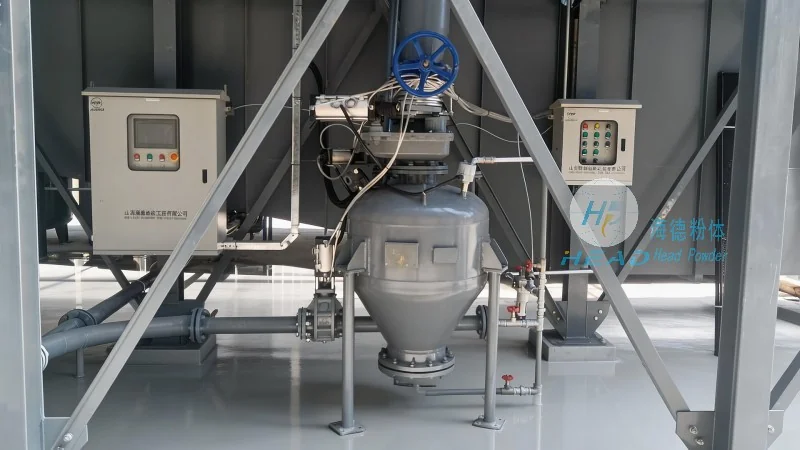
HeadPowder has successfully implemented lithium iron carbonate pneumatic conveying lines in various battery manufacturing facilities. For instance, in a large-scale battery cell production plant, the system was used to transport lithium iron carbonate from a bulk storage silo to a mixing and coating line. The system was designed to handle a material flow rate of up to 10 tons per hour, ensuring that the production line operates at optimal capacity. Another application involved transporting the material between different processing stages, such as from a drying unit to a granulation machine, where the material was further processed into the final battery electrode material.
In conclusion, the pneumatic conveying line for lithium iron carbonate is a highly effective and efficient solution for material handling in the battery manufacturing industry. The system's design, based on the principle of air-based transport, offers numerous advantages over traditional mechanical conveying methods. With its ability to handle high-value materials like lithium iron carbonate while maintaining product quality and operational efficiency, the system is a critical component in modern battery production facilities. HeadPowder's expertise in engineering such systems ensures that clients receive tailored solutions that meet their specific production needs and operational requirements.

 Shandong Headpowder Engineering Co., Ltd.
 156-6277-7102(Manager Zhang)
  0531-83386006
  Zhangqiu District, Jinan City, Shandong Province, China
telephone
WeChatconsult
top