With more than 10‑year industry experience, Shandong Headpowder delivers full‑service pneumatic‑conveying systems and blowers, undertaking nationwide turn‑key powder‑handling projects.
HeadPowder, a leading engineering company based in Shandong, China, specializes in the design and implementation of advanced pneumatic conveying systems tailored for graphite electrode material handling. This article delves into the fundamental principles behind such systems and highlights key working scene characteristics that define their operational effectiveness.
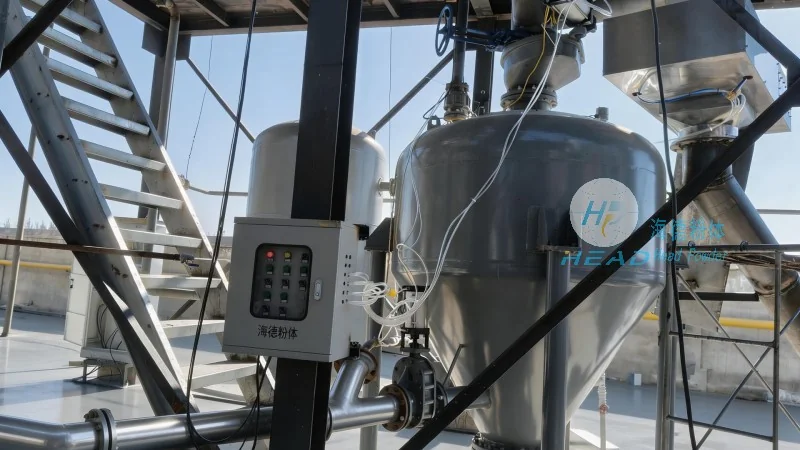
The core principle of a pneumatic conveying line for graphite electrode materials involves the use of compressed air or other gases to transport bulk materials through a pipeline system. In this process, the material is suspended in the air stream, allowing it to be moved from the source to the destination without the need for mechanical components like belts or buckets. The system typically consists of a feeding hopper, a conveyor line, and a discharge unit, all connected by a network of pipes. The air flow is controlled to ensure the material is transported efficiently, minimizing particle degradation and ensuring consistent flow rates. This method is particularly effective for handling graphite electrode materials due to their high density and abrasive nature, as it reduces wear on equipment and maintains material integrity during transport. The principle relies on the interaction between the material particles and the air stream, where compressed air creates a flow that lifts and propels the particles forward. The velocity of the air stream is crucial, as it must be sufficient to overcome gravitational forces while maintaining a stable suspension. This requires precise control of air pressure and flow rate, which can be adjusted based on material properties and system design. The system operates at pressures ranging from 0.5 to 1.5 bar, with positive displacement blowers or rotary lobe compressors providing consistent air supply. Pipeline design, including bends and expansion joints, is optimized to minimize pressure losses and prevent blockages.
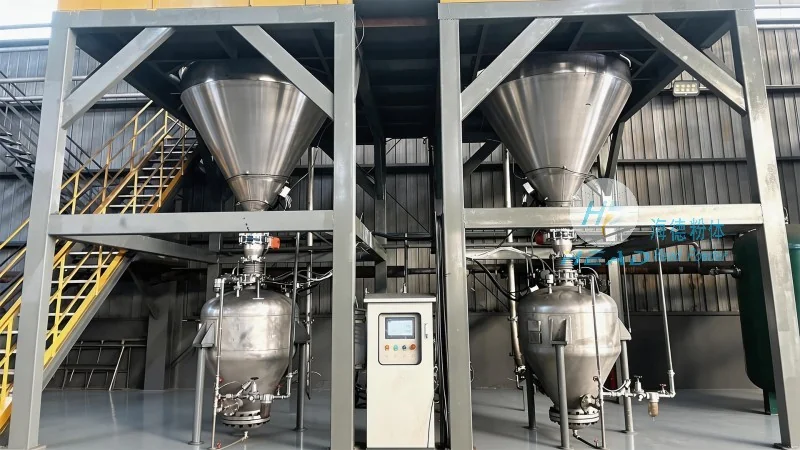
The working scene characteristics of pneumatic conveying lines for graphite electrode materials are defined by several key factors that impact performance and suitability in industrial settings. Firstly, the system's ability to handle high material loads with minimal maintenance is a critical characteristic. This is achieved through robust pipeline designs and efficient air compression systems, ensuring continuous operation under heavy loads. Secondly, adaptability to different material sizes and shapes is another important characteristic. Graphite electrode materials vary from granules to larger chunks, and the system can be configured with adjustable air flow rates and nozzle designs to handle all variations. Thirdly, environmental friendliness is a notable characteristic. Unlike traditional mechanical methods, pneumatic systems do not generate dust or require additional cleaning equipment, making them ideal for applications where air quality and safety are paramount. Additionally, energy efficiency is a key characteristic, as compressed air transport is often more cost-effective than other methods over time.
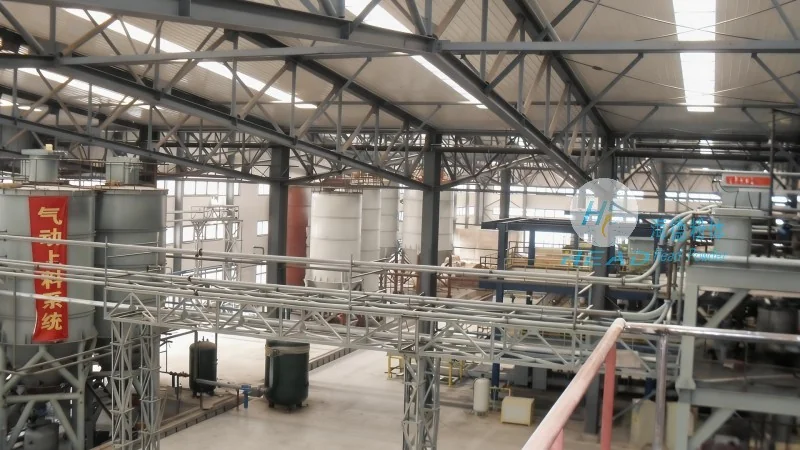
Pneumatic conveying lines for graphite electrode materials are widely used in industrial processes where material transport efficiency and material integrity are essential. These systems are commonly employed in manufacturing facilities that produce graphite electrodes, where the material needs to be moved from storage to processing equipment or from production lines to packaging areas. The operational benefits of such systems include reduced labor costs due to automated material handling, lower equipment wear compared to mechanical conveyors, and improved safety as there are no moving parts that could pose a risk to personnel. Furthermore, the system's ability to handle abrasive materials like graphite without significant wear ensures longer equipment lifespan and lower maintenance expenses. The working scene characteristics also include the system's scalability, allowing it to be expanded or modified to accommodate increased production volumes or changes in material handling requirements. This flexibility makes pneumatic conveying lines a versatile solution for various industrial applications.
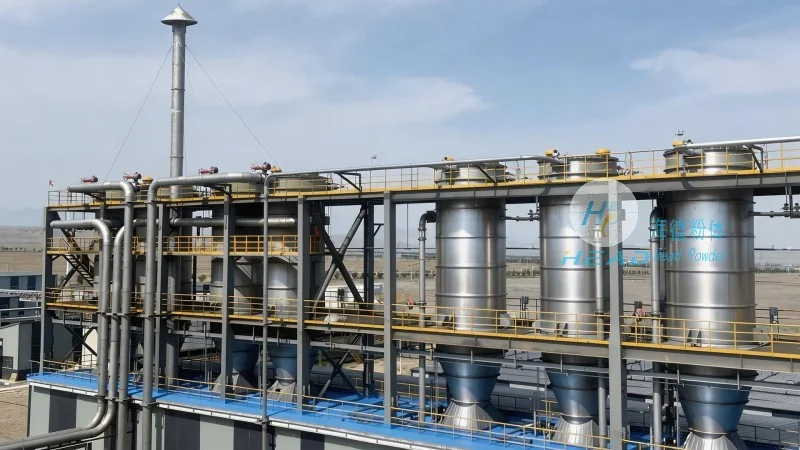
In summary, the pneumatic conveying line for graphite electrode materials is a sophisticated system that leverages the principles of air flow and material suspension to achieve efficient and reliable material transport. The working scene characteristics, including high load capacity, adaptability to material variations, environmental friendliness, and energy efficiency, make it an ideal choice for industrial applications. As a leading provider in this field, HeadPowder continues to innovate and optimize these systems to meet the evolving needs of the graphite electrode industry, ensuring sustainable and efficient material handling solutions.

 Shandong Headpowder Engineering Co., Ltd.
 156-6277-7102(Manager Zhang)
  0531-83386006
  Zhangqiu District, Jinan City, Shandong Province, China
telephone
WeChatconsult
top