With more than 10‑year industry experience, Shandong Headpowder delivers full‑service pneumatic‑conveying systems and blowers, undertaking nationwide turn‑key powder‑handling projects.
Understanding the mechanics and design of soap granule pneumatic conveying equipment is crucial for industries that handle fine powders. This equipment is a specialized system designed to transport soap granules or similar powder materials through a pipeline using air pressure. The following overview will explain the fundamental structure and operational principles of such equipment, providing insights into its design and functionality.
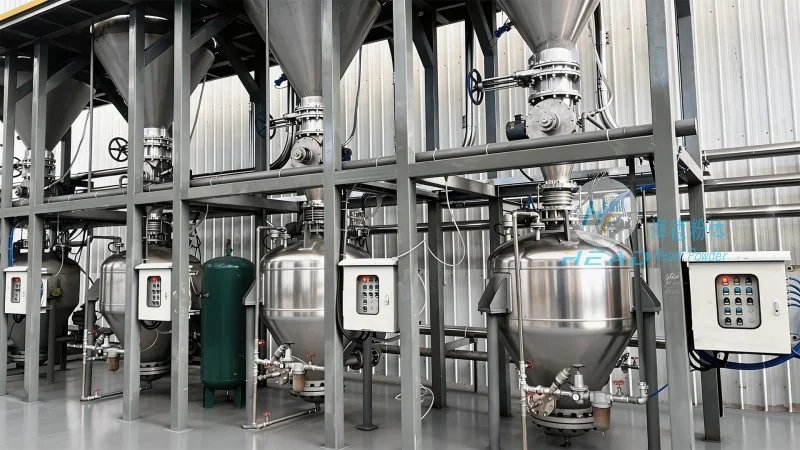
The information presented here is provided by Shandong HeadPowder Engineering Co., Ltd., a company specializing in the design and manufacturing of powder handling equipment. HeadPowder is based in Shandong, China, and offers a range of solutions tailored to the needs of industries dealing with granular and powdered materials.
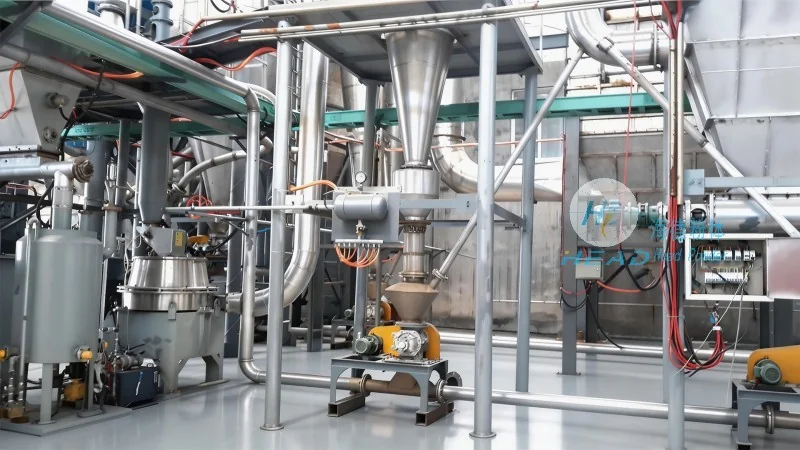
Pneumatic conveying systems for soap granules typically consist of several key components that work together to transport the material. The primary structure includes a hopper for material storage, a conveying line (often a pipeline), a blower or compressor to generate the air flow, and a receiver or discharge unit where the material is deposited. The hopper is designed to hold the soap granules and feed them into the conveying line at a controlled rate. The blower provides the necessary air pressure to move the granules through the pipeline, and the air flow is regulated to ensure efficient and consistent transport. The receiver at the end of the line collects the material and may include a filter to remove any residual air or dust.
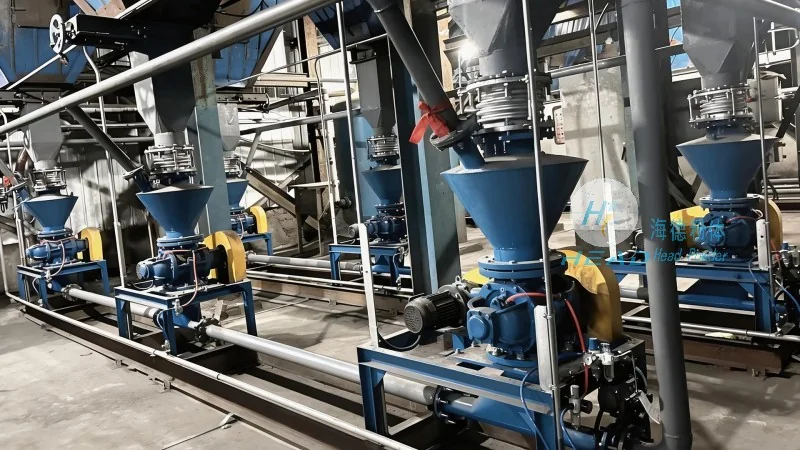
The hopper is a critical component that ensures a steady supply of soap granules to the conveying line. It is usually equipped with a feeder, such as a rotary valve or a screw feeder, which controls the flow rate of the material into the pipeline. The conveying line is typically made of stainless steel or other corrosion-resistant materials to handle the chemical properties of soap granules and prevent contamination. The blower or compressor is responsible for generating the air pressure, and its capacity is matched to the volume and density of the material being transported. The air flow is directed through the pipeline, carrying the soap granules in a suspended state. At the receiving end, a cyclone separator or a bag filter may be used to separate the material from the air, ensuring that the material is deposited cleanly and the air is filtered before release.
Using pneumatic conveying equipment for soap granules offers several advantages over traditional methods like belt conveyors or bucket elevators. The system is enclosed, which reduces dust contamination and improves safety in the workplace. It also allows for a more flexible layout, as the pipeline can be routed around obstacles or through different levels of a facility. The equipment is relatively easy to maintain, as there are fewer moving parts compared to mechanical conveyors. Additionally, the system can be designed to handle varying material flow rates, making it suitable for both small-scale and large-scale production environments.
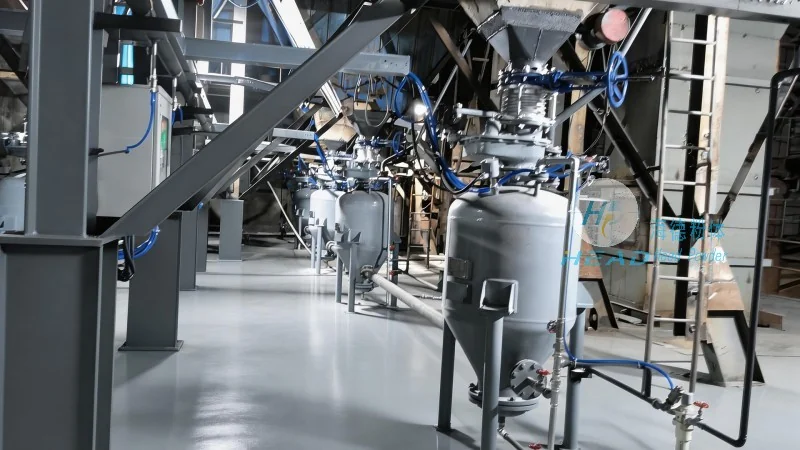
Soap granule pneumatic conveying equipment is a sophisticated system that combines engineering principles with practical design to efficiently transport powder materials. By understanding its structure and operational principles, industries can select and operate the most suitable equipment for their specific needs. Shandong HeadPowder Engineering Co., Ltd. specializes in providing high-quality pneumatic conveying solutions tailored to the requirements of various industries, ensuring reliable and efficient material handling.

 Shandong Headpowder Engineering Co., Ltd.
 156-6277-7102(Manager Zhang)
  0531-83386006
  Zhangqiu District, Jinan City, Shandong Province, China
telephone
WeChatconsult
top