With more than 10‑year industry experience, Shandong Headpowder delivers full‑service pneumatic‑conveying systems and blowers, undertaking nationwide turn‑key powder‑handling projects.
When it comes to the efficient and safe handling of battery materials, the choice of pneumatic conveying structure is critical. Proper selection ensures optimal performance, minimal material degradation, and compliance with safety standards. This article explores the main pneumatic conveying structures commonly used in the battery material processing industry, providing insights into their functionalities and applications.
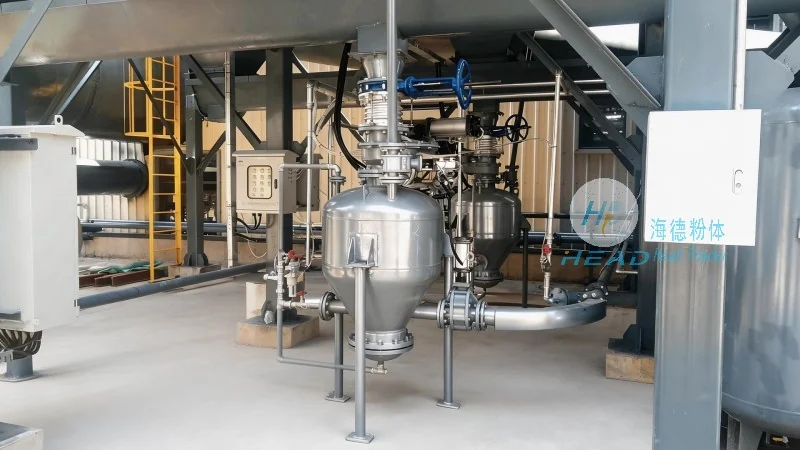
Pneumatic conveying systems are essential for transporting bulk materials like lithium compounds, graphite, and other battery raw materials from one point to another within a production facility. These systems utilize air or gas to move materials through pipelines, offering advantages such as reduced contamination, lower labor costs, and the ability to handle materials in a closed environment. The effectiveness of a pneumatic conveying system largely depends on the type of structure employed, which must be tailored to the specific characteristics of the battery material being handled.
Several main structures are widely used in the battery material industry, each with distinct operational principles and suitability for different material types and process requirements.
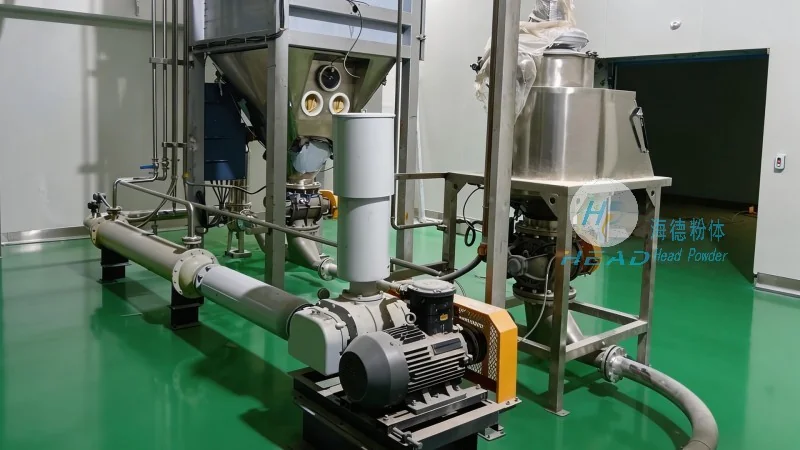
The positive pressure system operates by blowing air or gas into the conveying line, creating a pressure higher than the ambient air pressure. This method is particularly effective for transporting materials that are prone to degradation or contamination, as the entire system is sealed and the material is never exposed to the external environment. The positive pressure system is commonly used for handling sensitive materials such as lithium hydroxide and other reactive compounds, where maintaining a controlled atmosphere is crucial. The system typically includes a blower, a material feeder, and a discharge unit, with the air flow direction being from the source to the destination. This structure ensures consistent material flow and minimal particle breakage, making it ideal for high-value battery materials.
Conversely, the negative pressure system creates a vacuum within the conveying line, drawing material from the source to the destination. This method is often preferred for applications where the material needs to be transported over longer distances or through complex piping networks. The vacuum system is suitable for handling materials that are less sensitive to air exposure, such as graphite and other inert powders. It typically involves a vacuum pump, a material collection hopper, and a discharge valve. The negative pressure approach allows for more flexible pipeline configurations and can handle materials with higher moisture content, though it may require more maintenance to prevent dust accumulation and ensure efficient suction.
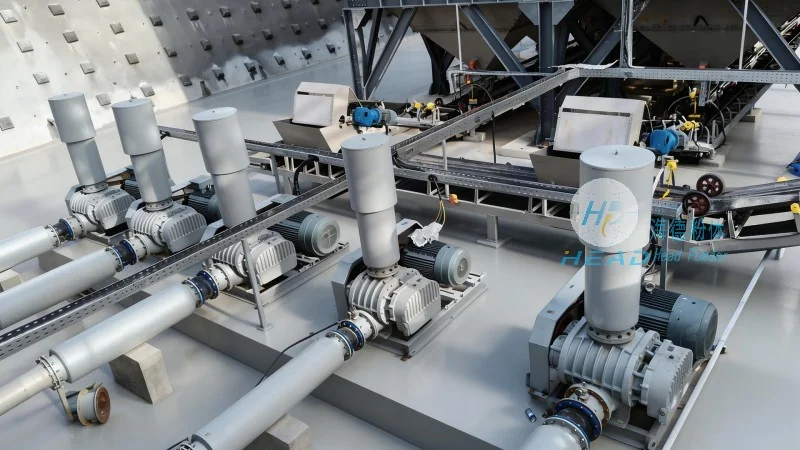
A hybrid system combines elements of both positive and negative pressure, offering enhanced flexibility and efficiency. This structure is particularly useful when handling a mix of material types or when the conveying distance and process requirements vary. The hybrid system may use a positive pressure section for the initial material transport and a negative pressure section for the final delivery, or vice versa. This approach allows for optimized energy consumption and reduced wear on components. For battery material processing, a hybrid system can be tailored to handle both reactive and inert materials, ensuring that each material type is conveyed under the most suitable conditions. This versatility makes the hybrid system a popular choice in modern battery manufacturing facilities.
The dilute phase system is characterized by a high air-to-material ratio, typically 20-100 times the material volume. This method is ideal for short to medium-distance conveying of fine powders, as it minimizes material buildup and reduces the risk of blockages. The dilute phase system is commonly used for transporting materials like lithium carbonate and other fine powders, where particle size and flow characteristics are critical. The system operates at relatively high velocities, ensuring that the material remains suspended in the air stream. This structure is efficient for handling materials that are prone to agglomeration or caking, as the high air flow prevents particle sticking to the pipeline walls. The dilute phase approach also allows for easier cleaning and maintenance, as the material is continuously in motion and does not settle in the pipeline.
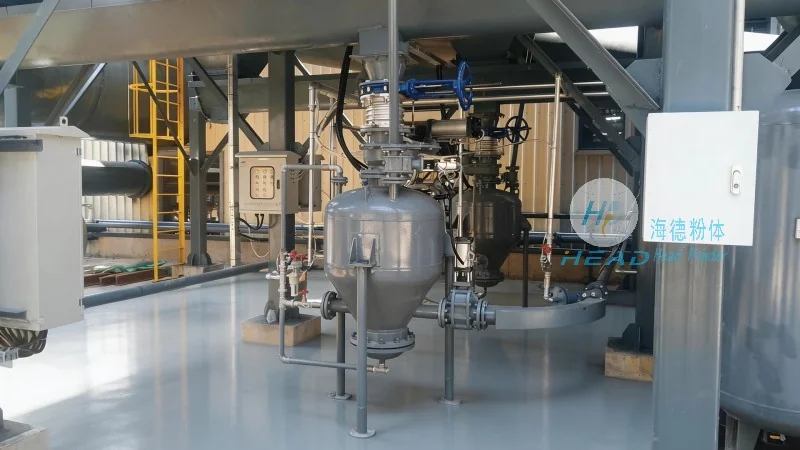
In contrast, the dense phase system uses a lower air-to-material ratio, typically 1-5 times the material volume. This method is suitable for conveying materials over longer distances or when the material is prone to degradation at high velocities. The dense phase system operates at lower velocities, allowing the material to move in a plug flow, which reduces particle breakage and maintains the material's integrity. This structure is commonly used for handling sensitive materials such as cathode active materials, where the risk of particle damage is high. The dense phase system also provides better control over the material flow rate, making it easier to regulate the delivery of materials to downstream processes. By maintaining a lower velocity, the system minimizes the impact on the material's physical properties, ensuring that the battery materials remain in optimal condition for the manufacturing process.
Shandong HeadPowder Engineering Co., Ltd., a leading provider of pneumatic conveying solutions, specializes in designing and manufacturing customized systems tailored to the unique needs of the battery material industry. With a focus on innovation and quality, the company has developed advanced structures that address the specific challenges of handling battery materials, including material sensitivity, process efficiency, and safety compliance. The company's expertise in material flow dynamics and system integration ensures that each pneumatic conveying structure is optimized for maximum performance and reliability. Based in Shandong, China, HeadPowder Engineering leverages its local presence and industry knowledge to deliver solutions that meet the evolving demands of the battery manufacturing sector. By combining technical expertise with practical application experience, the company helps battery manufacturers improve their production processes, reduce costs, and enhance overall operational efficiency.

 Shandong Headpowder Engineering Co., Ltd.
 156-6277-7102(Manager Zhang)
  0531-83386006
  Zhangqiu District, Jinan City, Shandong Province, China
telephone
WeChatconsult
top