With more than 10‑year industry experience, Shandong Headpowder delivers full‑service pneumatic‑conveying systems and blowers, undertaking nationwide turn‑key powder‑handling projects.
HeadPowder, a leading manufacturer based in Shandong, China, specializes in the design and production of advanced pneumatic conveying systems tailored for handling ammonium chloride materials. This article delves into the fundamental principles behind such equipment and highlights the key characteristics of its operational environments.
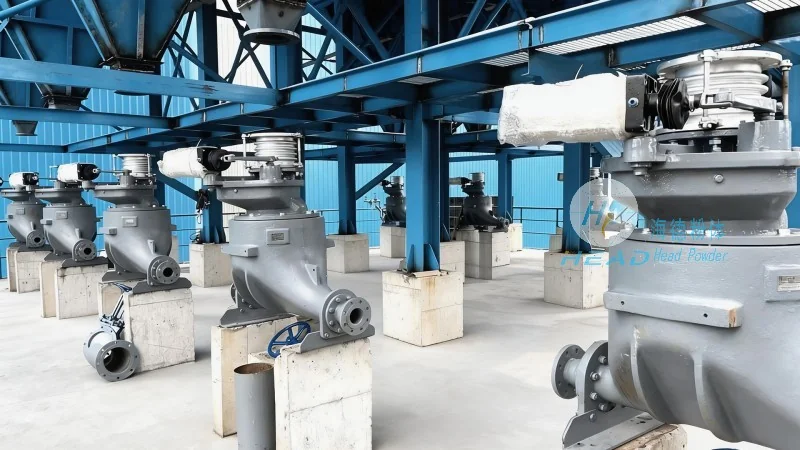
The pneumatic conveying system for ammonium chloride operates on the principle of using compressed air to transport bulk materials through a pipeline network. Unlike traditional mechanical conveyors, this method eliminates the need for moving parts in the conveying path, reducing maintenance requirements and enhancing safety. The system typically consists of a hopper for material storage, a blower or compressor to generate the air flow, a pipeline system for material transport, and a discharge point for the material. The process begins when the ammonium chloride is fed into the hopper, where it is then drawn into the pipeline by the air flow. The air velocity is carefully controlled to ensure the material is suspended and transported efficiently without causing blockages or excessive wear on the system components.
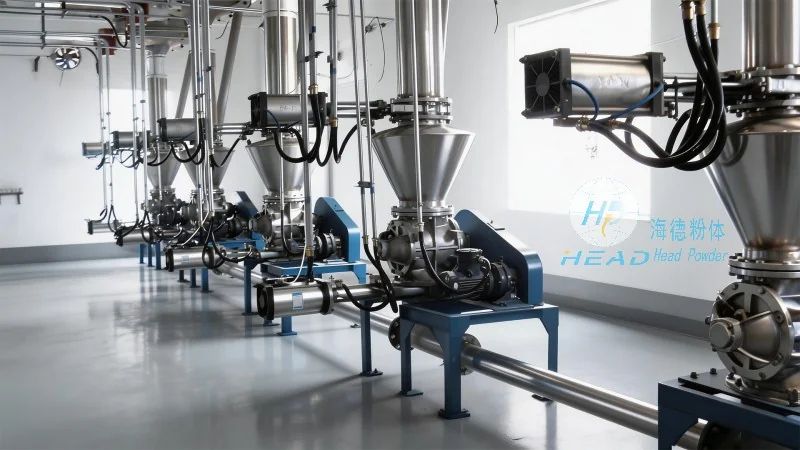
The operational environment of ammonium chloride pneumatic conveying equipment is characterized by several distinct features that influence its design and performance. First, the material's physical properties, such as its particle size, density, and flowability, are critical factors. Ammonium chloride is a fine, free-flowing powder, which makes it suitable for pneumatic transport but also requires precise air velocity control to prevent dust accumulation and ensure consistent flow. Second, the system's design must account for the material's chemical properties, including its hygroscopic nature—ammonium chloride readily absorbs moisture from the air, which can affect its handling characteristics and the system's efficiency. Therefore, the equipment often incorporates moisture control measures, such as drying the air or using sealed containers, to maintain optimal material condition. Third, the working environment may involve varying temperatures and humidity levels, which can impact the system's performance. The equipment is engineered to operate reliably under these conditions, with components designed to withstand potential corrosion or degradation from the material.
Ammonium chloride pneumatic conveying systems are widely used in industrial settings where efficient and safe material transport is essential. These applications include chemical manufacturing plants, fertilizer production facilities, and food processing industries. The equipment's ability to handle large volumes of material over long distances with minimal downtime makes it a preferred choice for continuous production processes. Additionally, the system's compact design and reduced footprint compared to traditional conveyors allow for better space utilization in industrial facilities. From a performance perspective, the system offers high conveying rates, with some models capable of transporting up to several tons per hour, depending on the system configuration and material characteristics. The energy efficiency of the system is also a key consideration, as the blower or compressor is optimized to provide the necessary air pressure with minimal energy consumption. This not only reduces operational costs but also aligns with sustainability goals in industrial operations.
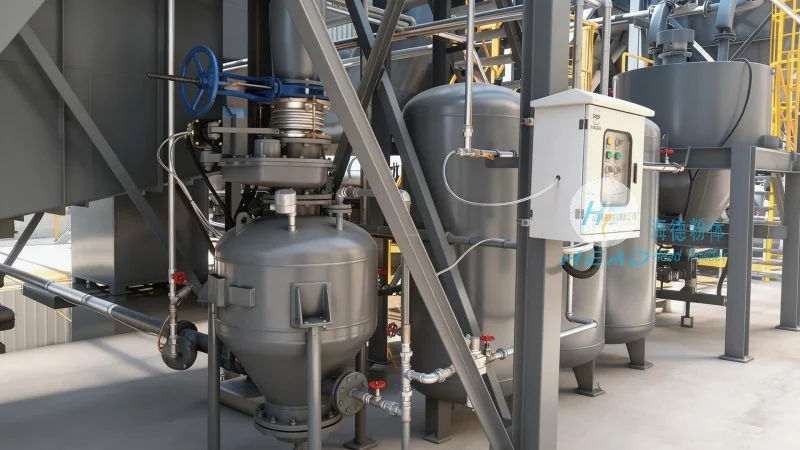
HeadPowder Engineering Co., Ltd., based in Shandong, China, is committed to delivering high-quality pneumatic conveying solutions for ammonium chloride and other bulk materials. The company's expertise in material handling technology ensures that its equipment is designed to meet the specific needs of industrial applications, combining efficiency, reliability, and safety. By understanding the unique properties of ammonium chloride and the demands of its operational environments, HeadPowder provides tailored solutions that enhance productivity and operational performance for its clients. With a focus on innovation and customer satisfaction, HeadPowder continues to be a trusted partner in the chemical and industrial sectors, offering advanced pneumatic conveying systems that meet the evolving needs of modern manufacturing.

 Shandong Headpowder Engineering Co., Ltd.
 156-6277-7102(Manager Zhang)
  0531-83386006
  Zhangqiu District, Jinan City, Shandong Province, China
telephone
WeChatconsult
top