With more than 10‑year industry experience, Shandong Headpowder delivers full‑service pneumatic‑conveying systems and blowers, undertaking nationwide turn‑key powder‑handling projects.
For industrial applications, the performance of aluminum oxide powder is heavily influenced by its technical specifications and the efficiency of its conveying system. Understanding these aspects is crucial for optimizing production processes and ensuring product quality. This article provides an in-depth look at the key technical parameters of aluminum oxide powder and the critical aspects of its conveying system, along with insights into the expertise of Shandong HeadPowder Engineering Co., Ltd., a leading provider in the field.
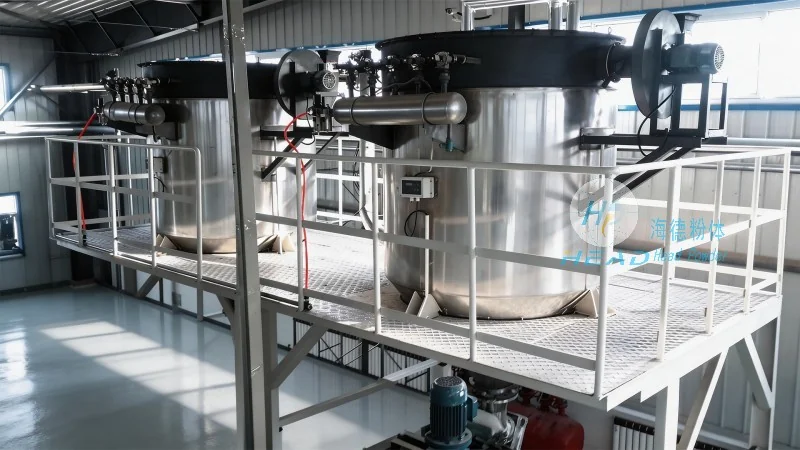
Aluminum oxide powder, commonly known as alumina, is a versatile material used in various industries, including ceramics, refractories, and chemical manufacturing. The technical parameters of this powder directly impact its application performance. Several critical parameters must be considered when evaluating aluminum oxide powder:
Firstly, the particle size distribution is a fundamental parameter. It affects the powder's flowability, packing density, and reactivity. A narrow particle size distribution ensures consistent performance in processes like sintering and casting. HeadPowder specializes in producing aluminum oxide powder with precise particle size control, tailored to meet specific industrial requirements. Our advanced grinding and classification technologies enable us to deliver powders with particle sizes ranging from sub-micron to several microns, depending on the application.
Secondly, the purity of the aluminum oxide powder is essential, especially in high-technology applications such as semiconductor manufacturing and aerospace components. Impurities can significantly affect the material's mechanical and electrical properties. Shandong HeadPowder Engineering Co., Ltd. employs stringent quality control measures, including advanced purification processes, to ensure our aluminum oxide powders meet or exceed industry standards for purity. This commitment to high purity is reflected in our product specifications, which typically indicate a purity level of over 99.9% for many of our grades.
Thirdly, the specific surface area of the powder influences its surface reactivity and adsorption capacity. Higher surface area powders are often preferred in applications requiring enhanced reactivity, such as catalysis. Our production processes allow us to adjust the specific surface area by controlling the grinding intensity and particle size. By offering a range of specific surface areas from 2 to 50 m²/g, we cater to diverse customer needs, from traditional ceramics to advanced materials.
Finally, the bulk density and flowability of the powder are critical for efficient handling and processing. Powders with good flowability reduce the risk of blockages in conveying systems and improve the uniformity of material distribution in production lines. HeadPowder's expertise in powder processing ensures that our aluminum oxide powders exhibit optimal bulk density and flow characteristics, minimizing operational challenges for our clients.
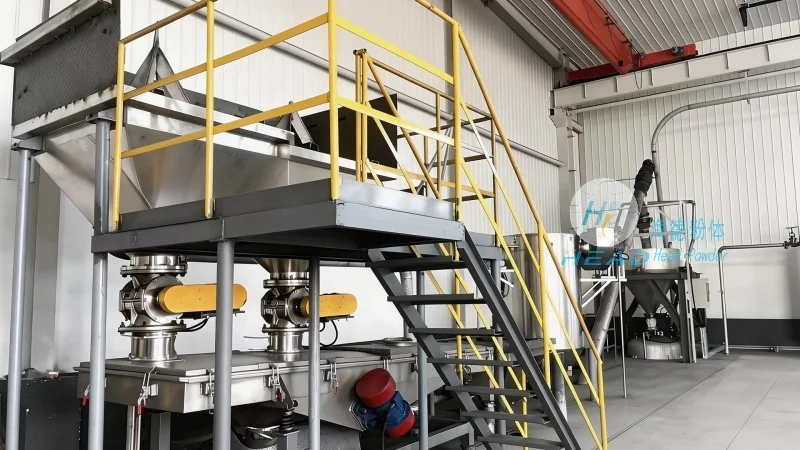
The efficient transport of aluminum oxide powder from storage to processing equipment is a critical aspect of industrial operations. A well-designed conveying system not only enhances productivity but also ensures product integrity and safety. The process involves several key components and steps that must be carefully integrated to achieve reliable and consistent performance.
First, the storage of aluminum oxide powder is typically done in silos or bulk containers. These storage vessels are designed to minimize dust generation and maintain the powder's quality. HeadPowder recommends using sealed silos with appropriate aeration systems to prevent caking and maintain the powder's flowability. The silos are equipped with level indicators and pressure sensors to monitor the material level and pressure, ensuring safe and efficient operation.
Second, the conveying of the powder from the storage silo to the processing equipment is usually achieved through pneumatic or mechanical systems. Pneumatic conveying systems use compressed air to transport the powder in a closed pipeline, which is ideal for handling fine powders and minimizing dust exposure. Mechanical conveying systems, such as screw conveyors or belt conveyors, are used for bulkier or more abrasive powders. The choice of system depends on factors like the powder's properties, the distance to be conveyed, and the required flow rate.
In pneumatic conveying, the powder is drawn into the pipeline by a vacuum or pressure system. The system includes a feeder, a pipeline network, and a receiver at the destination. The feeder ensures a consistent flow rate, while the pipeline design minimizes pressure drops and prevents particle segregation. HeadPowder's expertise in conveying system design allows us to recommend the most suitable system for each application, considering factors like the powder's particle size, moisture content, and the distance between storage and processing areas.
Third, the transfer of powder from the conveying system to the processing equipment, such as mixers or reactors, requires careful handling to avoid material loss or contamination. HeadPowder recommends using rotary valves or star feeders at the discharge point to control the flow rate and prevent backflow. These components are designed to handle fine powders without causing blockages or excessive wear. The receiver at the processing equipment is equipped with a dust collection system to capture any airborne particles and maintain a clean working environment.
Finally, the maintenance and monitoring of the conveying system are essential for long-term reliability. Regular inspection of components like pipelines, valves, and filters is necessary to prevent clogging and ensure consistent performance. HeadPowder provides technical support and maintenance services to help clients optimize their conveying systems and minimize downtime. Our team of experts can conduct system audits and recommend upgrades to improve efficiency and safety.
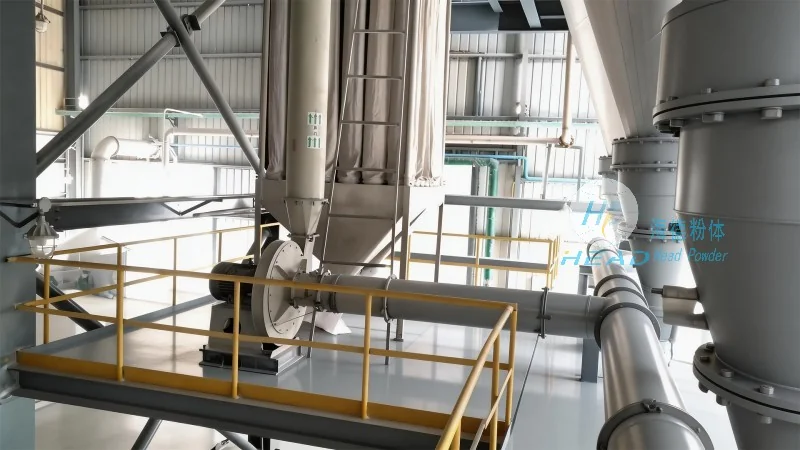
Shandong HeadPowder Engineering Co., Ltd., operating under the brand name HeadPowder, is a leading manufacturer and supplier of high-quality aluminum oxide powder and related engineering solutions. With a strong focus on research and development, the company has established itself as a trusted partner for industries requiring precise and reliable powder materials.
HeadPowder's production facilities are equipped with state-of-the-art technology, including advanced grinding and classification equipment, as well as stringent quality control systems. The company adheres to international standards, such as ISO 9001, to ensure the consistency and quality of its products. Our commitment to innovation and customer satisfaction has enabled us to serve a wide range of industries, including ceramics, refractories, chemical manufacturing, and aerospace.
HeadPowder's technical team consists of experienced engineers and scientists who specialize in powder processing and material science. They work closely with customers to understand their specific needs and provide tailored solutions. The company's R&D center is continuously developing new grades of aluminum oxide powder to meet emerging industry demands, such as high-purity materials for semiconductor applications and specialty powders for advanced ceramics.
HeadPowder is committed to sustainability and environmental responsibility. The company implements eco-friendly practices in its production processes, including energy-efficient grinding and waste reduction measures. By minimizing the environmental impact of its operations, HeadPowder contributes to a sustainable future for the industries it serves.
With its headquarters in Shandong, China, HeadPowder serves clients globally, providing high-quality aluminum oxide powder and engineering expertise. The company's dedication to quality, innovation, and customer service has earned it a reputation as a reliable partner in the aluminum oxide powder industry.

 Shandong Headpowder Engineering Co., Ltd.
 156-6277-7102(Manager Zhang)
  0531-83386006
  Zhangqiu District, Jinan City, Shandong Province, China
telephone
WeChatconsult
top