With more than 10‑year industry experience, Shandong Headpowder delivers full‑service pneumatic‑conveying systems and blowers, undertaking nationwide turn‑key powder‑handling projects.
For industrial applications, understanding the technical parameters of biomass powder is crucial for optimizing processing efficiency and system performance. This article provides a detailed overview of key technical specifications associated with biomass powder, alongside an analysis of the conveying system processes used to handle this material efficiently.
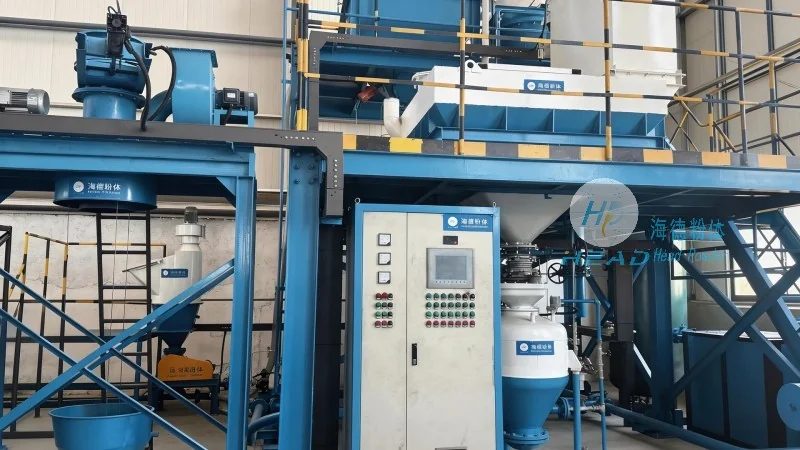
Biomass powder, derived from various organic feedstocks such as agricultural residues, forestry waste, or dedicated energy crops, exhibits distinct physical and chemical properties that influence its handling and processing. The primary technical parameters include particle size distribution, bulk density, moisture content, and flowability. Particle size is typically measured in micrometers or millimeters, with applications requiring different sizes for specific processes. For instance, finer particles may be preferred for combustion or gasification, while larger particles are suitable for pelletization or briquetting. Bulk density, which varies based on the material's composition and moisture level, affects storage and transport capacity. Moisture content is critical as it impacts the material's stability and combustion efficiency. High moisture levels can lead to caking or blockages in conveying systems, necessitating drying or moisture control measures. Flowability, often quantified by angle of repose or Carr's index, determines how easily the powder can be moved through pipelines or hoppers. These parameters are essential for selecting appropriate equipment and designing effective conveying systems that ensure consistent material flow and prevent operational issues.
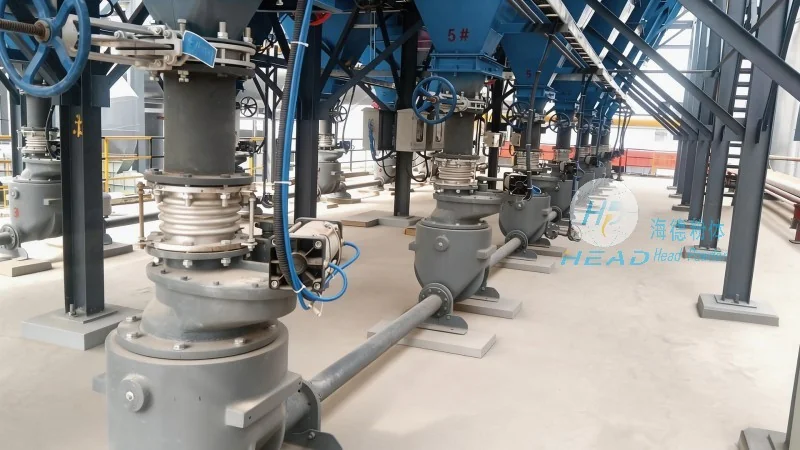
The design and implementation of a conveying system for biomass powder must address the unique challenges posed by its physical properties. Common conveying methods include pneumatic (air-assisted) systems, screw conveyors, and bucket elevators, each with specific advantages and limitations. Pneumatic conveying, particularly in the form of pressure or vacuum systems, is widely used for long-distance or high-volume transport due to its ability to handle fine powders without clogging. The process involves feeding the powder into a hopper, where it is then drawn into a pipeline by a fan or blower. The air-powder mixture is transported through the system, with separation occurring at the discharge point to collect the material and return the air to the system. Screw conveyors, on the other hand, are suitable for horizontal or slight incline transport and are ideal for handling bulkier or more cohesive powders. They consist of a rotating screw within a tube, which pushes the material forward. This method is often used in combination with other equipment, such as feeders or mixers, to control the flow rate and prevent material degradation. Bucket elevators are employed for vertical transport, lifting the powder from lower to higher levels. The system typically includes a hopper at the bottom, a bucket chain, and a motor-driven drive mechanism. Each bucket picks up the material at the lower level and releases it at the upper level, ensuring efficient vertical movement. The choice of conveying system depends on factors such as the required transport distance, material characteristics, and operational requirements. Proper system design, including considerations for moisture control, particle size, and flowability, is essential to maintain system efficiency and minimize downtime.
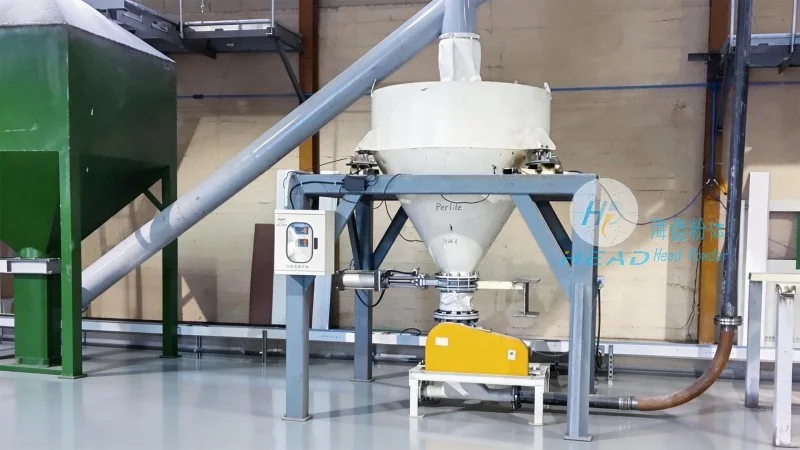
Shandong HeadPowder Engineering Co., Ltd., commonly known as headpowder, specializes in the engineering and manufacturing of equipment for biomass powder handling and conveying systems. With a focus on providing tailored solutions for industrial applications, the company leverages its expertise in material science and process engineering to address the unique challenges of biomass powder processing. Headpowder's team of engineers and technicians works closely with clients to understand their specific requirements, from raw material characteristics to final processing goals. The company's commitment to quality and innovation ensures that its products meet the highest standards of performance and reliability. Based in Shandong, China, headpowder serves a global market, delivering customized conveying systems and technical support to clients in various industries, including energy, agriculture, and manufacturing. By combining advanced technology with practical application, headpowder helps clients optimize their biomass powder handling processes, enhancing efficiency and reducing operational costs.

 Shandong Headpowder Engineering Co., Ltd.
 156-6277-7102(Manager Zhang)
  0531-83386006
  Zhangqiu District, Jinan City, Shandong Province, China
telephone
WeChatconsult
top