With more than 10‑year industry experience, Shandong Headpowder delivers full‑service pneumatic‑conveying systems and blowers, undertaking nationwide turn‑key powder‑handling projects.
When it comes to the efficient and reliable transportation of nanometer calcium carbonate, the design of a pneumatic conveying system plays a crucial role. As a leading provider in the field, Shandong HeadPowder Engineering Co., Ltd. specializes in developing tailored solutions that meet the unique demands of industrial applications. This article aims to guide you through the key considerations and steps involved in designing a reasonable nanometer calcium carbonate pneumatic conveying system, ensuring optimal performance and longevity.
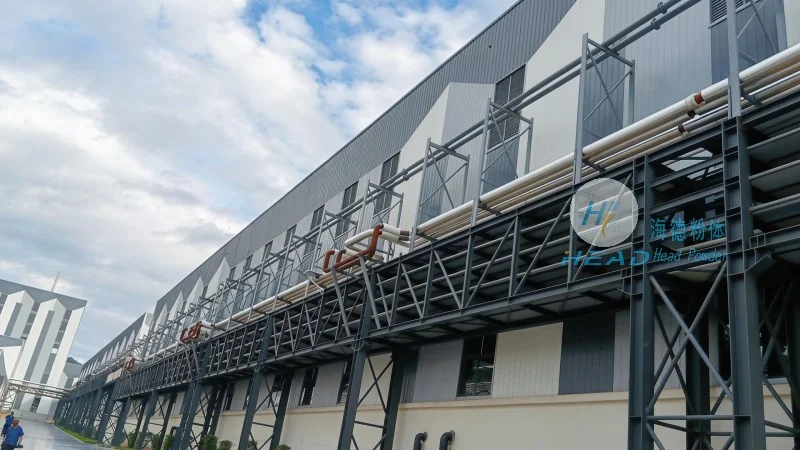
Before diving into the design process, it's essential to understand the specific characteristics of nanometer calcium carbonate and the operational environment. Nanometer calcium carbonate, with its fine particle size and high surface area, presents unique challenges during transportation. These particles are prone to agglomeration and can cause blockages if not handled properly. Therefore, the design must address issues such as particle flowability, pressure drop, and system efficiency. At HeadPowder, our experts conduct thorough assessments to identify the material's properties, including density, moisture content, and particle size distribution, which are critical for selecting the right equipment and system configuration.
The success of a nanometer calcium carbonate pneumatic conveying system hinges on several key design factors. First, the choice of conveying method—whether it's a positive pressure, negative pressure, or a combination of both—depends on the distance, elevation changes, and material characteristics. Positive pressure systems, where air is blown into the system, are commonly used for short to medium distances and are effective for handling fine powders like nanometer calcium carbonate. Negative pressure systems, on the other hand, are suitable for longer distances and can help contain dust, though they require more robust equipment to prevent air leaks and maintain system integrity.
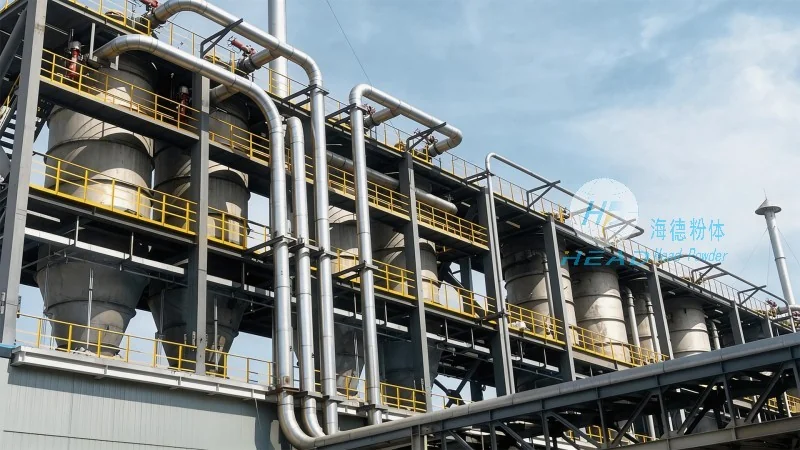
Second, the selection of equipment components is paramount. This includes the feeder, which must be capable of handling the fine particles without causing clogging or degradation. A rotary valve or a star feeder is often preferred for its ability to provide a consistent flow rate and prevent material buildup. The pipeline design is another critical aspect; the diameter and material of the pipes must be chosen to minimize pressure drop and prevent particle deposition. Stainless steel or high-density polyethylene (HDPE) pipes are commonly used due to their resistance to corrosion and abrasion. Additionally, the system's pressure control is essential to maintain a stable flow and prevent overpressurization, which can lead to system failure or product damage.
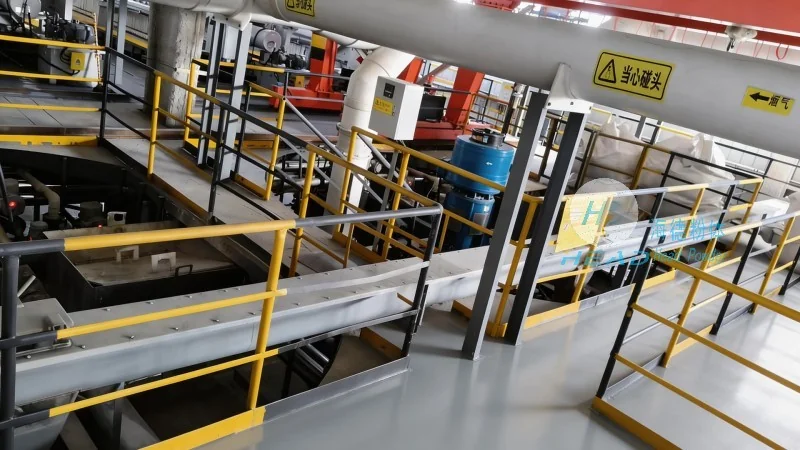
At Shandong HeadPowder Engineering Co., Ltd., we take a comprehensive approach to designing nanometer calcium carbonate pneumatic conveying systems. Our team of engineers works closely with clients to understand their specific needs, from production capacity to operational constraints. We conduct detailed calculations and simulations to optimize the system's performance, ensuring that it meets the required flow rates, pressure levels, and safety standards. Our solutions are tailored to the unique characteristics of nanometer calcium carbonate, addressing challenges such as particle agglomeration and system efficiency. By leveraging our expertise and advanced design tools, we deliver systems that are not only efficient but also cost-effective and reliable.
Once the system is designed and installed, regular maintenance is crucial to ensure long-term performance. At HeadPowder, we provide comprehensive maintenance services and training to our clients, helping them to identify and address potential issues before they become major problems. This includes regular inspection of equipment components, cleaning of pipelines, and monitoring of pressure and flow rates. By maintaining the system properly, clients can extend its lifespan and ensure consistent product quality. Our commitment to quality and customer satisfaction is reflected in our after-sales support, which includes technical assistance and spare parts availability.

 Shandong Headpowder Engineering Co., Ltd.
 156-6277-7102(Manager Zhang)
  0531-83386006
  Zhangqiu District, Jinan City, Shandong Province, China
telephone
WeChatconsult
top