With more than 10‑year industry experience, Shandong Headpowder delivers full‑service pneumatic‑conveying systems and blowers, undertaking nationwide turn‑key powder‑handling projects.
Graphite pneumatic conveying technology represents a sophisticated method for transporting graphite materials through a pipeline system using air as the conveying medium. This technology is widely adopted in various industrial sectors due to its efficiency, flexibility, and ability to handle delicate or abrasive materials like graphite. The fundamental principle involves creating a flow of air within a pipeline, which then carries the graphite particles from the source to the destination. By understanding the core principles and operational mechanisms, industries can optimize material handling processes, enhance safety, and improve overall productivity.
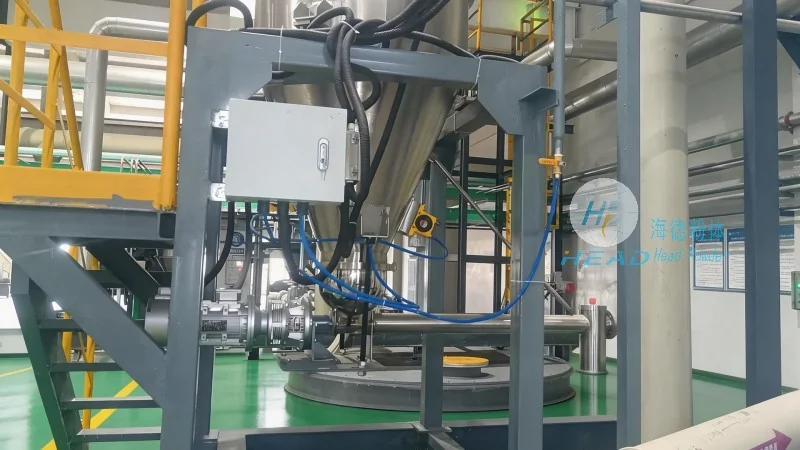
The operation of graphite pneumatic conveying systems is based on several key principles that ensure effective material transport. First, the system relies on the generation of sufficient air velocity to overcome the gravitational forces acting on the graphite particles. This is typically achieved through the use of blowers or compressors that supply high-pressure air. The air velocity must be maintained at a level that prevents particle deposition and ensures a stable flow. Second, the design of the pipeline system, including the diameter, length, and bends, plays a crucial role in minimizing pressure drop and energy consumption. Properly sized pipelines and smooth bends reduce friction losses, allowing for more efficient conveying. Third, the selection of appropriate air flow rates and particle size distribution is critical. The ratio of air to solid material (air-to-solids ratio) must be optimized to balance conveying efficiency with energy usage. Additionally, the use of appropriate materials for the pipeline, such as stainless steel or special coatings, is essential to prevent corrosion and material buildup, which can affect system performance over time.
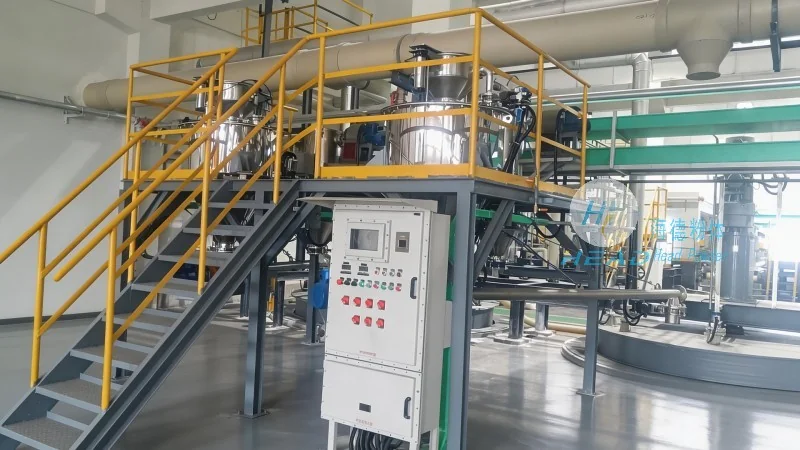
Graphite pneumatic conveying technology finds extensive applications across multiple industries, particularly in the processing and manufacturing of graphite-based products. In the graphite mining and processing sector, this technology is used to transport raw graphite ore from mining sites to processing facilities. The ability to handle large volumes of material efficiently reduces transportation costs and improves operational throughput. In the battery manufacturing industry, where high-purity graphite is a critical component, pneumatic conveying ensures that graphite powders are transported without contamination, maintaining the quality of the final product. The automotive and aerospace industries also utilize this technology for the transport of graphite components and raw materials, especially in applications requiring precision and cleanliness. Furthermore, in the chemical and pharmaceutical industries, where graphite is used as a lubricant or additive, pneumatic conveying helps maintain the purity of the material, preventing contamination from external sources. The versatility of graphite pneumatic conveying makes it suitable for a wide range of applications, from bulk material handling to precision delivery of fine powders.
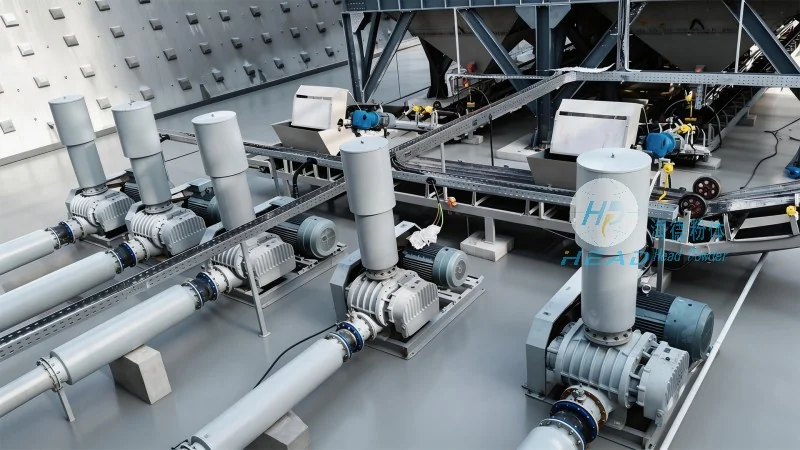
Compared to traditional material handling methods, such as belt conveyors or bucket elevators, graphite pneumatic conveying systems offer several advantages that make them a preferred choice in many industrial settings. One of the primary benefits is the ability to transport materials in a closed system, which enhances safety by preventing dust emissions and minimizing the risk of fire or explosion, especially when handling flammable or reactive materials like graphite. This closed system also helps maintain the purity of the material, as it is protected from external contaminants. Another significant advantage is the flexibility in system design. Pneumatic conveying systems can be easily adapted to different layouts and configurations, allowing for integration with existing production lines or new facility designs. The system can be expanded or modified to accommodate changes in production volume or material types without major structural changes. Energy efficiency is another key advantage. While initial setup costs may be higher, the operational energy consumption is often lower compared to other methods, especially for long-distance or high-volume transport. The reduced need for maintenance and lower labor costs further contribute to the overall cost-effectiveness of pneumatic conveying systems. Additionally, the system's ability to handle a wide range of particle sizes and shapes makes it suitable for diverse applications, from fine powders to larger graphite pieces.
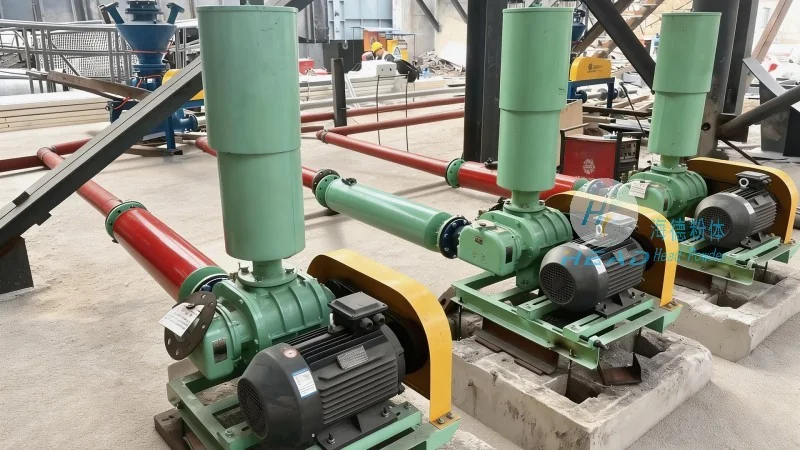
The field of graphite pneumatic conveying technology is continuously evolving, driven by advancements in materials science, automation, and process optimization. One of the notable trends is the integration of advanced control systems and automation. Modern pneumatic conveying systems now incorporate sophisticated sensors and control algorithms that monitor air pressure, flow rates, and particle concentrations in real-time. This allows for dynamic adjustments to optimize conveying performance, reduce energy consumption, and prevent system failures. The use of predictive maintenance technologies is also becoming more prevalent, enabling proactive maintenance and reducing downtime. Another trend is the development of more efficient and compact conveying systems. Engineers are focusing on reducing the size and weight of components, such as blowers and pipelines, while maintaining or improving conveying capacity. This is particularly important for applications in space-constrained environments or for portable conveying solutions. The adoption of sustainable and eco-friendly practices is also a key trend. Companies are developing systems that use less energy, reduce waste, and minimize environmental impact. This includes the use of energy-efficient motors, recycling of air, and the implementation of green materials in system construction. Furthermore, the integration of digital technologies, such as the Internet of Things (IoT) and artificial intelligence (AI), is enhancing the capabilities of pneumatic conveying systems. IoT sensors provide real-time data on system performance, while AI algorithms can predict maintenance needs and optimize operational parameters. These advancements are expected to further improve the efficiency, reliability, and sustainability of graphite pneumatic conveying technology in the future.

 Shandong Headpowder Engineering Co., Ltd.
 156-6277-7102(Manager Zhang)
  0531-83386006
  Zhangqiu District, Jinan City, Shandong Province, China
telephone
WeChatconsult
top