With more than 10‑year industry experience, Shandong Headpowder delivers full‑service pneumatic‑conveying systems and blowers, undertaking nationwide turn‑key powder‑handling projects.
HeadPowder, a leading engineering company based in Shandong, China, specializes in the design, manufacturing, and installation of advanced pneumatic conveying systems for dry powder mortar applications. This article provides a detailed overview of the operation process and working principle of our dry powder mortar powder pneumatic conveying lines, highlighting the key components, operational steps, and technical aspects that ensure efficient and reliable material handling.
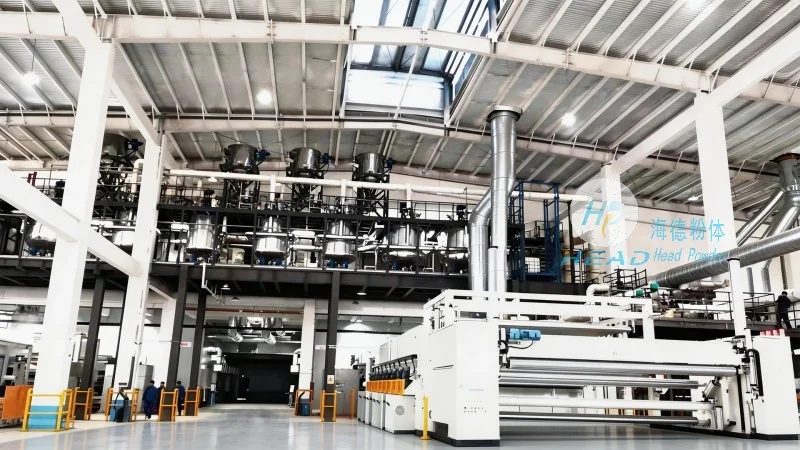
Dry powder mortar powder pneumatic conveying lines are sophisticated systems engineered to transport dry powders, such as cement, sand, and additives, from storage silos or bulk containers to production lines or mixing stations. These systems utilize air as the primary medium to move the powder, eliminating the need for mechanical components like belts or buckets, which can cause wear and tear or contamination. The efficiency and flexibility of pneumatic conveying make it an ideal solution for the construction industry, where consistent and clean material transfer is critical.
HeadPowder, headquartered in Shandong, China, is a professional manufacturer and supplier of pneumatic conveying equipment. With years of experience in the field, we have developed state-of-the-art solutions tailored to the specific needs of the dry powder mortar industry. Our company is committed to providing high-quality, reliable systems that meet international standards and deliver optimal performance. The address of our company is in Shandong, China, where our team of experts designs and manufactures each system to ensure durability and efficiency.
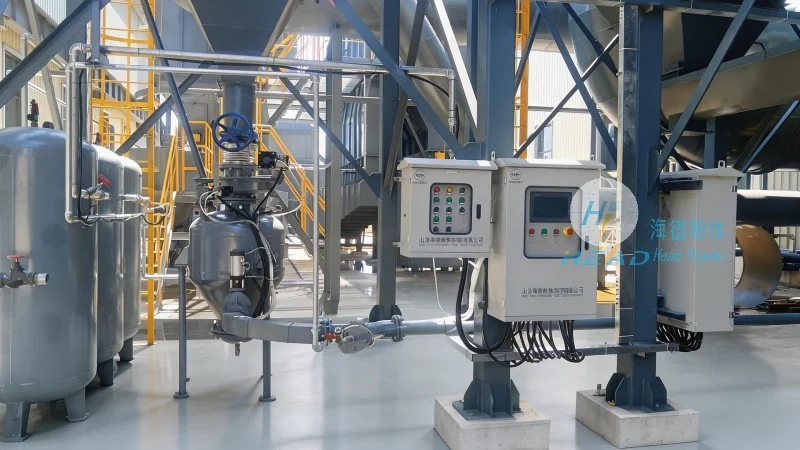
Our pneumatic conveying systems for dry powder mortar are designed to handle various powder types, including fine powders and granules, with minimal segregation and loss. The core components of the system include a feed hopper, a rotary valve or feeder, a pressure or vacuum pump, a series of pipelines, and a discharge unit. The system can operate in either positive pressure (pressure conveying) or negative pressure (vacuum conveying) modes, depending on the application requirements. Positive pressure systems are typically used for long-distance or high-capacity transport, while vacuum systems are suitable for short-distance or low-volume applications.
The operation of a dry powder mortar powder pneumatic conveying line involves several sequential steps to ensure smooth and continuous material transfer. First, the dry powder is fed into the system from a storage silo or bulk container through a feed hopper. The hopper is equipped with a rotary valve or feeder that controls the flow rate of the powder, preventing overloading and ensuring consistent feed. Next, the powder is introduced into the pipeline via an airlock or feeder, where it is mixed with the conveying air. The air, typically compressed to a specific pressure, is then injected into the pipeline, creating a flow that propels the powder particles forward. The conveying air and powder mixture travels through the pipeline network, which may include bends, elbows, and vertical sections, to reach the discharge point. At the end of the line, the powder is separated from the air using a cyclone separator or filter, and the clean powder is collected in a receiving hopper or directly fed into the production process. The air, now containing any residual dust, is then filtered and discharged or recirculated, depending on the system design.
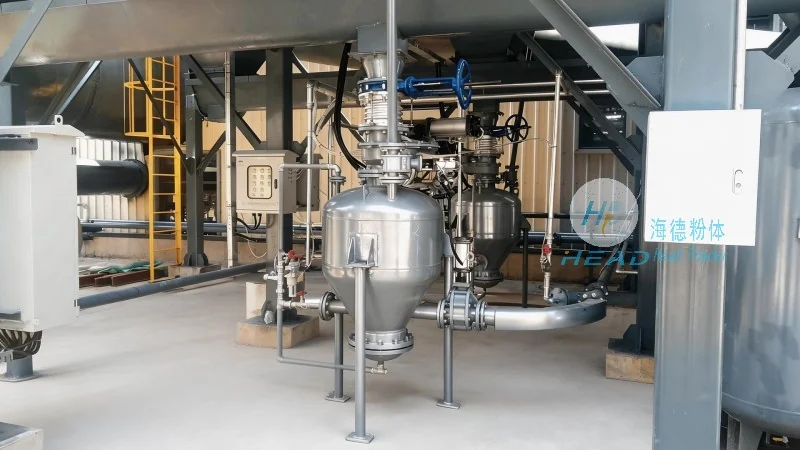
The working principle of a pneumatic conveying system for dry powder mortar is based on the interaction between the powder particles and the conveying air. In positive pressure systems, the air is compressed and forced through the pipeline, creating a high-pressure environment that pushes the powder particles along. The air velocity is maintained at a level sufficient to keep the powder in suspension, preventing settling or blockages. In negative pressure systems, the air is drawn from the pipeline using a vacuum pump, creating a low-pressure environment that pulls the powder particles into the line. The air flow rate is carefully controlled to ensure that the powder remains in suspension and is transported efficiently. The key to the system's efficiency is the balance between the air velocity and the powder's particle size and density. Proper air velocity ensures that the powder particles are fully suspended and transported without damage or segregation. The system also incorporates control mechanisms to regulate the flow rate, pressure, and air volume, ensuring stable operation and preventing system overload or damage.
Each component of the dry powder mortar powder pneumatic conveying line plays a crucial role in the overall operation. The feed hopper is responsible for storing and feeding the powder into the system, while the rotary valve or feeder controls the flow rate and prevents material buildup. The airlock or feeder ensures that the powder is introduced into the pipeline without causing blockages or air leakage. The pressure or vacuum pump provides the necessary air pressure or vacuum to drive the conveying process. The pipeline network, including bends and vertical sections, is designed to handle the flow of powder and air while minimizing pressure loss and ensuring smooth transport. The cyclone separator or filter separates the powder from the air, allowing the powder to be collected and the air to be cleaned or recirculated. The control system monitors and regulates the operation of the components, ensuring that the system operates within safe and efficient parameters.
Pneumatic conveying systems for dry powder mortar offer several advantages over traditional mechanical conveying methods. First, they eliminate the need for mechanical components, reducing maintenance costs and the risk of contamination. The system is also highly flexible, allowing for easy integration with existing production lines and adjustments to meet changing production requirements. Pneumatic conveying is also capable of handling a wide range of powder types and particle sizes, making it suitable for various dry powder mortar applications. Additionally, the system can operate in both positive and negative pressure modes, providing flexibility in long-distance and short-distance transport. The efficiency of the system is also enhanced by the ability to control the flow rate and pressure, ensuring optimal performance and minimal energy consumption.
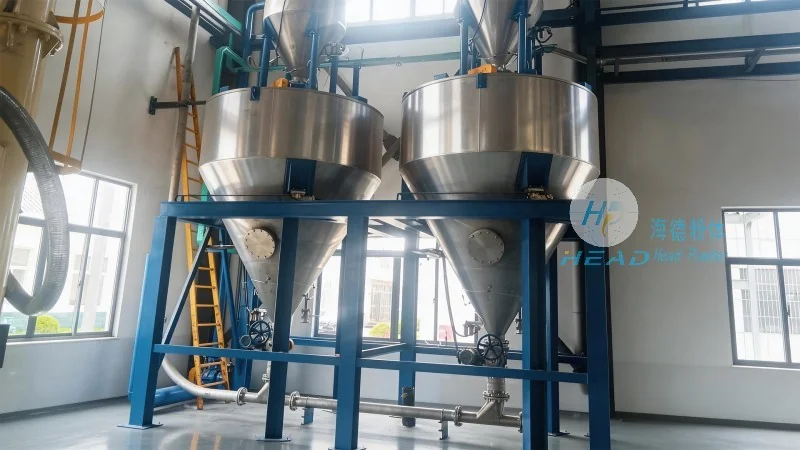
Dry powder mortar powder pneumatic conveying lines are widely used in the construction industry, particularly in the production of dry mortar, plaster, and other building materials. The systems are also used in other industries, such as pharmaceuticals, food processing, and chemical manufacturing, where the transport of dry powders is required. The flexibility and efficiency of the system make it an ideal solution for applications that require clean, consistent, and reliable material transfer. HeadPowder's systems are designed to meet the specific needs of these industries, providing high-quality and reliable solutions that enhance productivity and reduce costs.
HeadPowder's dry powder mortar powder pneumatic conveying lines are advanced systems that provide efficient and reliable transport of dry powders for various applications. The operation process involves sequential steps, including feeding, conveying, and discharging, while the working principle is based on the interaction between powder particles and conveying air. The system's components, including the feed hopper, rotary valve, air pump, and pipeline network, work together to ensure smooth and continuous operation. The advantages of pneumatic conveying, such as flexibility, efficiency, and minimal contamination, make it an ideal solution for the construction and other industries. With our expertise and commitment to quality, HeadPowder provides reliable and high-performance pneumatic conveying systems that meet the needs of our clients in Shandong and beyond.

 Shandong Headpowder Engineering Co., Ltd.
 156-6277-7102(Manager Zhang)
  0531-83386006
  Zhangqiu District, Jinan City, Shandong Province, China
telephone
WeChatconsult
top