With more than 10‑year industry experience, Shandong Headpowder delivers full‑service pneumatic‑conveying systems and blowers, undertaking nationwide turn‑key powder‑handling projects.
Shandong HeadPowder Engineering Co., Ltd., a leading enterprise in the field of powder handling technology, specializes in the design, manufacturing, and installation of advanced pneumatic conveying systems. The company is headquartered in Shandong, China, and has established a strong presence in the global market with its innovative solutions. This article focuses on the cement and fly ash powder pneumatic conveying system, exploring its fundamental principles and the specific characteristics of its operational scenarios. The system is engineered to efficiently transport fine powders such as cement and fly ash, addressing the challenges of material handling in industrial applications. With decades of experience in the industry, HeadPowder has developed a comprehensive range of solutions tailored to meet the diverse needs of clients in various sectors, including construction, power generation, and manufacturing.
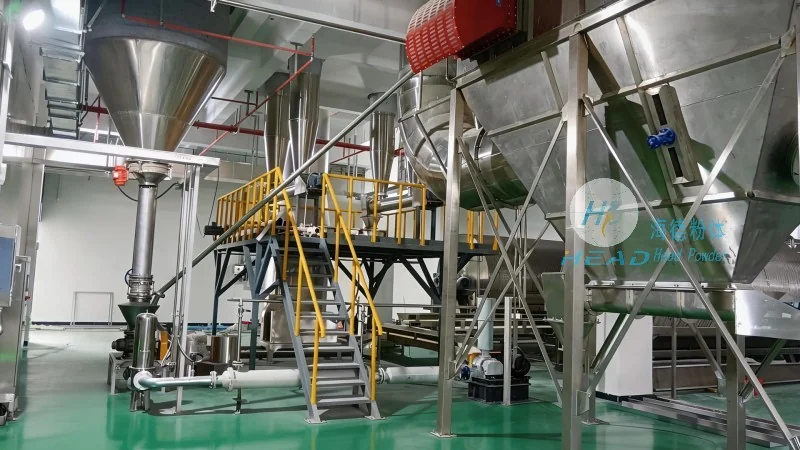
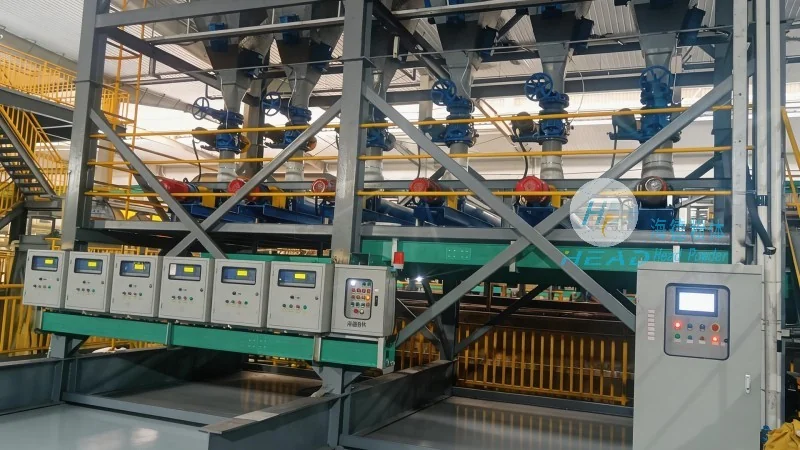
The core principle of the cement and fly ash powder pneumatic conveying system is based on the fundamental laws of fluid dynamics and particle mechanics. The system operates by creating a high-velocity airflow within a pipeline, which generates sufficient lift force to suspend and transport the powder particles. This process is governed by the concept of particle suspension, where the air velocity is maintained above the terminal velocity of the particles, ensuring they remain in a suspended state throughout the conveying process. The system typically employs a positive pressure configuration, where a blower or compressor supplies compressed air to the pipeline, forcing the material through the system. The air flow rate is carefully controlled to achieve optimal particle suspension and minimize pressure drops along the pipeline. Key components of the system include a material hopper, a rotary valve feeder, a blower unit, and a pipeline network with appropriate fittings and valves. The hopper stores the powder, while the feeder regulates the flow rate to match the system's capacity. The blower provides the necessary pressure to move the material, and the pipeline transports it to the destination, such as a storage silo or processing unit. The design of the pipeline, including the diameter and length, is critical to maintaining the air velocity and pressure within the system's operational range. Proper sizing ensures that the system operates efficiently, with minimal energy consumption and material degradation.
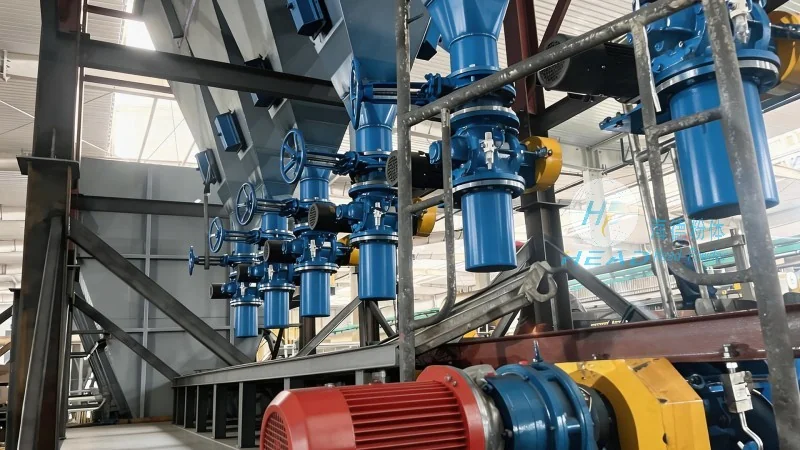
The operational scenarios for the cement and fly ash powder pneumatic conveying system are diverse and tailored to meet the specific requirements of industrial processes. These systems are commonly used in cement production facilities, where they facilitate the transport of raw materials like limestone, clay, and fly ash, as well as finished cement products. In power plants, the system efficiently handles fly ash, a byproduct of coal combustion, transporting it from the boiler to storage or disposal sites. The working scene characteristics include high material throughput, long-distance transport capabilities (up to several hundred meters), and the ability to handle fine powders with particle sizes ranging from 10 microns to several millimeters. The system is designed to operate in environments where dust control and material purity are paramount, ensuring that the transported powders remain free from contamination and maintain their quality. Additionally, the system can be integrated with other processing equipment, such as mixers, classifiers, and storage silos, to form a comprehensive material handling solution. The flexibility of the system allows it to adapt to different production scales, from small-scale batch operations to large-scale continuous production. The operational characteristics also include the ability to handle abrasive materials like fly ash, which requires the use of corrosion-resistant materials in the construction of the pipeline and components to ensure long-term durability and reliability.
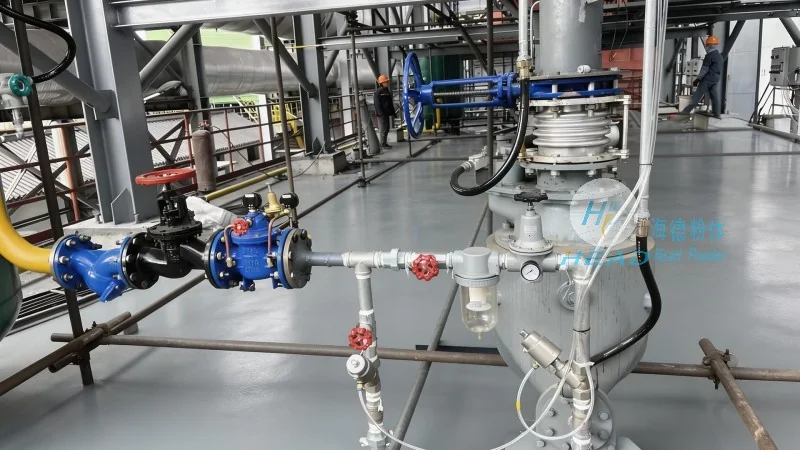
The cement and fly ash powder pneumatic conveying system offers several distinct advantages that make it a preferred choice for industrial material handling. One of the primary benefits is its high efficiency in transporting fine powders over long distances with minimal material loss and degradation. The system achieves this by maintaining a consistent air velocity and pressure, which prevents particle agglomeration and ensures the material remains in a suspended state. This efficiency translates into lower operational costs, as less energy is required to move the material compared to traditional mechanical conveying methods. Another advantage is the system's compact design, which allows for easy installation in confined spaces and integration with existing infrastructure. The system is also highly flexible, with the ability to reconfigure the pipeline network to accommodate changes in production requirements or facility layout. The use of positive pressure systems provides a safe and reliable operation, as the system is self-contained and does not expose the material to external air, reducing the risk of contamination. In terms of applications, the system is widely used in the cement industry for the transport of raw materials and finished products, as well as in the power generation industry for fly ash handling. It is also utilized in other industries, such as chemical processing and food production, where fine powders need to be transported safely and efficiently. The system's ability to handle abrasive and corrosive materials makes it suitable for a wide range of applications, contributing to improved productivity and reduced downtime in industrial operations.

 Shandong Headpowder Engineering Co., Ltd.
 156-6277-7102(Manager Zhang)
  0531-83386006
  Zhangqiu District, Jinan City, Shandong Province, China
telephone
WeChatconsult
top