With more than 10‑year industry experience, Shandong Headpowder delivers full‑service pneumatic‑conveying systems and blowers, undertaking nationwide turn‑key powder‑handling projects.
Continuous bulk material feeding conveying lines represent a cornerstone of modern industrial material handling, enabling the efficient and reliable transport of powders and granular substances from storage to processing units. This article delves into the underlying principles of these systems and examines the diverse working scenarios where they are applied, providing insights into their operational effectiveness and industry relevance.
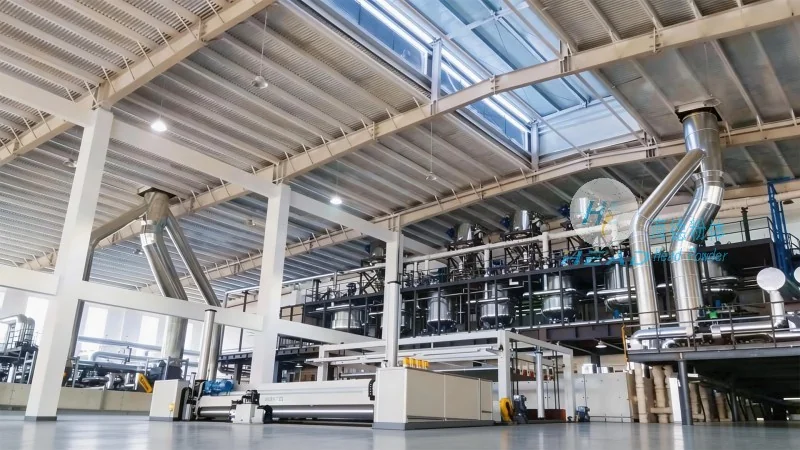
HeadPowder Engineering, a prominent enterprise headquartered in Shandong, China, is dedicated to advancing powder handling technologies through innovative design and manufacturing. As a leading manufacturer in the field, the company focuses on delivering high-performance, customized solutions tailored to the unique needs of various industries. With a strong emphasis on quality, safety, and sustainability, HeadPowder has built a reputation for excellence in the global market.
The primary principle of continuous powder material feeding conveyors is to maintain a consistent, unbroken flow of bulk materials, minimizing material loss and ensuring precise delivery to downstream processes. These systems operate by utilizing mechanical or pneumatic forces to move materials through a closed or semi-closed pathway, which can be configured in various configurations such as horizontal, vertical, or inclined lines.
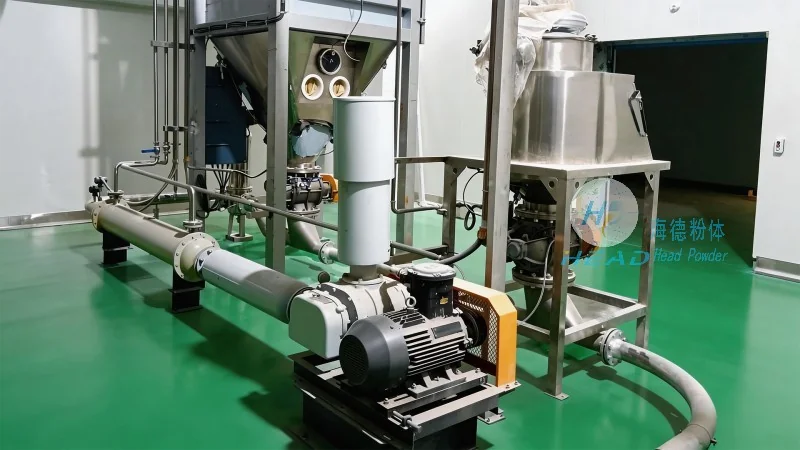
Screw conveyors, a common type of continuous feeding system, function by rotating a helical screw within a trough. As the screw rotates, it pushes material forward along the trough, creating a steady flow. This method is particularly effective for dry, free-flowing powders and granules, as it minimizes segregation and ensures uniform transport. The design of the screw, including its pitch and diameter, can be adjusted to optimize material handling efficiency for different material characteristics.
Pneumatic conveyors, another widely used option, employ compressed air to transport materials in a pipeline. The material is carried in a stream of air, which can be either positive or negative pressure, depending on the system design. This method is ideal for fine powders and those sensitive to mechanical contact, as it avoids friction and abrasion. The flexibility of pneumatic systems allows for complex routing, making them suitable for applications requiring multiple transfer points or vertical lifts.
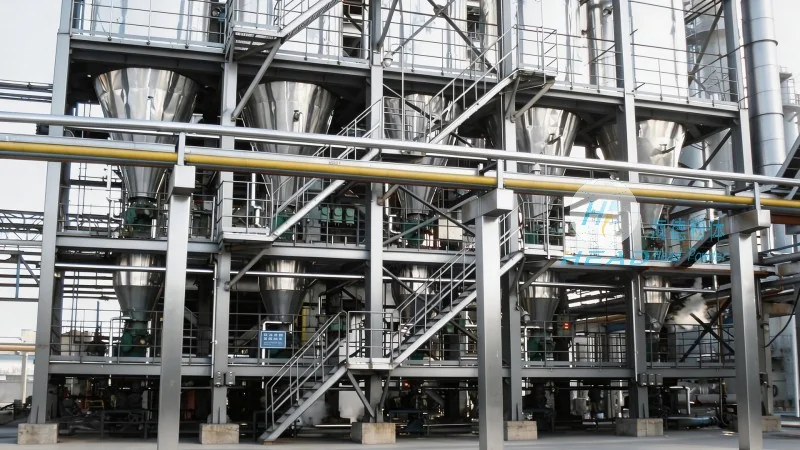
Continuous feeding conveyors are integral to numerous industrial processes across sectors such as pharmaceuticals, food processing, chemical manufacturing, and mining. Their application scenarios are defined by specific operational requirements, material properties, and environmental considerations.
In the pharmaceutical industry, these systems are critical for transporting raw materials or intermediates to mixing, granulation, or packaging units. The enclosed design of many conveyor systems is essential for maintaining a sterile environment, preventing contamination, and ensuring compliance with Good Manufacturing Practices (GMP). For example, in the production of active pharmaceutical ingredients (APIs), continuous feeding conveyors are used to transfer powders to high-shear mixers, where they are combined with other components to form the final product. The precision and reliability of these systems are crucial for achieving consistent product quality and meeting regulatory standards.
In food processing, continuous feeding conveyors handle ingredients like flour, sugar, spices, or dairy products, transferring them to mixing, extrusion, or packaging equipment. The systems are typically constructed from food-grade materials, such as stainless steel, and are designed with easy-to-clean surfaces to meet hygiene regulations. For instance, in the production of baked goods, a continuous screw conveyor may transport flour from a silo to a mixing machine, ensuring a consistent feed rate and preventing clogging. The ability to handle different moisture levels and flow characteristics makes these conveyors versatile for various food applications.
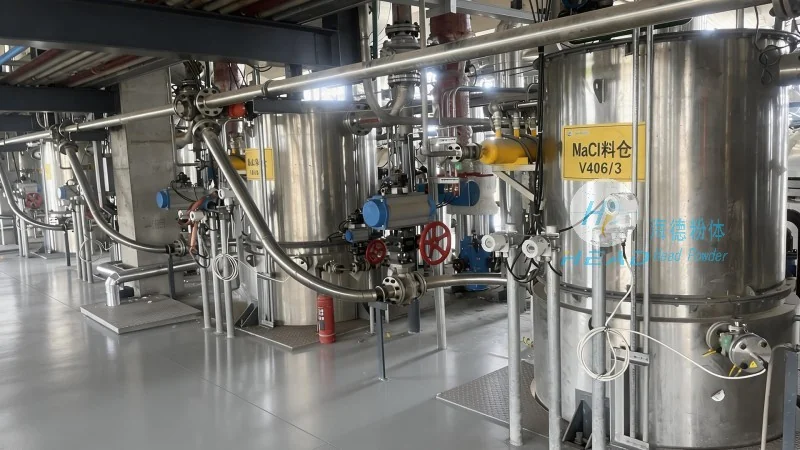
In chemical manufacturing, continuous feeding conveyors play a vital role in transporting raw chemicals, catalysts, or finished products to storage tanks, reactors, or packaging lines. The robust construction of these systems is essential for handling abrasive or corrosive materials, which are common in chemical processes. For example, in the production of fertilizers, a pneumatic conveyor may transport granular nitrogen or phosphorus compounds from a storage silo to a blending unit. The high capacity and durability of these systems ensure efficient material transfer, even in harsh industrial environments where temperature and pressure variations are present.
In mining and mineral processing, continuous feeding conveyors are used to transport ores, concentrates, or tailings from crushers to grinding mills, sorting equipment, or storage facilities. The high throughput and rugged design of these systems are critical for handling large volumes of bulk materials in demanding mining operations. For instance, in a copper mining plant, a screw conveyor may transport crushed ore from a crusher to a ball mill for grinding. The ability to handle coarse materials and resist wear from abrasive particles makes these conveyors suitable for long-term use in mining applications.

 Shandong Headpowder Engineering Co., Ltd.
 156-6277-7102(Manager Zhang)
  0531-83386006
  Zhangqiu District, Jinan City, Shandong Province, China
telephone
WeChatconsult
top