With more than 10‑year industry experience, Shandong Headpowder delivers full‑service pneumatic‑conveying systems and blowers, undertaking nationwide turn‑key powder‑handling projects.
High-calcium powder, commonly utilized in industrial processes such as cement production, feed manufacturing, and chemical processing, requires specialized material handling solutions. Pneumatic conveying offers an efficient method for transporting these powders over varying distances and within complex industrial setups. This article delves into the fundamental principles of high-calcium powder pneumatic conveying and highlights the key characteristics of its operational environments, providing insights into how this technology optimizes material transport in industrial applications.
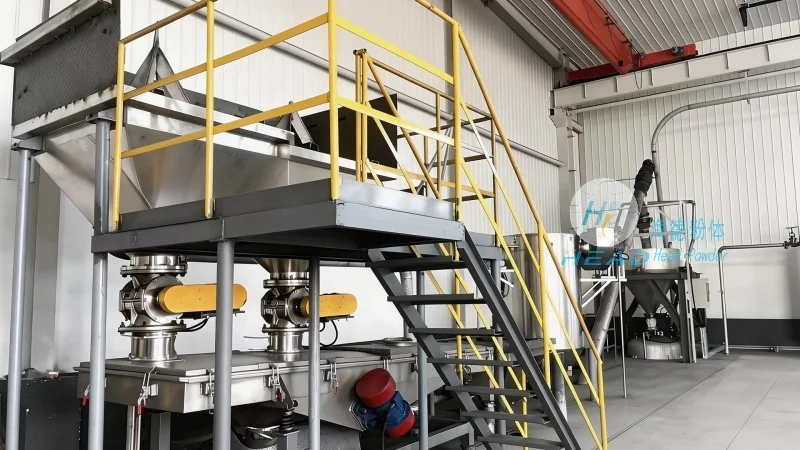
Pneumatic conveying is a technique that transports bulk materials, including powders, through a pipeline using a gas stream, typically air. The process involves creating a flow of air that carries the powder particles through the system. For high-calcium powder, which often exhibits high density and may have cohesive or abrasive properties, the design of the pneumatic conveying system must account for these characteristics to ensure efficient and reliable operation. The core principle centers on balancing the air velocity with the powder's particle size, density, and flowability. A well-designed system maintains consistent air flow rate and pressure to prevent particle segregation, agglomeration, or blockages in the pipeline.
Two primary types of pneumatic conveying systems exist: positive pressure and negative pressure. Positive pressure systems employ a blower or compressor to force air and powder into the pipeline, while negative pressure systems use a vacuum to draw material from the source. For high-calcium powder, positive pressure systems are often preferred due to their ability to handle higher material loads and provide better control over the conveying process. The system typically includes components like a hopper for material storage, a feeder to regulate the powder flow rate, a blower or compressor to generate the air flow, and a pipeline network that transports the powder to the destination. The choice of system depends on factors such as the distance to be covered, the volume of material to be conveyed, and the specific properties of the high-calcium powder.
The operational characteristics of high-calcium powder pneumatic conveying systems vary based on the industrial application and the specific requirements of the process. These characteristics include factors like the scale of operation, the distance of material transport, environmental conditions, and the need for integration with other industrial equipment. In cement manufacturing, for example, high-calcium powder is frequently used as a raw material and must be transported from storage silos to the kiln or other processing units. The conveying system must handle large volumes of powder over significant distances, often requiring high-capacity positive pressure systems with robust pipeline networks. The system must also be designed to minimize dust emissions and ensure compliance with environmental regulations, which may involve dust collection and filtration systems.
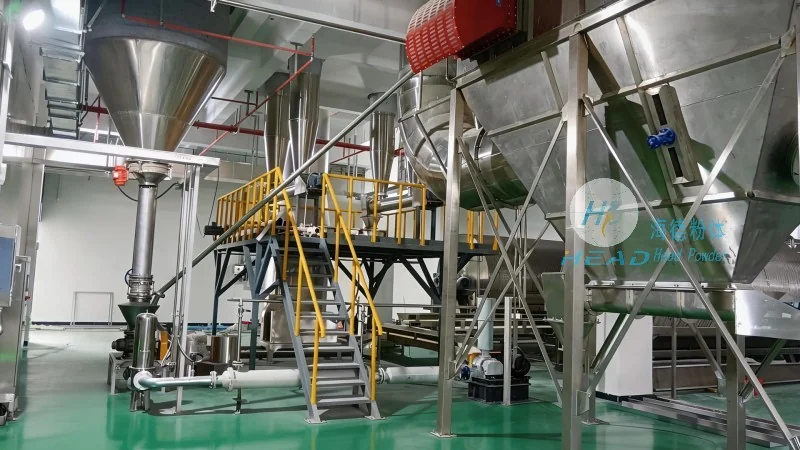
In feed manufacturing, high-calcium powder may serve as an ingredient in animal feed formulations. The conveying system in this scenario may need to handle smaller volumes of powder and operate within a more compact facility. The system design may prioritize flexibility and ease of maintenance, with components that can be easily cleaned and sanitized to meet food safety standards. The working scene may also involve integration with mixing and processing equipment, requiring the pneumatic conveying system to deliver the powder at a controlled rate to maintain consistent product quality.
In chemical processing industries, high-calcium powder might be used as a reagent or raw material in various chemical reactions. The conveying system in this context must handle potentially abrasive or corrosive materials, requiring the use of materials such as stainless steel or special coatings for the pipeline and components. The system may also need to be equipped with safety features to prevent the release of hazardous powders or gases, such as explosion-proof blower motors and dust explosion suppression systems. The working scene may involve high-temperature or high-pressure conditions, necessitating the use of specialized equipment that can withstand these environmental factors.
Optimizing the performance of a high-calcium powder pneumatic conveying system involves careful consideration of several factors to ensure efficient and reliable operation. One key aspect is the selection of appropriate air velocity and pressure. The air velocity must be high enough to entrain the powder particles but not so high as to cause excessive wear on the pipeline or components. The pressure must be sufficient to overcome pipeline resistance and maintain a consistent flow rate. System designers often use computational fluid dynamics (CFD) simulations to model air and powder flow and optimize system parameters.
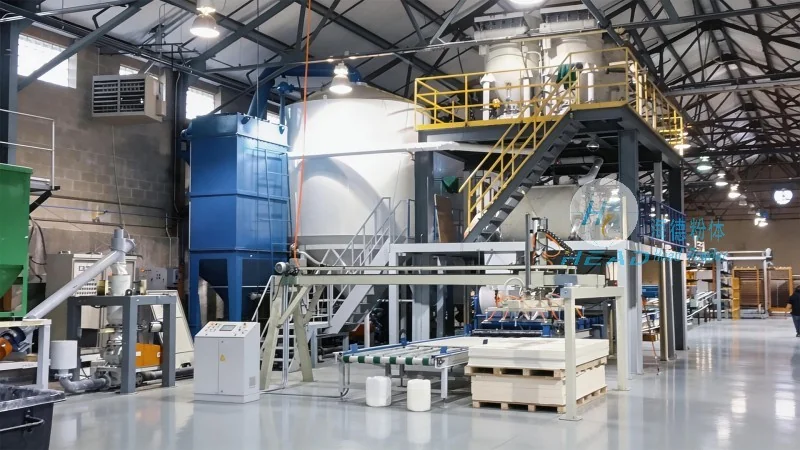
Another critical factor is the design of the hopper and feeder. The hopper must be designed to prevent material bridging or arching, which can cause blockages. The feeder, such as a rotary valve or screw feeder, must control the powder flow rate accurately to match downstream process demands. Proper maintenance of these components is crucial to prevent wear and ensure consistent performance.
The pipeline network is also a critical component. The diameter, length, and number of bends and fittings affect pressure drop and overall system efficiency. Using smooth, corrosion-resistant materials like stainless steel or PTFE-coated pipes can reduce friction and extend system lifespan. Additionally, pulse-jet or other cleaning mechanisms can help maintain pipeline cleanliness and prevent powder residue buildup.
High-calcium powder pneumatic conveying is a vital technology in various industrial sectors, enabling efficient and reliable transport of these materials. By understanding the fundamental principles of pneumatic conveying and the specific characteristics of different operational environments, industrial operators can design and implement systems that optimize material handling, reduce downtime, and improve overall operational efficiency. The expertise of companies like Shandong HeadPowder Engineering Co., Ltd., headquartered in China, plays a crucial role in providing tailored solutions that meet the unique needs of high-calcium powder applications, ensuring industrial processes run smoothly and effectively.

 Shandong Headpowder Engineering Co., Ltd.
 156-6277-7102(Manager Zhang)
  0531-83386006
  Zhangqiu District, Jinan City, Shandong Province, China
telephone
WeChatconsult
top