With more than 10‑year industry experience, Shandong Headpowder delivers full‑service pneumatic‑conveying systems and blowers, undertaking nationwide turn‑key powder‑handling projects.
For industries dealing with titanium dioxide powder, efficient and reliable material handling is crucial. The pneumatic conveying system for titanium dioxide powder offers a solution that combines advanced technology with practical application, ensuring safe and effective transport of this valuable material. This article provides an overview of the structure and operational principles of such a system, highlighting the key components and how they work together to achieve optimal performance.

Pneumatic conveying systems are widely used in the processing of fine powders like titanium dioxide due to their ability to transport materials without direct contact with mechanical components. This method not only reduces contamination risks but also enhances operational flexibility. The system typically consists of several core components that work in sequence to move the powder from the source to the destination. Understanding these components and their functions is essential for optimizing the system's performance and ensuring long-term reliability.
The pneumatic conveying system for titanium dioxide powder, as provided by Shandong HeadPowder Engineering Co., Ltd., includes several critical parts. The primary components are the material feed hopper, the air supply unit (usually a blower or compressor), the conveying pipeline, and the receiving hopper. Each component plays a vital role in the overall operation of the system.
The material feed hopper is designed to store and feed the titanium dioxide powder into the system. It often features a hopper with a discharge valve or a rotary valve to control the flow rate of the powder. This ensures a steady and controlled supply of material, preventing overloading or underflow that could disrupt the conveying process. The hopper is typically made of corrosion-resistant materials to handle the chemical properties of titanium dioxide and to maintain hygiene standards.
The air supply unit, often a positive displacement blower or a centrifugal fan, generates the necessary airflow to move the powder particles through the pipeline. The choice of blower depends on the system's requirements, such as the material's density, particle size, and the desired conveying distance. The blower is connected to the conveying pipeline via a duct, and its performance directly impacts the system's conveying capacity and efficiency.
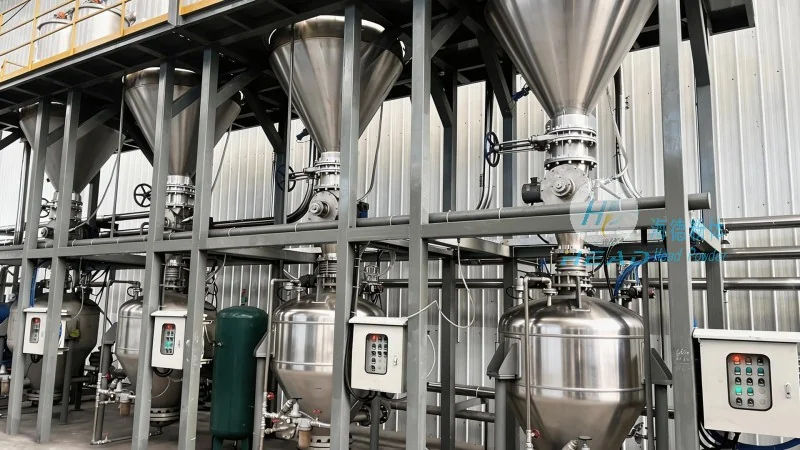
The conveying pipeline is the main channel through which the titanium dioxide powder is transported. It is usually made of stainless steel or other corrosion-resistant materials to withstand the abrasive nature of the powder and to prevent contamination. The pipeline is designed with appropriate bends and elbows to accommodate changes in direction, and the internal surface is smooth to minimize friction and pressure loss. The pipeline may also include pressure relief valves and check valves to ensure safe operation and prevent backflow.
The receiving hopper collects the titanium dioxide powder at the end of the conveying process. It is similar in design to the feed hopper but may include additional features such as a dust collection system or a level indicator. The receiving hopper ensures that the powder is stored safely and can be easily transferred to the next processing stage. Proper sealing and maintenance of the receiving hopper are essential to prevent dust emissions and maintain product quality.
The operation of the pneumatic conveying system for titanium dioxide powder follows a simple yet effective principle: creating a flow of air that entrains the powder particles and transports them through the pipeline. The process begins when the material is fed from the hopper into the pipeline. The air supply unit then generates a high-velocity airflow that draws the powder particles into the air stream. As the powder particles are entrained, they are carried along the pipeline to the receiving hopper.
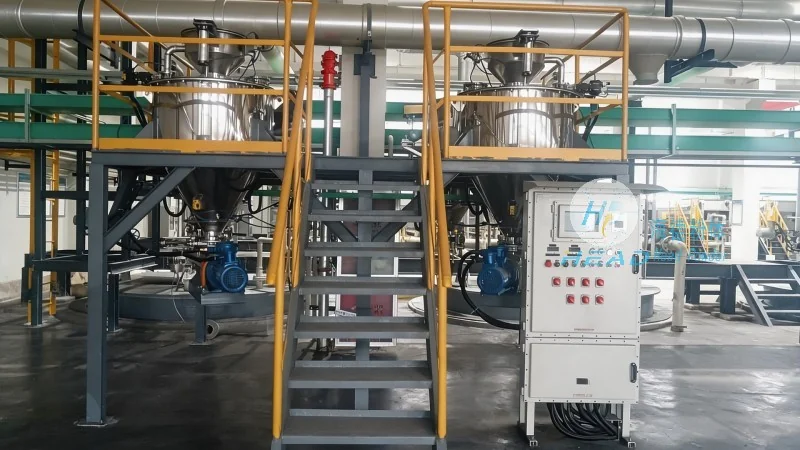
During the conveying process, the air velocity must be sufficient to overcome the gravitational force acting on the powder particles and to maintain their suspension in the air stream. The velocity is typically higher than the terminal velocity of the powder particles to ensure stable transport. The system may also use a combination of positive and negative pressure zones to optimize the conveying efficiency, especially for long-distance or complex layouts.
The system's control system monitors various parameters such as pressure, flow rate, and material level. These parameters are adjusted in real-time to maintain optimal operation. For example, if the material feed rate increases, the air supply may be adjusted to maintain the required airflow and prevent blockages. The control system ensures that the system operates within safe limits and maximizes its efficiency.
Compared to traditional mechanical conveying methods, pneumatic conveying offers several advantages for handling titanium dioxide powder. One of the key benefits is the ability to transport the material without direct contact with mechanical parts, which reduces the risk of contamination and product degradation. This is particularly important for titanium dioxide, which is used in applications where purity is critical, such as in the production of pigments and coatings.
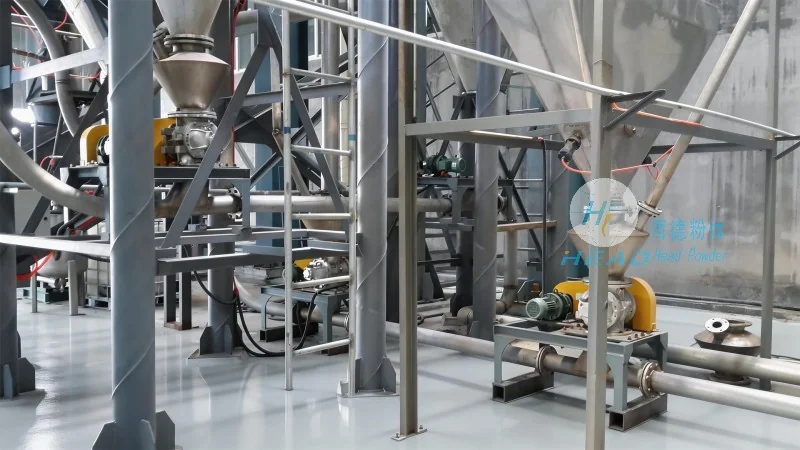
Another advantage is the flexibility of the system. Pneumatic conveying can handle a wide range of particle sizes and densities, making it suitable for various applications. The system can also be easily modified or expanded to accommodate changes in production requirements. This flexibility reduces the need for frequent system overhauls and minimizes downtime.
The system also offers improved safety and hygiene. By eliminating the need for manual handling of the powder, the risk of dust exposure and inhalation is significantly reduced. The enclosed pipeline and hopper design prevent dust emissions and maintain a clean working environment. This is crucial for compliance with environmental regulations and for maintaining the health and safety of the workforce.
In addition, pneumatic conveying systems are generally more energy-efficient than mechanical systems, especially for long-distance transport. The air flow can be optimized to minimize energy consumption while maintaining the required conveying capacity. This results in lower operational costs and a more sustainable operation.
The pneumatic conveying system for titanium dioxide powder, as designed and manufactured by Shandong HeadPowder Engineering Co., Ltd., represents a reliable and efficient solution for material handling in the industry. By understanding the structure and operational principles of the system, users can optimize its performance and ensure long-term operation. The system's advantages, including reduced contamination risk, flexibility, and improved safety, make it an ideal choice for handling titanium dioxide powder in various applications.

 Shandong Headpowder Engineering Co., Ltd.
 156-6277-7102(Manager Zhang)
  0531-83386006
  Zhangqiu District, Jinan City, Shandong Province, China
telephone
WeChatconsult
top