With more than 10‑year industry experience, Shandong Headpowder delivers full‑service pneumatic‑conveying systems and blowers, undertaking nationwide turn‑key powder‑handling projects.
Manganese sulfate is a critical chemical compound widely used in various industrial applications, including battery production, fertilizers, and chemical manufacturing. The efficient and reliable transportation of manganese sulfate materials is essential for maintaining production efficiency and ensuring product quality. This article provides an in-depth exploration of the working principle and key features of manganese sulfate material conveying lines, highlighting the technological advancements and operational benefits they offer to industrial processes.
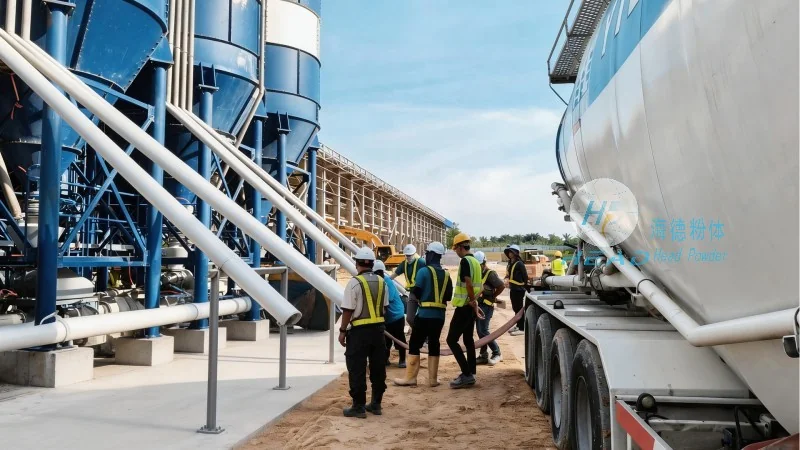
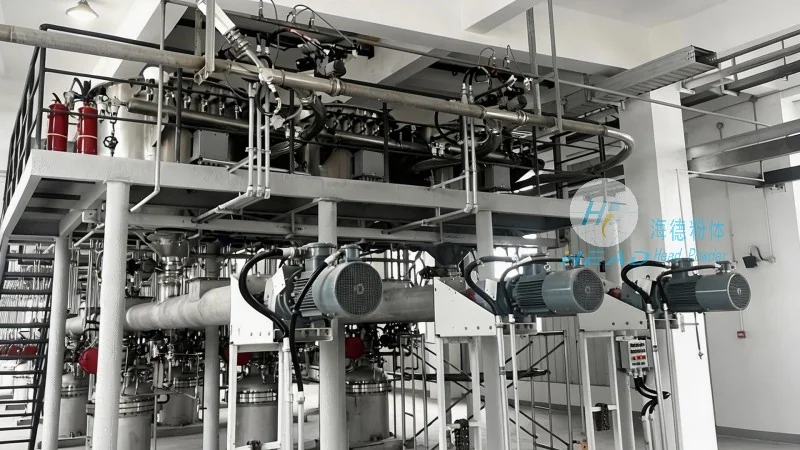
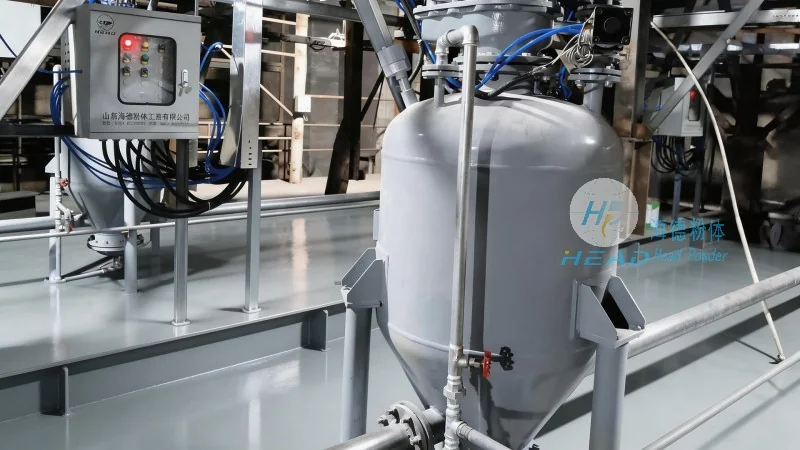
The manganese sulfate material conveying line operates by integrating multiple components to facilitate the seamless transfer of manganese sulfate from the source to the processing or storage point. The process typically starts with the material being loaded into a storage hopper or silo, where it is stored under controlled conditions to prevent caking or moisture absorption. From the hopper, the material is fed into the primary conveyor system, which may vary based on the physical state of the manganese sulfate—whether it is in powder, granule, or crystalline form. For powder or fine granules, pneumatic conveying systems are commonly employed, utilizing air pressure to transport the material through a network of pipes. This method is particularly effective for handling dusty or light materials, as it minimizes dust generation and ensures a clean transfer. For bulk or larger granules, mechanical conveyors such as belt conveyors or screw conveyors are used. Belt conveyors use a continuous belt to move the material along a fixed path, while screw conveyors utilize a rotating screw to push the material forward. Both systems are equipped with adjustable speed controls and load sensors to maintain a consistent flow rate and prevent overloading. The conveying line also includes intermediate hoppers and transfer points to direct the material to different processing stages or storage locations. Control systems, including PLCs (Programmable Logic Controllers), are integrated to monitor the entire process, adjust conveyor speeds, and trigger alarms in case of anomalies. This automated control ensures that the conveying operation is efficient, reliable, and adaptable to fluctuating production demands, minimizing downtime and maximizing productivity.
Shandong HeadPowder Engineering Co., Ltd. develops and manufactures manganese sulfate material conveying lines that are distinguished by several critical features designed to enhance performance, durability, and operational efficiency. One of the primary features is the use of corrosion-resistant materials in the construction of the conveying components. Manganese sulfate is a chemically active compound, and exposure to it can cause corrosion in standard steel equipment. Therefore, the conveying lines are built with stainless steel or specialized alloys that resist chemical attack, ensuring long-term service life and reducing maintenance costs. Another key feature is the integration of advanced control technologies, including PLC-based systems and sensor networks. These systems enable precise regulation of the material flow, allowing for real-time monitoring of conveyor speed, load levels, and system health. This level of automation minimizes human intervention, reduces operational errors, and enhances overall process control. The conveying lines also incorporate dust suppression and filtration systems to comply with environmental regulations and maintain a safe working environment. By capturing and neutralizing dust particles, these systems prevent air pollution and protect both equipment and personnel from respiratory hazards. Additionally, the modular design of the conveying systems allows for easy customization and scalability. Clients can select components such as hoppers, conveyors, and control panels based on their specific production needs, and the system can be expanded or modified as production volumes increase. This flexibility makes the conveying lines suitable for a wide range of industrial applications, from small-scale chemical manufacturing to large-scale battery production facilities. The combination of robust construction, advanced automation, and environmental compliance makes HeadPowder Engineering's manganese sulfate material conveying lines a reliable choice for industries requiring efficient and safe material handling solutions.

 Shandong Headpowder Engineering Co., Ltd.
 156-6277-7102(Manager Zhang)
  0531-83386006
  Zhangqiu District, Jinan City, Shandong Province, China
telephone
WeChatconsult
top