With more than 10‑year industry experience, Shandong Headpowder delivers full‑service pneumatic‑conveying systems and blowers, undertaking nationwide turn‑key powder‑handling projects.
White clay, a vital raw material in sectors like ceramics, paper, and chemical manufacturing, demands efficient and reliable handling solutions. The pneumatic conveying system stands out as an advanced technology for transporting white clay from storage to processing units. This system leverages air as the conveying medium, offering a flexible and low-maintenance approach that minimizes the need for traditional mechanical conveyors and associated maintenance challenges. By ensuring consistent material flow and reducing contamination risks, the system supports the high standards required in industries where product quality and operational efficiency are paramount.
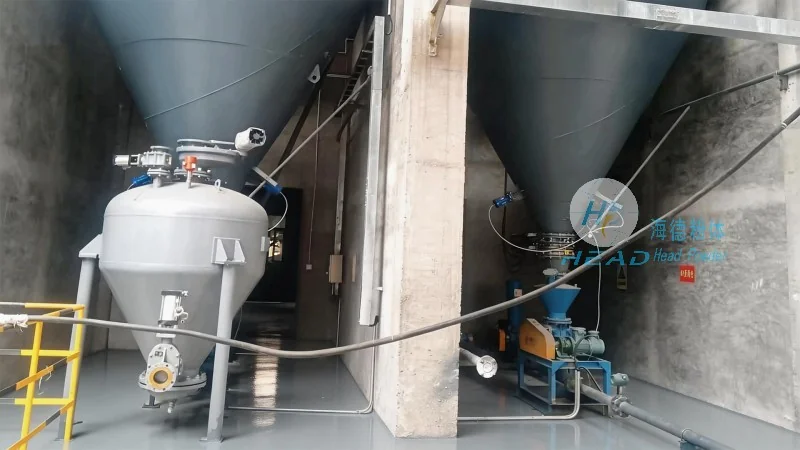

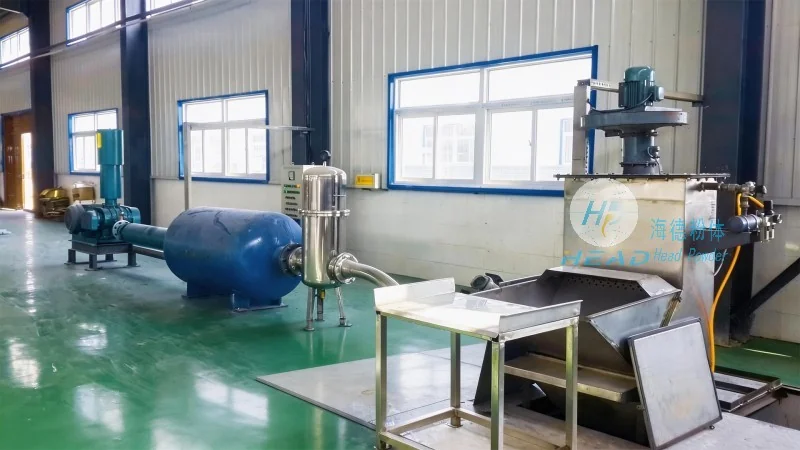
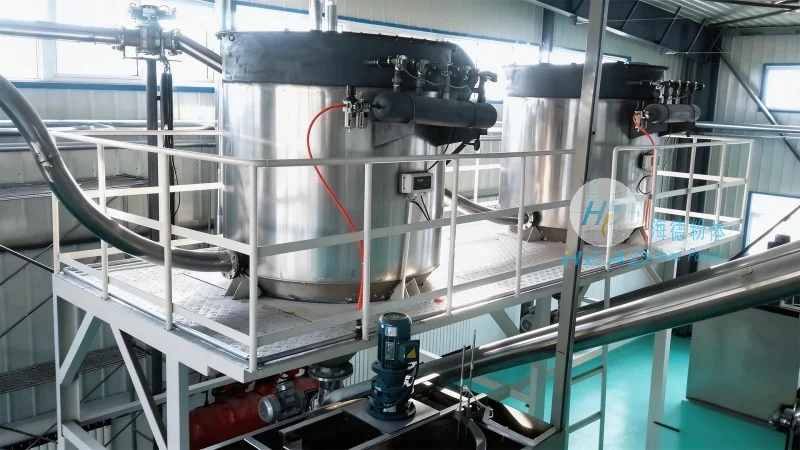
The white clay pneumatic conveying system comprises several interdependent components designed to handle the unique characteristics of white clay. The primary components include the storage hopper, which serves as the material reservoir; the air compressor, responsible for generating the necessary pressure to move the material; the pipeline network, which transports the clay-air mixture; and the receiving hopper or processing unit at the destination. Each component is engineered to address specific aspects of white clay, such as its particle size, moisture content, and flowability. The hopper is typically equipped with a rotary valve or screw feeder to control material discharge rate and prevent blockages. The air compressor, often a positive displacement type, provides the required pressure to create a flow of air that entrains the clay particles. The pipeline, constructed from corrosion-resistant materials like stainless steel or PVC, ensures durability and resistance to wear from the clay particles. The receiving hopper is designed to deposit the clay accurately, avoiding spillage or material loss.
The operation of the white clay pneumatic conveying system follows a systematic process. The material is first fed from the storage hopper into the feeder, which regulates the discharge rate to maintain consistency. Simultaneously, the air compressor generates high-pressure air, introduced into the pipeline. As the air flows, it creates a low-pressure zone that draws the white clay particles into the air stream, forming a mixture of air and clay. This mixture is then transported through the pipeline to the receiving hopper. The air velocity in the pipeline is maintained at a level sufficient to keep the clay particles suspended, preventing deposition or blockages. At the receiving end, a cyclone separator or filter separates the air from the clay particles. The air is either recirculated or vented, while the separated white clay is deposited into the processing unit, ready for the next production stage. This continuous process ensures a steady flow of white clay, minimizing downtime and supporting smooth industrial operations.

 Shandong Headpowder Engineering Co., Ltd.
 156-6277-7102(Manager Zhang)
  0531-83386006
  Zhangqiu District, Jinan City, Shandong Province, China
telephone
WeChatconsult
top