With more than 10‑year industry experience, Shandong Headpowder delivers full‑service pneumatic‑conveying systems and blowers, undertaking nationwide turn‑key powder‑handling projects.
Understanding the pneumatic conveying equipment used for lithium battery positive electrode materials is crucial for optimizing material handling processes in the battery manufacturing industry. This equipment plays a vital role in efficiently transporting fine powders, such as those used in lithium iron phosphate (LFP), lithium nickel manganese cobalt oxide (NMC), and other advanced cathode chemistries. The design principles behind these systems are tailored to address the unique challenges of handling these materials, including their fine particle size, potential for static charge, and sensitivity to moisture and contamination.
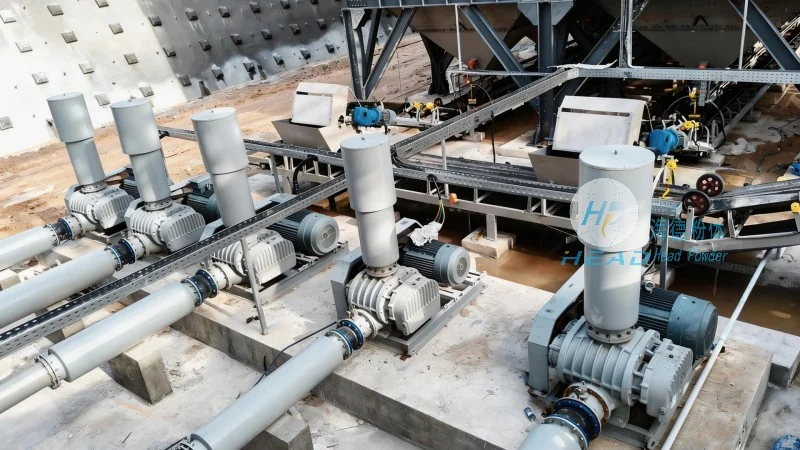
The core function of pneumatic conveying equipment is to transport bulk materials through a pipeline using air or gas as the conveying medium. This method offers several advantages over traditional mechanical conveying systems, particularly for sensitive materials like lithium battery positive electrodes. Key benefits include reduced material degradation, lower risk of contamination, and improved process control. The equipment typically consists of a hopper for material storage, a conveying line, and a receiver for the discharged material. The system operates by creating a pressure differential, either through positive pressure (where air is blown into the line) or negative pressure (where air is drawn out), to move the material through the pipeline.
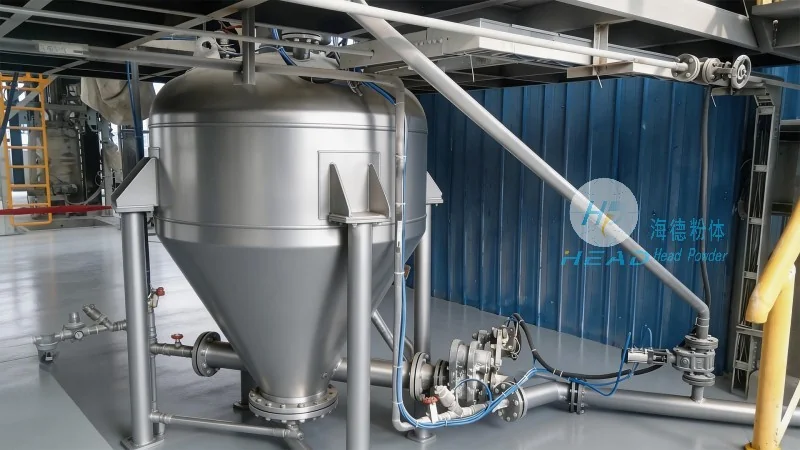
Designing pneumatic conveying systems for lithium battery positive electrode materials requires careful consideration of several factors to ensure optimal performance and material integrity. First, the selection of appropriate air velocities is critical. The velocity must be high enough to prevent material settling or clogging but low enough to avoid excessive particle breakage or attrition. For fine powders, typical conveying velocities range from 20 to 40 meters per second, depending on the particle size and material properties. Second, the system's pressure drop must be managed to minimize energy consumption while maintaining sufficient flow. This involves selecting the right pipe diameter, length, and fittings to reduce friction losses. Third, the inclusion of features like static charge control and moisture protection is essential. Many lithium battery materials are hygroscopic and prone to static discharge, which can lead to dust explosions or material agglomeration. Therefore, systems often incorporate anti-static additives, grounding mechanisms, and desiccant filters to mitigate these risks.
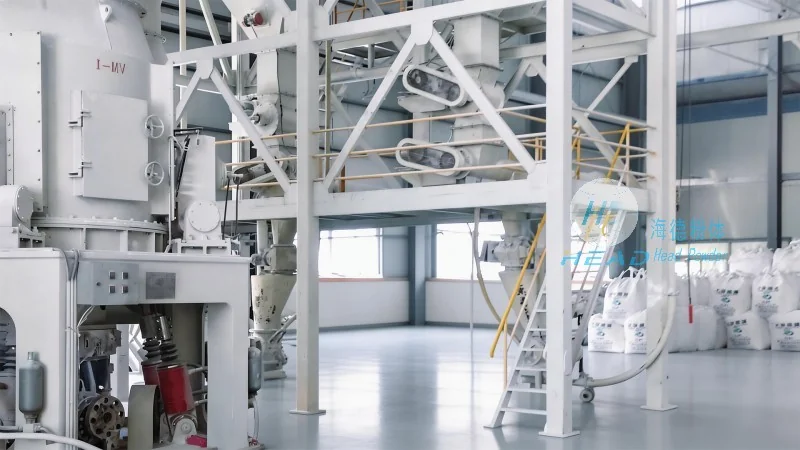
At the heart of the pneumatic conveying equipment are several key components that work in tandem to achieve efficient material transport. The hopper, or feed bin, is designed to hold the bulk material and provide a controlled discharge into the conveying line. It may include a rotary valve or a gate valve to regulate the flow rate. The conveying line itself is typically made of stainless steel or other corrosion-resistant materials to prevent contamination from the battery materials. The line is equipped with various fittings, such as elbows, tees, and reducers, which are strategically placed to maintain consistent air flow and prevent pressure losses. The receiver, or discharge hopper, collects the material at the end of the line and may include a dust collection system to capture any airborne particles. The system's control panel manages the air flow, pressure, and material flow rates, often using sensors to monitor parameters like pressure, temperature, and flow rate, ensuring stable operation.
Pneumatic conveying equipment is widely used in various stages of lithium battery production, from raw material handling to final product packaging. In the raw material processing stage, these systems transport the positive electrode active materials from storage silos to mixing and coating lines. This ensures a consistent and controlled feed of materials, which is critical for maintaining the uniformity of the cathode layer. During the coating process, the equipment delivers the material to the coating machine at a precise rate, matching the production speed of the line. In the final assembly stage, the system may be used to transport the finished electrode sheets to the cell formation and packaging stages. The efficiency and reliability of the pneumatic conveying system directly impact the overall production throughput and product quality, making it an indispensable part of modern lithium battery manufacturing facilities.
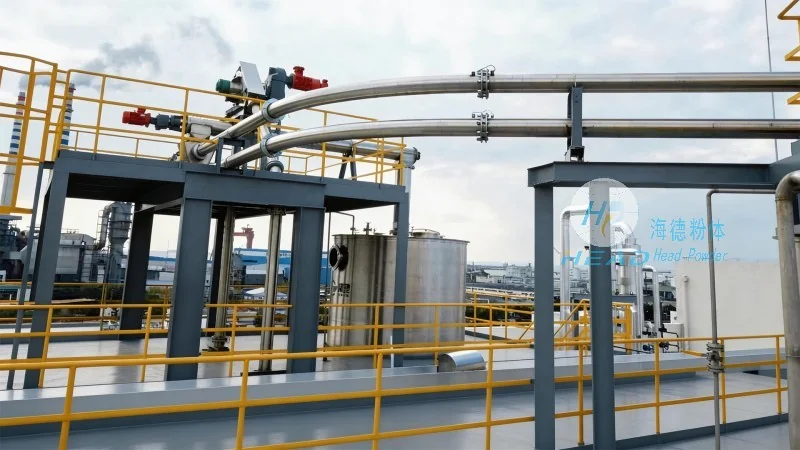
Shandong HeadPowder Engineering Co., Ltd., commonly known as HeadPowder, is a leading provider of specialized pneumatic conveying equipment tailored for the lithium battery industry. With years of experience in material handling technology, HeadPowder has developed customized solutions that address the unique challenges of handling lithium battery positive electrode materials. The company's engineers work closely with clients to understand their specific process requirements, material characteristics, and production goals, ensuring that the designed system meets all operational and safety standards. HeadPowder's equipment is engineered to provide high efficiency, low maintenance, and long service life, with features such as anti-static design, corrosion resistance, and precise flow control. The company's commitment to quality and innovation has made it a trusted partner for many battery manufacturers worldwide, helping them optimize their material handling processes and improve overall production performance.

 Shandong Headpowder Engineering Co., Ltd.
 156-6277-7102(Manager Zhang)
  0531-83386006
  Zhangqiu District, Jinan City, Shandong Province, China
telephone
WeChatconsult
top