With more than 10‑year industry experience, Shandong Headpowder delivers full‑service pneumatic‑conveying systems and blowers, undertaking nationwide turn‑key powder‑handling projects.
For industrial operations dealing with ceramic particles, selecting the right material handling solution is crucial for efficiency and safety. A key technology in this field is the ceramic particle pneumatic conveying equipment, which uses air to transport fine or bulk ceramic materials. This equipment not only enhances process flow but also ensures the integrity of the ceramic products being handled.
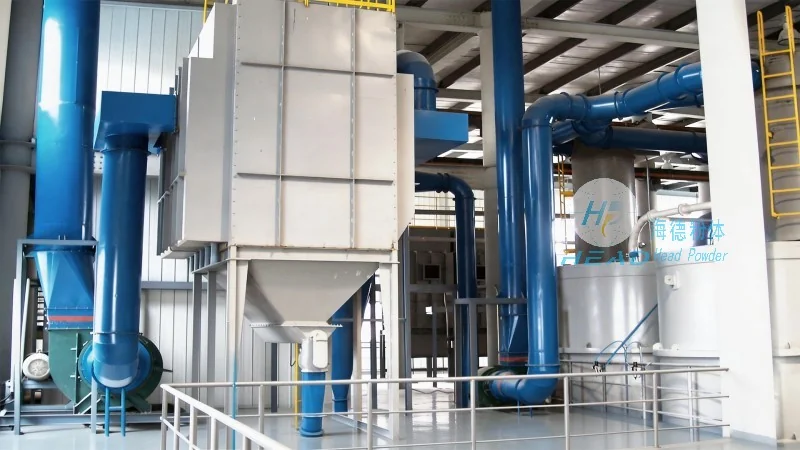
Ceramic particle pneumatic conveying equipment is a system designed to transport ceramic materials through a pipeline using air as the conveying medium. Unlike traditional mechanical conveyors, this system eliminates the need for moving parts in contact with the material, reducing wear and tear and minimizing the risk of contamination. The equipment is particularly suitable for handling fragile or abrasive ceramic particles, such as those used in refractory materials, electronic components, or decorative ceramics.
The design of ceramic particle pneumatic conveying equipment is based on fundamental principles of fluid dynamics and material science. The primary design principle is the creation of a consistent air flow that can lift and transport the ceramic particles through the pipeline. This is achieved through a combination of components, including a blower or compressor to generate the air pressure, a hopper or feeder to introduce the ceramic material, and a pipeline system that ensures smooth material movement.
A critical aspect of the design is the selection of materials for the equipment components. Since ceramic particles can be abrasive and may contain moisture or other contaminants, the equipment must be constructed from materials that can withstand these conditions. Common materials include stainless steel, special alloys, or even specialized ceramics for the most demanding applications. The design also considers the particle size and density, as these factors influence the air velocity required for effective conveying. Engineers use computational fluid dynamics (CFD) and empirical formulas to determine the optimal air pressure and flow rate for different ceramic materials.
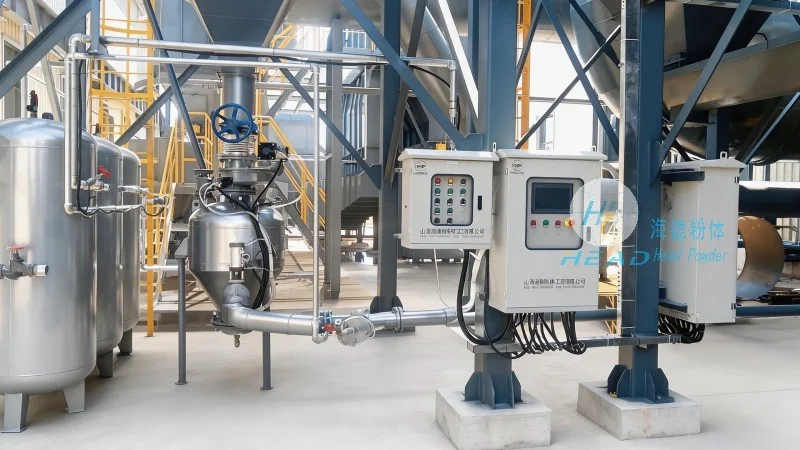
Shandong HeadPowder Engineering Co., Ltd., commonly known as HeadPowder, is a reputable manufacturer specializing in the design and production of ceramic particle pneumatic conveying equipment. With years of experience in the industry, HeadPowder has developed a range of solutions tailored to meet the diverse needs of ceramic manufacturers. The company’s headquarters is located in Shandong, China, where it leverages advanced manufacturing technologies and a skilled workforce to produce high-quality equipment.
HeadPowder’s ceramic particle pneumatic conveying systems are engineered to deliver reliable performance and durability. The company focuses on understanding the specific requirements of each client, whether it’s for high-temperature ceramic processing, fine powder handling, or bulk material transport. By integrating cutting-edge design principles with practical application knowledge, HeadPowder ensures that its equipment meets both current and future industry standards.
The ceramic particle pneumatic conveying equipment offered by HeadPowder and other manufacturers includes several key features that enhance its functionality and efficiency. One of the main advantages is the ability to handle both dry and slightly moist ceramic materials without the need for additional drying or conditioning steps. The equipment also minimizes product degradation, as the lack of mechanical contact reduces the risk of particle breakage or contamination.
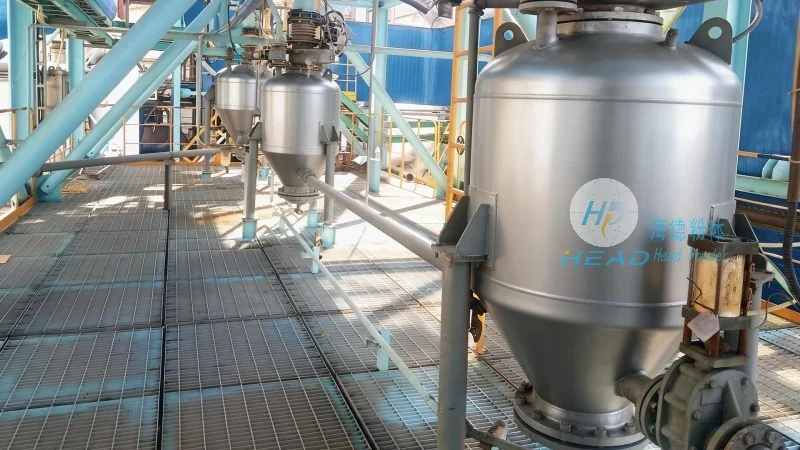
Another significant benefit is the flexibility in system design. Ceramic particle pneumatic conveying systems can be configured for both dilute phase (where particles are suspended in air) and dense phase (where particles are carried in a slurry-like state) conveying, depending on the material characteristics and application requirements. This adaptability allows for efficient transport over long distances or through complex layouts without significant pressure drops.
The equipment also contributes to improved operational safety. By eliminating the need for manual handling of ceramic powders, the risk of dust exposure and related health hazards is reduced. Additionally, the enclosed system design prevents environmental contamination and ensures compliance with industrial safety regulations.
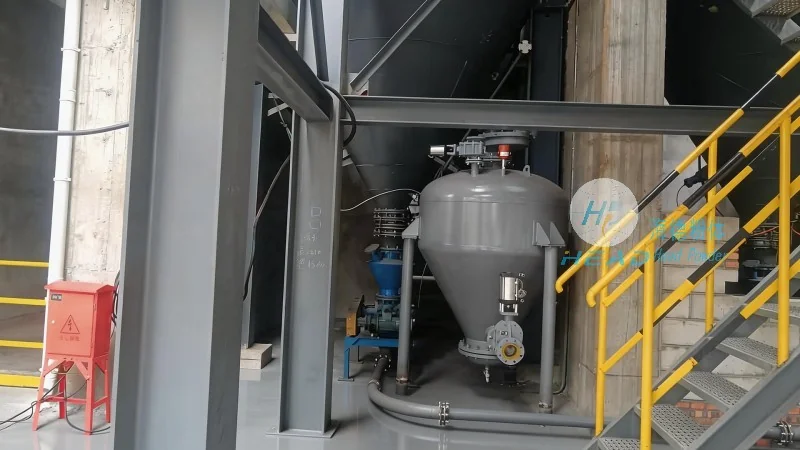
Ceramic particle pneumatic conveying equipment is widely used in various industrial sectors. In the refractory industry, it is used to transport raw materials such as clay, silica, and alumina to production lines. In the electronics industry, it handles fine ceramic powders for the manufacturing of capacitors and other components. The equipment is also utilized in the production of decorative ceramics, where precise control over particle size and distribution is critical.
Performance-wise, ceramic particle pneumatic conveying systems can achieve high conveying rates, often ranging from several hundred to several thousand kilograms per hour, depending on the system size and design. The systems are designed to maintain consistent material flow, which is essential for maintaining production line efficiency. HeadPowder’s equipment, for example, has been proven to deliver reliable performance in demanding environments, with minimal downtime and maintenance requirements.
In conclusion, ceramic particle pneumatic conveying equipment is a vital component in modern ceramic processing operations. Its design, based on fundamental principles of fluid dynamics and material handling, ensures efficient and safe transport of ceramic materials. Companies like Shandong HeadPowder Engineering Co., Ltd. play a crucial role in providing high-quality equipment that meets the specific needs of the industry. By investing in properly designed and manufactured pneumatic conveying systems, ceramic manufacturers can enhance their operational efficiency, reduce costs, and improve product quality.

 Shandong Headpowder Engineering Co., Ltd.
 156-6277-7102(Manager Zhang)
  0531-83386006
  Zhangqiu District, Jinan City, Shandong Province, China
telephone
WeChatconsult
top