With more than 10‑year industry experience, Shandong Headpowder delivers full‑service pneumatic‑conveying systems and blowers, undertaking nationwide turn‑key powder‑handling projects.
Efficient and reliable material handling is crucial in the fertilizer industry, especially when dealing with bulk powders like potassium carbonate. The pneumatic conveying system has emerged as a key solution for transporting such materials safely and efficiently. This article delves into the structure and operational principles of a potassium carbonate fertilizer pneumatic conveying equipment, highlighting its importance in modern industrial applications.
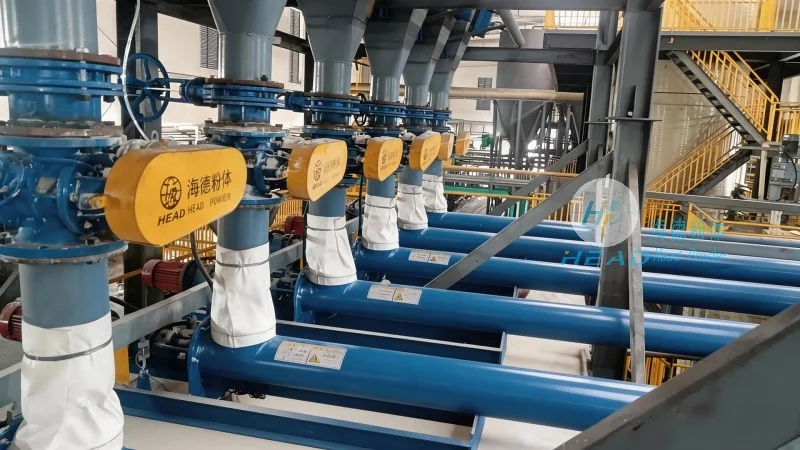
Potassium carbonate (K₂CO₃) is a vital component in agricultural fertilizers, providing essential potassium nutrients for plant growth. Handling this material in bulk requires specialized equipment to ensure minimal dust, contamination, and operational risks. Pneumatic conveying systems offer a solution by using air to transport powders through a network of pipes, eliminating the need for mechanical components that might cause wear or contamination. The equipment is designed to handle the specific properties of potassium carbonate, such as its fine particle size and potential hygroscopic nature, ensuring optimal performance.
HeadPowder, or Shandong HeadPowder Engineering Co., Ltd., is a leading manufacturer of powder handling and conveying systems based in Shandong, China. With years of experience in the industry, the company specializes in developing customized solutions for various bulk material applications, including fertilizer processing. HeadPowder's commitment to quality and innovation has made it a trusted partner for businesses seeking reliable and efficient material transport solutions. The company's facilities and technical expertise ensure that each equipment is tailored to meet the specific needs of clients, from small-scale operations to large industrial plants.
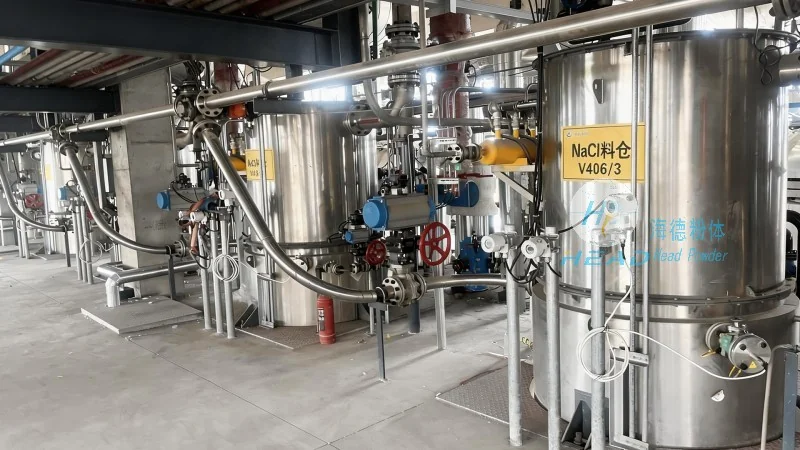
The pneumatic conveying system for potassium carbonate fertilizer typically consists of several key components that work in tandem to ensure smooth material transport. The main parts include the hopper, feeder, air compressor, conveying line, separation unit, and dust collector. Each component plays a critical role in the overall operation:
The operation of the potassium carbonate pneumatic conveying system involves a series of steps that ensure efficient material transport. The process typically starts with the material being fed from the hopper into the feeder. The feeder then releases the material into the conveying line, where it is mixed with air from the compressor. The air flow carries the material particles through the pipeline to the separation unit. In the separation unit, the air and material are separated, with the material falling into the receiving container and the air being filtered by the dust collector before being released.
For positive pressure systems, the air compressor blows air into the conveying line, creating a pressure differential that moves the material forward. The air velocity is carefully controlled to prevent material degradation or blockages. For negative pressure systems, the compressor creates a vacuum that draws the material from the hopper into the line. Both systems are designed to handle the specific characteristics of potassium carbonate, such as its fine particle size and potential tendency to clump, ensuring that the material is transported without clogging or loss.
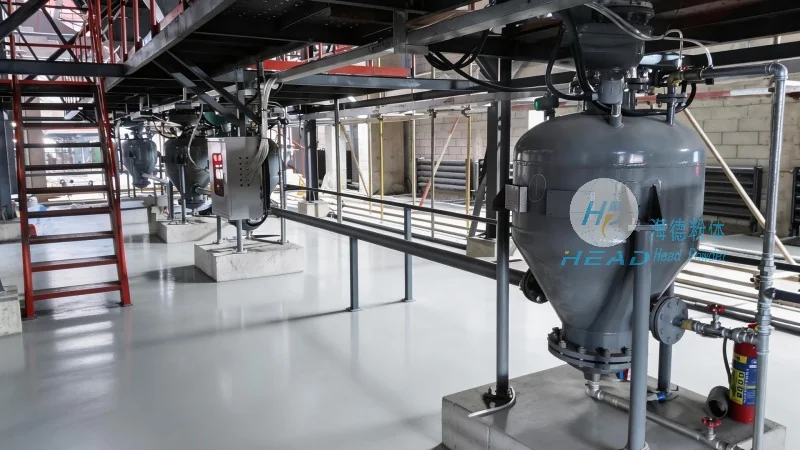
Implementing a pneumatic conveying system for potassium carbonate fertilizer offers several advantages over traditional mechanical conveying methods. These benefits include:
The potassium carbonate fertilizer pneumatic conveying equipment is a critical component in modern fertilizer processing, offering efficient, safe, and reliable material handling solutions. With its robust structure and operational principles, the system is designed to meet the specific needs of potassium carbonate, ensuring optimal performance and minimal downtime. Companies like Shandong HeadPowder Engineering Co., Ltd. play a vital role in providing these specialized systems, helping businesses in the fertilizer industry achieve their production goals while maintaining high standards of quality and safety.

 Shandong Headpowder Engineering Co., Ltd.
 156-6277-7102(Manager Zhang)
  0531-83386006
  Zhangqiu District, Jinan City, Shandong Province, China
telephone
WeChatconsult
top