With more than 10‑year industry experience, Shandong Headpowder delivers full‑service pneumatic‑conveying systems and blowers, undertaking nationwide turn‑key powder‑handling projects.
HeadPowder, a leading engineering company based in Shandong, China, specializes in the design and manufacturing of advanced material handling solutions. Among their product portfolio is the sodium carbonate pneumatic conveying system, a sophisticated technology used for the efficient transport of bulk solid materials like sodium carbonate. This article provides an overview of the system's structure and working principle, highlighting its key components and operational mechanisms.
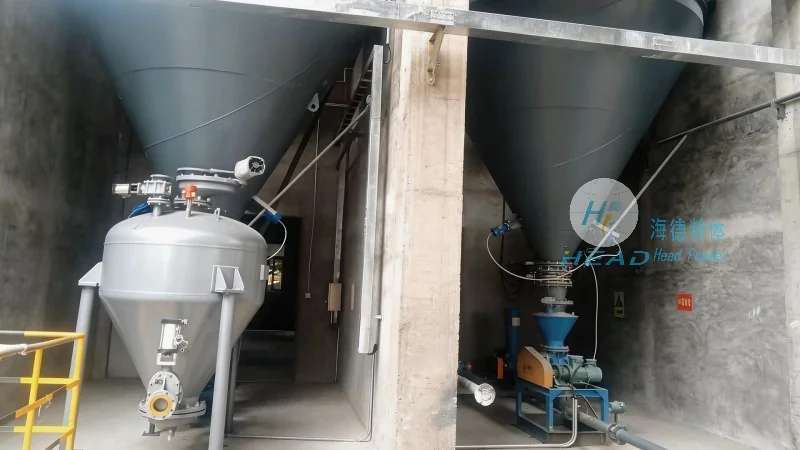
The sodium carbonate pneumatic conveying system consists of several critical components that work in tandem to ensure reliable and efficient material transport. The primary components include the feeding device, the conveying pipeline, the separation equipment, and the control system. Each component is meticulously designed to handle the unique properties of sodium carbonate, such as its granular or powder form, and to maintain the integrity of the material during transport.
The feeding device is the initial stage of the pneumatic conveying system, responsible for introducing sodium carbonate into the conveying pipeline. It typically includes a hopper or a bin that stores the material, a rotary valve or a screw feeder that controls the flow rate, and a feeder that ensures a consistent and uniform feed. The design of the feeding device is crucial as it directly impacts the system's performance. For sodium carbonate, which can be abrasive or have varying particle sizes, a robust and adjustable feeding mechanism is essential to prevent blockages and maintain steady flow.
The conveying pipeline is the core of the system, responsible for transporting sodium carbonate through the air. It is usually made of stainless steel or other corrosion-resistant materials to withstand the chemical properties of sodium carbonate and prevent contamination. The pipeline design considers factors such as the material's density, particle size, and flow characteristics. The system may use either positive pressure or negative pressure (or a combination of both) to move the material. In positive pressure systems, compressed air is introduced at the inlet, while in negative pressure systems, air is drawn out at the outlet. The pipeline is often equipped with bends, elbows, and straight sections that are carefully engineered to minimize pressure loss and maintain the material's velocity.
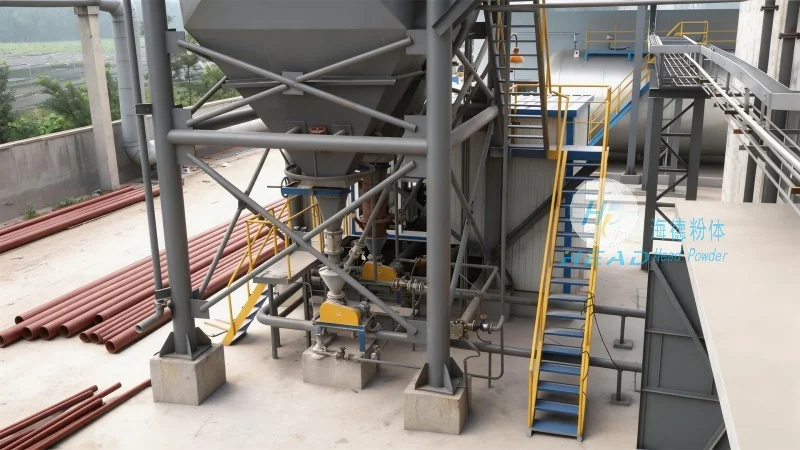
At the receiving end of the conveying system, separation equipment is used to separate the sodium carbonate from the air stream. This typically involves a cyclone separator or a bag filter. The cyclone separator uses centrifugal force to separate the solid particles from the air, while the bag filter traps the particles in fabric bags. The separated sodium carbonate is then collected in a receiving hopper or a storage bin. The separation equipment is designed to ensure that the delivered material is clean, dry, and free from contaminants, which is critical for downstream processes.
The control system is responsible for monitoring and adjusting the operation of the pneumatic conveying system. It includes sensors to measure pressure, flow rate, and material level, as well as controllers to regulate the feeding rate, air pressure, and other parameters. The system may also include alarms and safety features to prevent overpressure or other hazards. The control system ensures that the system operates efficiently and safely, adapting to changes in material feed or other conditions.
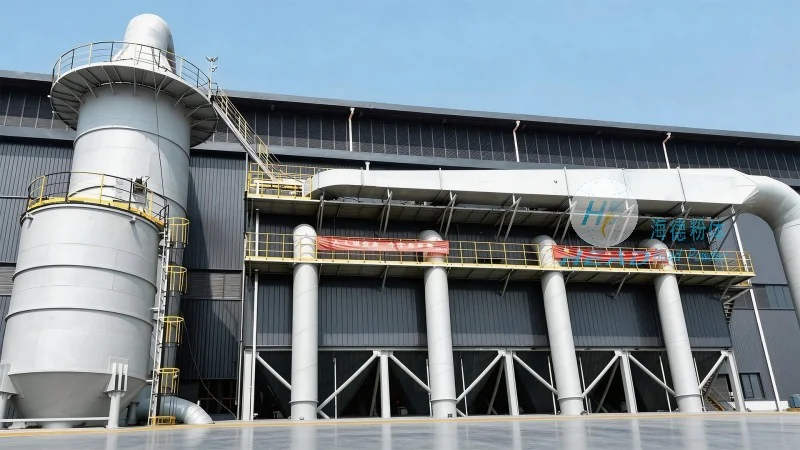
The working principle of the sodium carbonate pneumatic conveying system is based on the use of air as a medium to transport the material. The process begins with the feeding device introducing sodium carbonate into the conveying pipeline. Compressed air is then introduced at the inlet, creating a high-velocity air stream that lifts and carries the material particles. The air and material mixture travels through the pipeline to the receiving end, where the separation equipment separates the material from the air. The separated sodium carbonate is collected and can be used in various applications, such as in the production of glass, detergents, and other chemical products.
The sodium carbonate pneumatic conveying system offers several advantages over traditional material handling methods. It is highly efficient, as it can transport large quantities of material over long distances with minimal labor. The system is also flexible, as it can be adapted to different material types and processing requirements. Additionally, the system is clean and hygienic, as it prevents dust and contamination during transport. The use of stainless steel and other corrosion-resistant materials ensures that the system is durable and long-lasting. Overall, the sodium carbonate pneumatic conveying system is a reliable and effective solution for the transport of bulk solid materials like sodium carbonate.
HeadPowder's sodium carbonate pneumatic conveying system is a sophisticated and efficient solution for the transport of bulk solid materials. The system's structure and working principle are designed to handle the unique properties of sodium carbonate, ensuring reliable and clean transport. With its advanced components and control system, the system offers several advantages over traditional methods, making it an ideal choice for various industrial applications. HeadPowder, with its expertise in engineering and material handling, continues to provide high-quality solutions for the chemical and industrial sectors.

 Shandong Headpowder Engineering Co., Ltd.
 156-6277-7102(Manager Zhang)
  0531-83386006
  Zhangqiu District, Jinan City, Shandong Province, China
telephone
WeChatconsult
top