With more than 10‑year industry experience, Shandong Headpowder delivers full‑service pneumatic‑conveying systems and blowers, undertaking nationwide turn‑key powder‑handling projects.
When it comes to transporting fine sand and gravel using pneumatic conveying systems, preventing pipeline blockages is a critical challenge that impacts operational efficiency and system longevity. The unique properties of fine particulate materials, such as their tendency to agglomerate, high friction coefficients, and variable particle sizes, create specific demands on system design and operation. This article explores effective strategies to mitigate blockages and highlights the key design parameters that engineers must consider to ensure reliable and uninterrupted material transport.
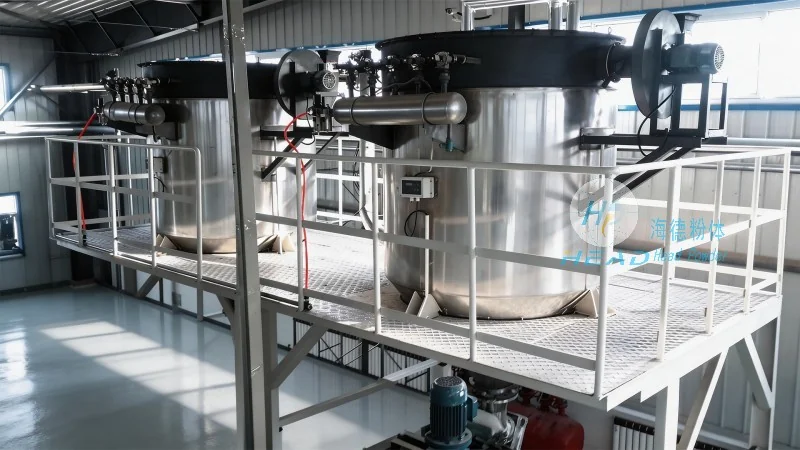
Fine sand and gravel particles, typically ranging from 0.1 mm to 2 mm in diameter, exhibit behaviors that differ significantly from coarser materials. Their small size allows for better suspension in air, but it also increases the risk of particle-to-particle and particle-to-pipe wall interactions that can lead to caking and blockages. Additionally, these materials often have high moisture content or are prone to electrostatic charges, further complicating the conveying process. The goal is to design a system that maintains sufficient air velocity to keep particles suspended while minimizing the formation of solid deposits that can obstruct flow.
Several critical design parameters must be optimized to prevent blockages in pneumatic conveying systems for fine sand and gravel. These parameters are interrelated and require careful consideration based on the specific material characteristics and operational requirements.
The diameter of the conveying pipeline is one of the most significant factors influencing flow characteristics. For fine sand and gravel, a larger pipe diameter is generally preferred to reduce friction losses and maintain a stable flow regime. However, excessively large diameters can lead to higher energy consumption and increased costs. Engineers typically use the "diameter-to-particle size ratio" as a guideline, aiming for a ratio of at least 20:1 to ensure smooth particle movement. For example, a 100 mm pipe diameter is suitable for conveying fine sand with particle sizes up to 1.5 mm, while a 150 mm pipe may be necessary for coarser gravel. The pipe material also plays a role; smooth, non-porous surfaces like stainless steel or PVC are recommended to minimize particle adhesion.
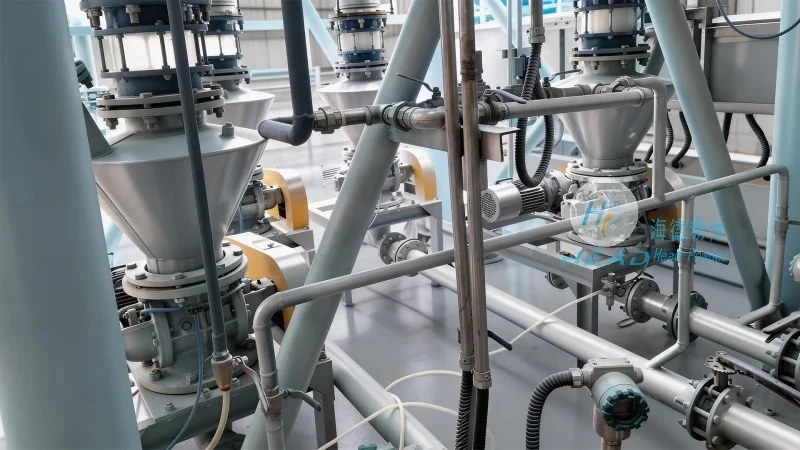
Air velocity is a primary factor in maintaining particle suspension. Insufficient velocity causes particles to settle and accumulate on pipe walls, leading to blockages. The recommended air velocity for fine sand and gravel is typically between 20-30 m/s, depending on the particle size and density. Higher velocities may be required for materials with higher moisture content or cohesive properties. The system pressure, often measured in bar or psi, must be sufficient to overcome friction losses and maintain the desired velocity throughout the conveying line. A pressure drop analysis is essential to ensure that the system can maintain the required velocity from the inlet to the outlet, especially in long-distance or complex system layouts.
Pre-treatment of the fine sand and gravel can significantly improve conveying performance. Conditioning the material, such as adding a small amount of anti-caking agent or using a pre-drying process, can reduce moisture content and prevent agglomeration. Additionally, incorporating a mixing or blending step before the material enters the conveying system can help distribute particles more evenly, reducing the likelihood of localized blockages. For example, adding a low concentration of a dispersant can improve particle flowability and prevent the formation of clumps that would otherwise obstruct the pipeline.
The design of the conveying system layout, including the number and angle of bends, has a direct impact on blockage risk. Sharp bends and tight turns increase friction and can cause particles to settle or accumulate at the bend points. To mitigate this, engineers should use gradual bends with larger radii and minimize the number of turns in the system. For fine sand and gravel, bends with a radius of at least 5 times the pipe diameter are recommended. Additionally, incorporating expansion joints or flexible connectors can help accommodate thermal expansion and reduce stress on the pipeline, which may otherwise contribute to material buildup.
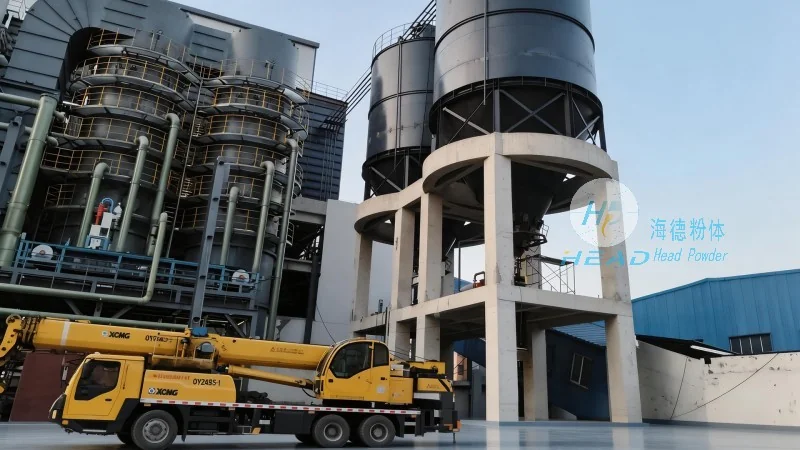
The collection system, including filters and cyclones, is critical for preventing material re-entry into the conveying line and maintaining system cleanliness. A well-designed filter with appropriate mesh size can prevent fine particles from escaping and re-entering the pipeline, reducing the risk of clogging. Cyclones with high efficiency and proper gas-to-solid separation are essential to ensure that the collected material is free of air, minimizing the chance of re-agglomeration. Regular maintenance of these components is also vital to prevent blockages caused by accumulated material in the filter or cyclone housing.
Implementing real-time monitoring and control systems can help detect potential blockages early and take corrective action. Sensors such as pressure transducers, flow meters, and particle counters can provide data on system performance and alert operators to changes in flow characteristics. Automated control systems can adjust air velocity or pressure in response to detected blockages, preventing complete system shutdown. For example, a system with a pressure sensor that triggers an alarm when pressure drops below a certain threshold can allow for timely intervention before a blockage becomes severe.
Preventing pipeline blockages in pneumatic conveying systems for fine sand and gravel requires a comprehensive approach that considers material properties, system design, and operational parameters. By optimizing pipe diameter, air velocity, material conditioning, system layout, and monitoring systems, engineers can significantly reduce the risk of blockages and ensure reliable material transport. The key is to balance the system design with the specific characteristics of the material, using data-driven decisions and proven engineering principles to achieve optimal performance. As a leading provider of pneumatic conveying solutions, Shandong HeadPowder Engineering Co., Ltd. specializes in designing and implementing such systems tailored to the unique needs of fine sand and gravel applications, ensuring efficient and uninterrupted material handling for industrial clients.

 Shandong Headpowder Engineering Co., Ltd.
 156-6277-7102(Manager Zhang)
  0531-83386006
  Zhangqiu District, Jinan City, Shandong Province, China
telephone
WeChatconsult
top